The Science of Cold Brew: Extraction, Acidity, Sweetness and How to Make It Better
Cold brew is everywhere, but much of what we hear about it is marketing: it's less acidic, sweeter, smoother and can rescue old beans. Researchers and roasters have started testing those claims. I've combined their findings with years of making cold brew at home. Here's what really happens when coffee meets cold water, and how to use that knowledge for a better glass.
We choose products independently. We may earn a commission through links on this page; your price stays the same. Affiliate policy
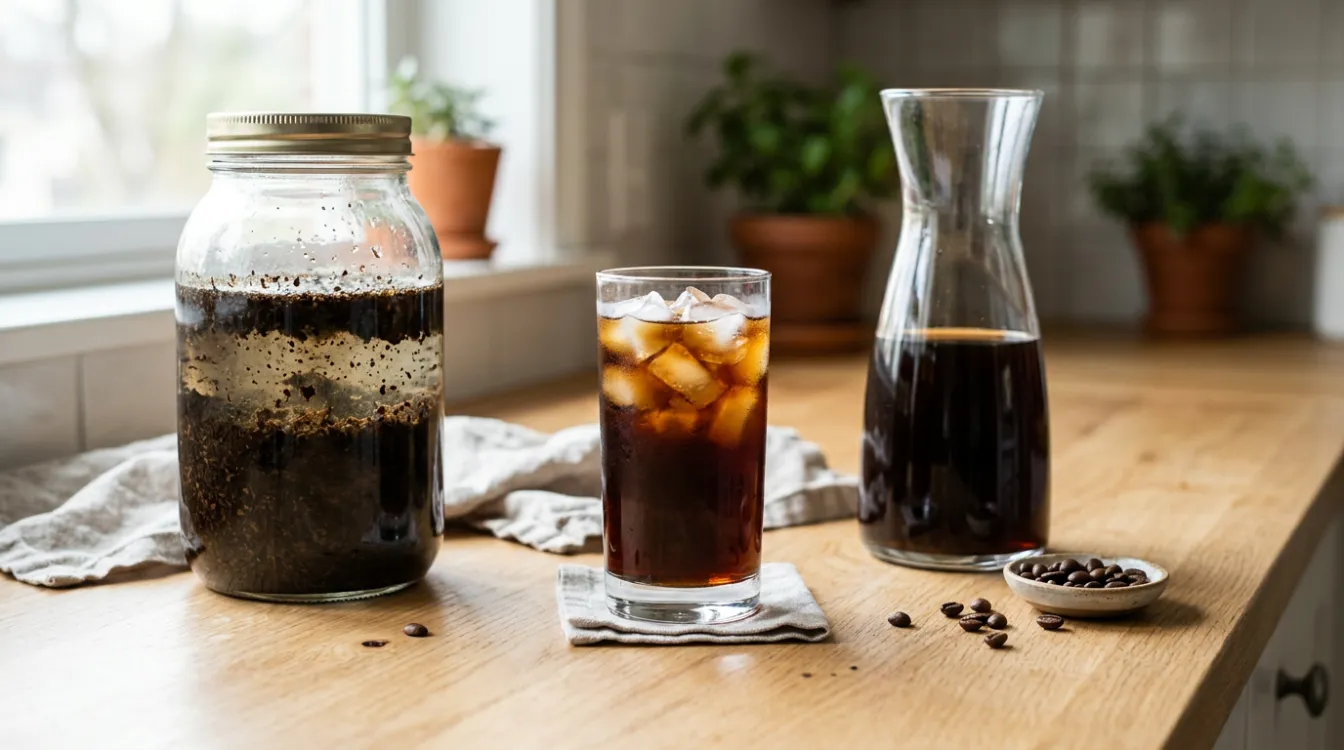
Cold brew is coffee steeped or dripped in cold water for 12 to 24 hours. Cold water extracts compounds selectively: many acids and sweet-associated compounds dissolve, while more of the bitter, astringent compounds stay behind. That makes cold brew smoother and less bitter, and it tastes sweeter even though it doesn't contain much more sugar. Research shows roast profile and brew method matter: fast roasts give more acidity, slow roasts more softness, and cold drip produces the most intense concentrate. Cold brew contains somewhat less total acid but isn't acid-free, and it can't rescue stale beans. For best results, use fresh medium-roast coffee, a coarse grind and a 12 to 16 hour steep.
Why cold brew deserves a closer look
Cold brew has gone from a back-of-house café trick to one of the fastest-growing coffee categories in the world. It's in supermarket fridges, on café menus everywhere and in cans next to soda.
Yet for a long time, almost everything we "knew" about cold brew came from marketing and folklore: it's less acidic, it's sweeter, it's smoother, it can rescue old beans. Few of those claims had been tested properly.
In recent years, researchers and roasters have started to study cold brew seriously, measuring extraction, acidity and aroma compounds and testing how roast and brewing method change the result. Their findings, combined with my own years of making cold brew at home, are the basis of this guide.
Cold brew vs iced coffee vs hot coffee
| Feature | Cold brew | Iced coffee | Hot coffee |
|---|---|---|---|
| Water temperature | Cold or room temperature | Hot, then cooled | Hot (about 195-205°F) |
| Brew time | 12-24 hours | Minutes | Minutes |
| Typical grind | Coarse | Medium | Medium to fine |
| Body | Smooth, round | Lighter | Varies |
| Acidity (taste) | Low, soft | Brighter | Brighter |
| Bitterness | Low | Moderate | Moderate |
| Aroma | Muted | Fresher | Strongest |
| Shelf life | Days in the fridge | Best fresh | Best fresh |
What exactly is cold brew?
Cold brew is coffee made by steeping or dripping ground coffee in cold or room-temperature water for many hours, usually 12 to 24. The long contact time makes up for the lack of heat.
There are two main methods:
- Immersion: coarse grounds steep in water in a jar, pitcher or bucket, then are filtered out. This is the most common method at home and in cafés.
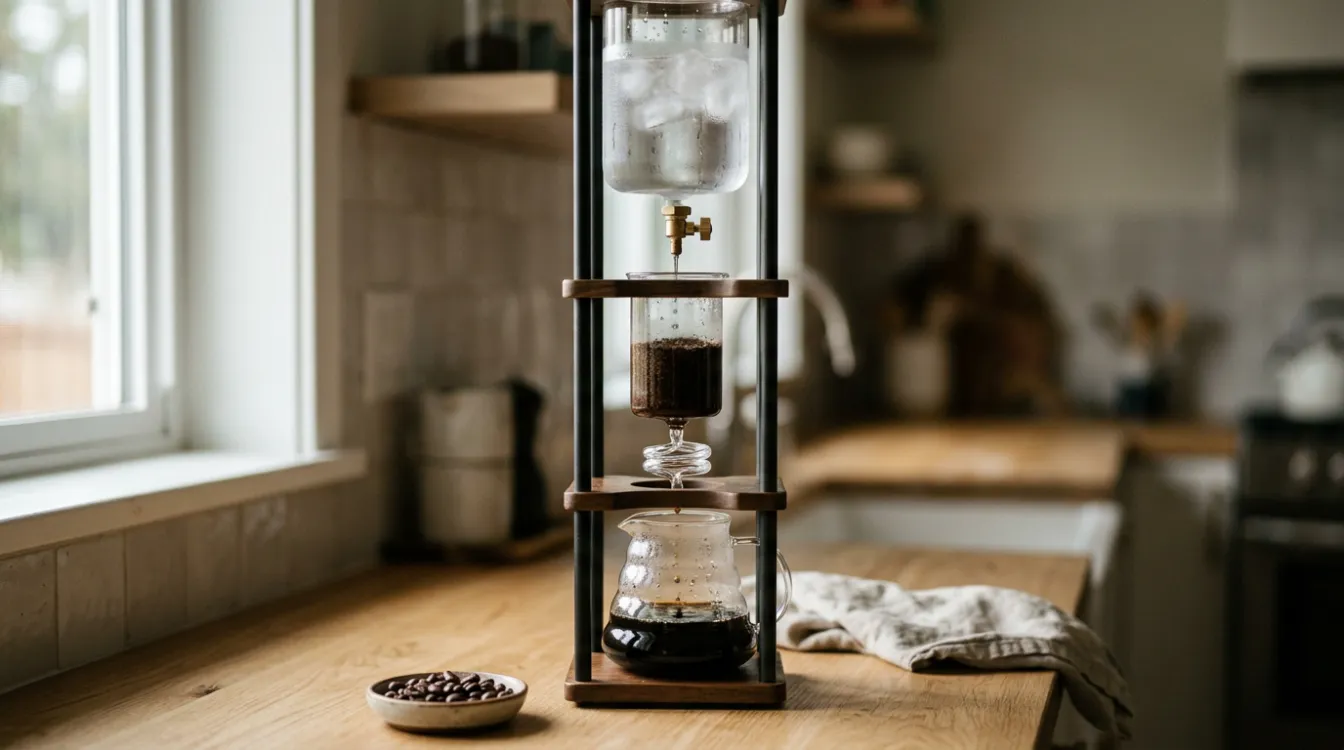
- Cold drip (slow drip): cold water drips slowly through a bed of coffee, often in a tall glass tower, over several hours.
Cold brew is usually made as a concentrate, then diluted with water, milk or ice before drinking. It's different from iced coffee, which is hot-brewed coffee chilled or poured over ice. My guide to iced coffee vs cold brew compares the two in detail.
From café buckets to factories
Café origins
Cold brew started as an informal, behind-the-counter item. Baristas would brew it overnight in 5-gallon plastic buckets or Toddy-style systems, filter it in the morning and serve it over ice.
Early specialty pioneers like La Colombe, Blue Bottle and Stumptown helped popularize it. A turning point came when Stumptown began selling bottled cold brew, showing that it could be a packaged product, not just a café drink.
Scaling up
Cold brew then moved from buckets into dedicated manufacturing plants. Early bottled and canned versions faced real technical challenges: inconsistent extraction, short shelf life and flavors that faded or turned stale.
Modern production uses commercial filtration systems, careful temperature control and strict hygiene to make cold brew safely and consistently at large scale.
The cold brew boom
Market research firms have projected strong double-digit growth for cold brew for years, and the category has largely lived up to it.
Cold brew has acted as a democratizing force for specialty coffee. It took specialty beans out of cafés and into grocery fridges, convenience stores and lunch boxes.
It also competes with an unexpected rival: soda. For many younger drinkers, a can of cold brew is an alternative to sugary soft drinks, offering caffeine and refreshment with little or no sugar.
Big companies noticed. Major acquisitions of specialty roasters by global food and beverage groups were partly driven by the ready-to-drink coffee opportunity, and regional cold brew brands have multiplied.
When shopping shifted toward grocery and online retail in recent years, ready-to-drink cold brew sales grew further.
How researchers studied cold brew
Despite cold brew's popularity, there was surprisingly little rigorous research behind it. One of the most cited projects came from Colombian researcher Nancy Córdoba, whose doctoral work explored the food science of cold brew, with input from roasters and quality specialists.
The setup
- Coffee: specialty-grade green coffee from Nariño, Colombia.
- Roasting: batches of about 4.4 pounds, with roast curves tracked in Cropster software.
- Roast degree: standardized, so differences came from the roast profile, not darkness.
Two roasting profiles
- High temperature, short time (HTST)A fast roast, completed in under about 6 minutes.
- Low temperature, long time (LTLT)A slower, gentler roast to the same color.
Three brewing methods
- Cold dripSlow-drip cold extraction.
- Cold immersionSteeping coffee in cold water.
- Hot brewingA French press, used as the hot benchmark.
What they measured
- Total dissolved solids (TDS) and extraction yield.
- Titratable acidity (total acid content) and pH.
- Non-volatile compounds by high-performance liquid chromatography (HPLC).
- Aroma compounds by gas chromatography-mass spectrometry.
- Trained sensory panels, analyzed with statistical methods.
It's one of the most complete studies of cold brew I've come across, and its results challenge some common assumptions.
The physics: temperature vs time
Extraction is the process of dissolving compounds from coffee into water. Temperature and time are the two main levers.
In hot brewing, water molecules move fast and carry lots of energy. They dissolve compounds quickly, so a pour-over takes only a few minutes.
Cold water has much less energy. It dissolves compounds slowly, so cold brew needs many hours to reach a satisfying strength.
Selective solubility
Not all compounds dissolve equally at low temperatures.
- Many acids and compounds linked to sweetness dissolve relatively easily, even in cold water.
- Some compounds associated with heavy bitterness and astringency need more heat to dissolve efficiently.
- Volatile aroma compounds are driven off by heat in hot brewing, but stay more in cold brew, though cold water also extracts fewer of them.
This selective extraction is a big part of why cold brew tastes smoother and less bitter than hot coffee made from the same beans.
Aroma perception
A compound's effect on flavor depends not just on how much is present, but on how sensitive our noses are to it. Tiny amounts of some aromas have huge effects, while large amounts of others go unnoticed. That's why cold brew can taste different even when chemical measurements look similar.
Key findings: roast and brewing method
Roast profile
- HTST roasts (fast and hot) produced higher TDS and higher acidity in the cup. Organic acids formed during roasting have less time to break down in a fast roast, so more survive into the brew.
- LTLT roasts (slow and gentle) produced fewer pyrazines, compounds linked to roasted, nutty and earthy aromas, and a softer profile.
In other words, the way a coffee is roasted, not just how dark it is, noticeably changes cold brew.
Brewing method
- Cold drip produced the highest TDS overall and higher concentrations of several compounds, making it the strongest and most intense.
- Hot brewing produced the highest titratable acidity, meaning more total acid in the cup.
- Statistical analysis showed a clear separation between hot and cold methods: they really are different drinks, not just different temperatures.
Sensory profiles by method
Trained tasters described clear differences.
- Hot brew (specialty coffee): intense aroma, heavier body and more pronounced acidity and bitterness.
- Cold brew (specialty coffee): a buttery mouthfeel, sweet aromatic notes and lower perceived bitterness.
- Cold drip vs cold immersion: cold drip made from an LTLT roast was particularly smooth and sweet, while immersion often tasted rounder and slightly more mellow.
- Commercial vs specialty beans: hot brewing exposed defects in lower-grade coffee very clearly. Cold brewing softened some defects but didn't hide them completely.
Typical differences I taste between hot and cold brew (same beans)
Is cold brew actually sweeter?
One of the central questions in coffee sensory science is whether cold brew is chemically sweeter, or just tastes sweeter.
The answer seems to be mostly the second. Cold brew doesn't contain dramatically more sugar. Instead, it contains less of the bitter and astringent compounds that normally mask sweetness.
Taste compounds interact. When bitterness drops, our perception of sweetness rises, even if sugar levels stay the same. That's why cold brew can taste sweet and smooth without any sugar added.
Is cold brew less acidic?
Cold brew is often marketed as "low acid" or "easier on the stomach." The truth is more nuanced.
- Titratable acidity (total acid content) is usually lower in cold brew than in hot coffee made from the same beans, as the research found.
- pH differences are often small; cold brew isn't dramatically less acidic chemically.
- Perceived acidity is lower, because cold brew tastes softer and rounder.
So cold brew usually tastes less acidic, and contains somewhat less total acid, but it isn't an acid-free drink. If you have a sensitive stomach, it may help, but it's not a guarantee. My guide to acidity and bitterness in coffee explains the difference between measured and perceived acidity.
Choosing beans: the "cold brew fixes bad coffee" myth
For years, some roasters treated cold brew as a way to use up old, stale or low-grade beans. The thinking was that cold extraction would hide the flaws.
Modern specialty producers reject that idea. Cold brew may soften defects, but it can't turn bad coffee into good coffee. Stale beans make flat cold brew; good beans make delicious cold brew.
Brazil: the commercial cornerstone
Natural and pulped natural Brazilian coffees are the backbone of many commercial cold brews. Their chocolate, nut and caramel flavors, low acidity and heavy body suit cold extraction perfectly and please most drinkers.
Colombia: the brighter counterpoint
Washed Colombian coffees, like those from Nariño, offer more fruit and brightness. They make lively, more complex cold brews for drinkers who want something beyond chocolate.
In retail, chocolate-forward cold brews sell far more. Many roasters use them as a gateway: approachable cold brew that leads people to explore specialty coffee.
Roast degree for cold brew
Many commercial cold brews used to be dark-roasted, but roasters increasingly prefer medium roasts.
- Brazilian cold brew profiles are often roasted slightly lighter than a traditional espresso roast, keeping chocolate and caramel without ashy, burnt notes.
- Colombian cold brew profiles are often roasted noticeably lighter, to preserve fruit and brightness.
Very dark roasts can make cold brew taste flat, smoky and one-dimensional. Very light roasts can taste thin and sour, because cold water struggles to extract them. Medium roasts usually hit the sweet spot.
How producers keep cold brew consistent
Large-scale cold brew needs consistency from batch to batch. Producers build multi-year relationships with green coffee suppliers who can deliver similar coffee year after year.
Daily quality control often includes measuring roast color with optical instruments, cupping each roast, measuring TDS and pH of each batch and checking microbiological safety.
Nitro cold brew usually uses the same sourcing, roasting and brewing as regular cold brew; the difference comes at the end, when nitrogen is added. My guide to nitro cold brew explains how that works.
Roasting equipment matters too. Fast convective roasters naturally produce roasts more like HTST profiles, while traditional drum roasters can produce slower, LTLT-style roasts. Producers adjust recipes to match their equipment.
How to make cold brew at home (immersion)
This is my go-to recipe for a smooth, versatile cold brew concentrate.
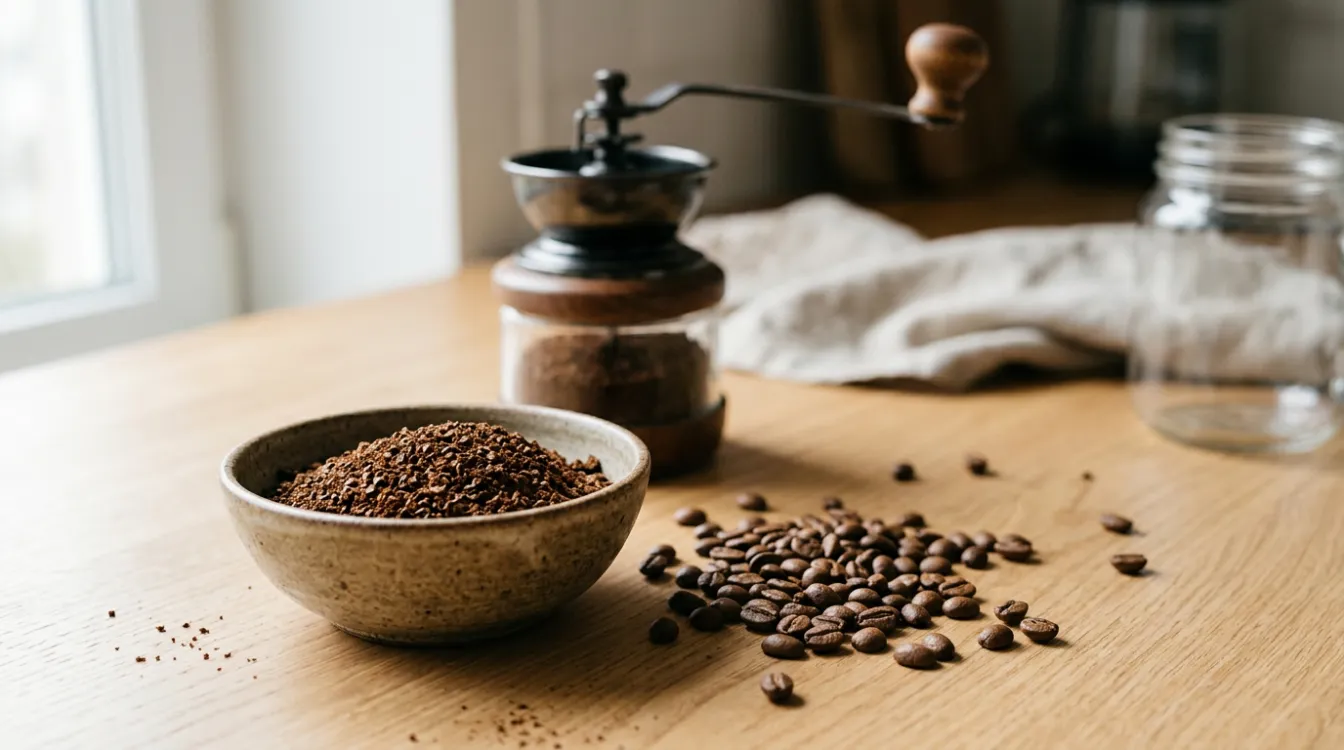
- Grind coarselyUse about 100 grams (3.5 ounces) of medium-roast coffee, ground like coarse sea salt.
- Add waterStir the coffee into 1 liter (about 34 ounces) of cold, filtered water, a 1:10 ratio for concentrate.
- SteepCover and leave at room temperature for 12 to 16 hours, or in the fridge for 18 to 24 hours.
- FilterStrain through a fine sieve, then through a paper filter for a clean concentrate.
- DiluteMix roughly 1 part concentrate with 1 to 2 parts water or milk, to taste.
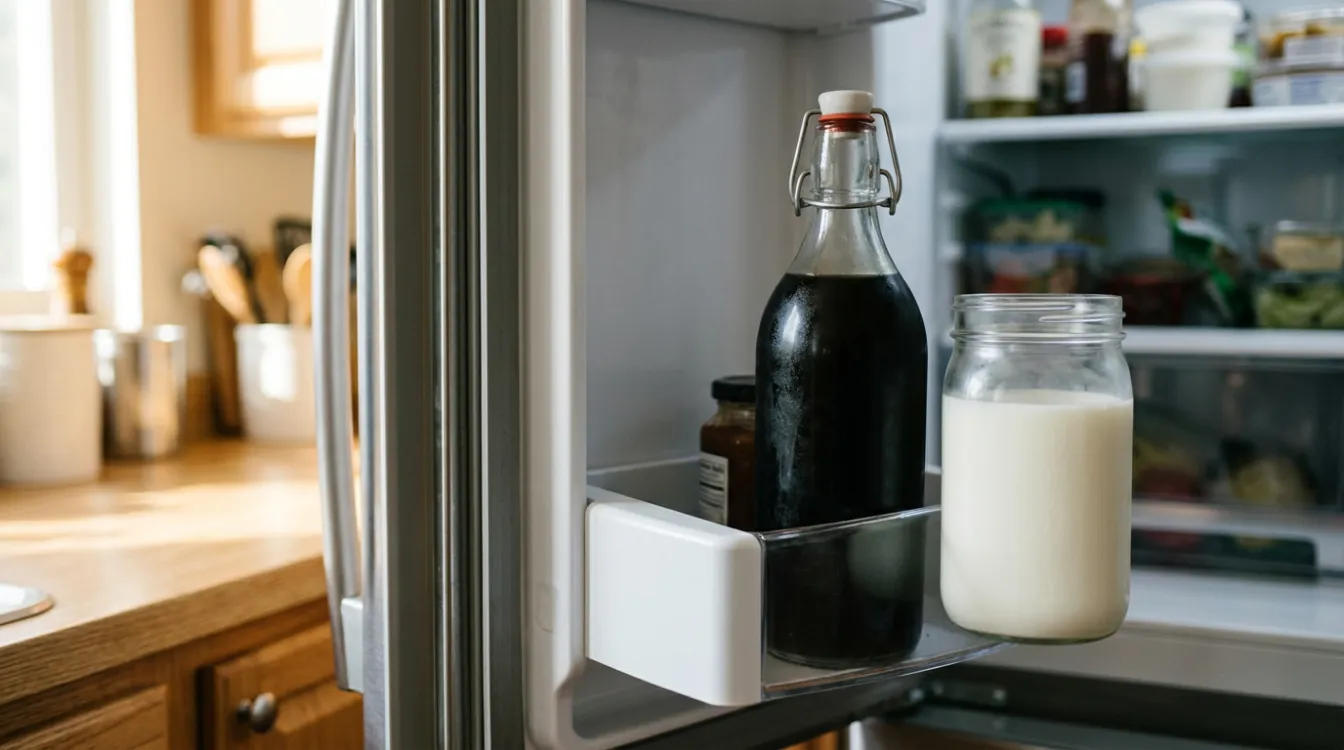
- StoreKeep the concentrate in a sealed bottle in the fridge and use within about a week.
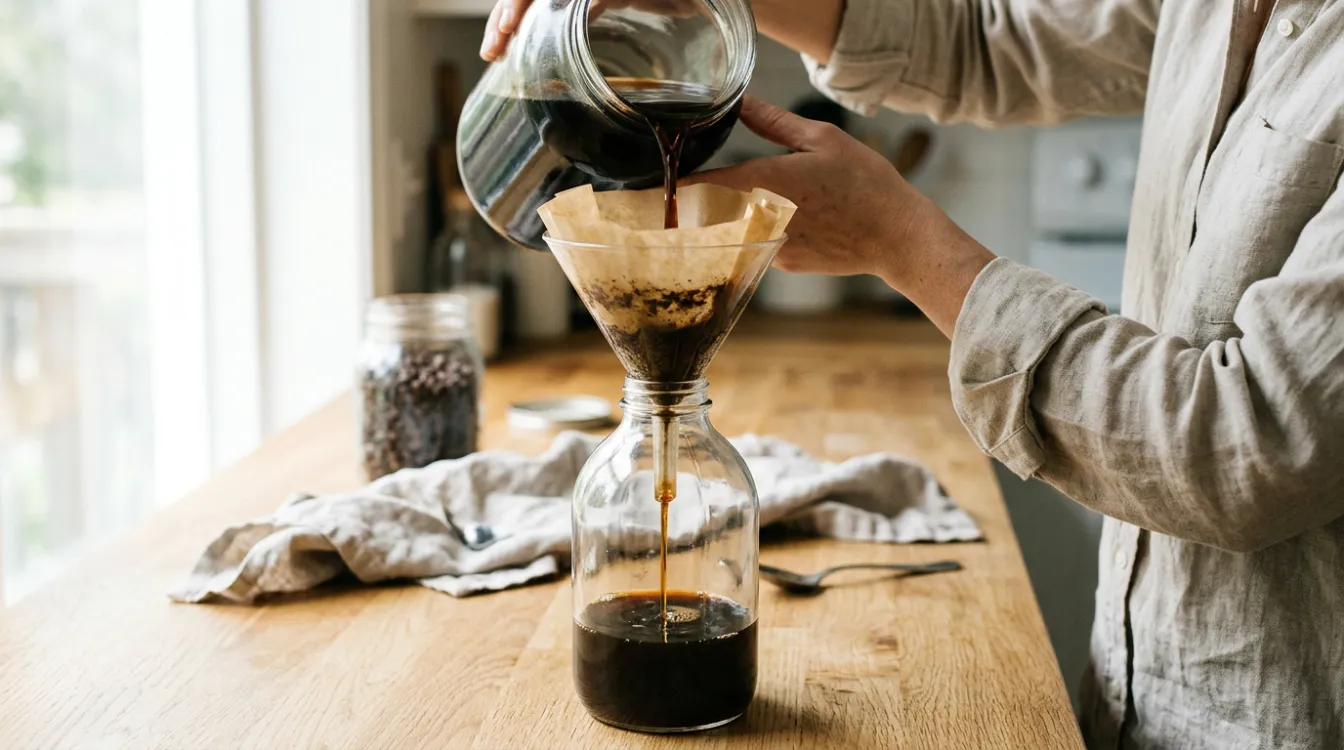
Our tip: Taste at 12 hours and again at 16. Longer isn't always better; past a point, cold brew can turn woody and flat.
Making cold drip coffee
Cold drip towers drip ice water slowly through coffee, usually one drop every one to two seconds, for several hours.
- Use a medium-fine grind, finer than for immersion.
- Wet the coffee bed first so water flows evenly.
- Adjust the valve for a steady drip rate.
- Expect 3 to 6 hours for a typical batch.
Cold drip produces an intense, clean, often sweeter concentrate, as the research suggests. It's more hands-on and needs special equipment, but the results are impressive.
Ratios, grind and time cheat sheet
| Style | Ratio (coffee:water) | Grind | Time |
|---|---|---|---|
| Concentrate (immersion) | 1:5 to 1:10 | Coarse | 12-24 hours |
| Ready-to-drink (immersion) | 1:12 to 1:16 | Coarse | 12-24 hours |
| Cold drip | 1:8 to 1:12 | Medium-fine | 3-6 hours |
| Japanese iced (hot over ice) | 1:15 to 1:16 | Medium-fine | 3-4 minutes |
My guide to coffee brewing ratios explains how to adjust strength.
Shelf life and food safety
Cold brew is brewed without heat, so it doesn't get the bacteria-killing benefit of hot water. Hygiene matters.
- Use clean equipment and filtered water.
- Steep in the fridge if your kitchen is warm.
- Filter thoroughly; leftover grounds keep extracting and can spoil faster.
- Store in clean, sealed bottles in the fridge.
- Use concentrate within about 7 to 10 days, and diluted cold brew within 2 to 3 days.
If it smells sour, fermented or "off," throw it out.
Commercial producers use strict hygiene, filtration and sometimes pasteurization or high-pressure processing to make bottled cold brew shelf stable. Understanding how aroma compounds and microbes change during storage is still an active research area.
How much caffeine is in cold brew?
Cold brew concentrate can be very strong because it uses a lot of coffee. After dilution, a typical glass often contains similar caffeine to a cup of drip coffee, sometimes more.
Caffeine depends on the amount of coffee used, the dilution and the steep time. Ready-to-drink cold brews vary widely; some contain much more caffeine than a standard coffee.
If you're sensitive to caffeine, dilute more and keep servings modest. My guide on how much coffee is too much covers safe limits.
A short history of cold brew
Kyoto-style drip
Cold coffee has a longer history than most people think. In Japan, slow-drip cold coffee became known as Kyoto-style coffee, made in tall glass towers where ice water falls drop by drop through a bed of grounds for many hours. Some accounts trace the idea back to Dutch traders in the 1600s, who may have used cold extraction to make coffee that would keep on long voyages, though the details are hard to confirm.
Whatever its origins, Kyoto-style drip became a craft in its own right. Cafés treated the towers almost like laboratory equipment and displayed them proudly on the counter.
The Toddy system
In the 1960s, an American chemical engineering graduate named Todd Simpson developed a simple immersion brewer after tasting low-acid coffee in Peru. His Toddy system used a plastic container, a felt filter and a stopper. It became the standard cold brew setup in many cafés for decades, long before cold brew was fashionable.
Iced coffee traditions
Cold coffee drinks also appear in many coffee cultures: Vietnamese iced coffee with condensed milk, Greek frappé, Japanese iced pour-over and Algerian mazagran, made with coffee and cold water or lemon. Most of these use hot-brewed coffee, though, which is a different thing from true cold brew. My piece on Vietnamese coffee culture explores one of the best-known traditions.
Grind size, surface area and filtration
Grind size is one of the most powerful levers in cold brew, because cold water relies on time and surface area to do the work heat normally does.
- Finer grounds expose more surface area, so they extract faster. Too fine, though, and cold brew turns muddy, bitter and hard to filter.
- Coarser grounds extract more slowly and evenly, and they filter cleanly. That's why most immersion recipes call for a coarse grind.
- Fines (tiny particles produced by every grinder) are the hidden problem. They over-extract, cloud the brew and clog filters.
A good burr grinder makes a big difference because it produces more uniform particles and fewer fines than a blade grinder. My guide to coffee grind size shows what each setting looks like, and my comparison of hand grinders vs electric grinders helps if you're choosing one.
Filtration choices
| Filter | Clarity | Body | Notes |
|---|---|---|---|
| Metal mesh | Low | Heavy | Lets oils and fines through |
| Cloth or felt | Medium | Medium | Classic café choice; needs careful cleaning |
| Paper | High | Lighter | Cleanest cup; slower to drain |
| Double filter (mesh then paper) | Very high | Medium-light | My preferred method at home |
I usually strain through a fine mesh sieve first to catch the bulk of the grounds, then pour through a paper filter. It takes longer, but the concentrate is cleaner and keeps better in the fridge, because fewer particles remain to keep extracting.
Why water quality matters
Cold brew is mostly water, so the water you use shapes the flavor.
- Filtered water removes chlorine and off-flavors that cold brew would otherwise preserve.
- Moderate mineral content helps extraction. Magnesium and calcium bind to flavor compounds and help pull them from the grounds.
- Very soft or distilled water can taste flat and extract poorly.
- Very hard water can make cold brew dull and chalky, and it may mute brightness.
If your tap water tastes good, filtered tap water usually works well. If you're curious, try one batch with filtered tap water and one with bottled spring water and taste them side by side. The difference can be surprising.
What I learned from my own experiments
Over the years I've made hundreds of batches of cold brew at home, changing one thing at a time. These are the lessons that changed how I brew.
Steep time
I once brewed the same beans for 8, 12, 16, 20 and 24 hours at room temperature. At 8 hours the brew was thin and slightly sour. At 12 hours it was sweet and balanced. At 16 hours it was rich and chocolatey. By 20 hours it started to taste woody, and at 24 hours it was flatter and more bitter. For most medium roasts, I now aim for 14 to 16 hours on the counter.
Fridge vs counter
Steeping in the fridge slows everything down. A fridge batch needed roughly 6 to 8 extra hours to taste as strong as a counter batch. It came out slightly cleaner and more delicate, which I like for fruity coffees. For chocolatey blends I usually steep on the counter.
Origin comparison
I brewed a natural Brazil, a washed Colombia and a washed Ethiopia side by side using the same recipe. The Brazil tasted like chocolate milk once I added milk, and it was the family favorite. The Colombia was juicy, with red apple and caramel. The Ethiopia was floral and tea-like, beautiful black but easily lost under milk. That test convinced me to match beans to how I plan to drink the cold brew. My guide to coffee growing regions and flavor explains why origins taste so different.
Old beans
To test the "use your old beans" idea, I brewed beans that had been open for about two months alongside the same coffee two weeks off roast. The old batch was not terrible, but it was flat, papery and lifeless. The fresh batch was clearly sweeter and more aromatic. Cold brew doesn't rescue stale coffee; it just makes the staleness quieter. My guide on how to store coffee beans helps keep them fresh.
Agitation
Stirring once at the start, then again after an hour, helped every grind wet evenly and noticeably improved consistency. Stirring constantly did not help; it just pushed more fines into suspension.
Choosing cold brew equipment
You don't need special gear to make great cold brew, but the right tools make it easier.
- A large jar or pitcher: the simplest option. Any clean glass container with a lid works.
- A French press: steep in the press, then push the plunger and pour through paper for clarity.
- Dedicated cold brew pitchers: have a built-in mesh filter basket, so you just lift the grounds out.
- Toddy-style brewers: make large batches with a felt filter and a drain plug for easy filtering.
- Slow-drip towers: beautiful and great for intense cold drip, but more expensive and hands-on.
- A good burr grinder: the most important upgrade for even extraction.
- A digital scale: helps you repeat good batches and adjust ratios precisely.
For most people, a jar, a sieve, paper filters and a scale are all you need to start. Upgrade only once you know how much cold brew you'll make.
Cold brew through the seasons
Cold brew isn't just a summer drink in my house. I adjust it through the year.
- Summer: a big batch of concentrate in the fridge, diluted with water over plenty of ice, or topped with tonic and orange peel.
- Autumn: cold brew with oat milk and a pinch of cinnamon, steeped with the grounds for extra spice.
- Winter: concentrate topped up with hot water for a smooth, low-bitterness hot coffee in the afternoon.
- Spring: fruitier, lighter single-origin cold brews from Ethiopia or Kenya, served black.
Keeping a jar of concentrate in the fridge means I always have coffee ready in seconds, whatever the weather. It's also a great option when guests arrive, because everyone can dilute it to the strength they like.
Cold brew and health
Cold brew shares most of coffee's health profile. Coffee contains antioxidants such as chlorogenic acids, and moderate coffee drinking has been linked with several health benefits in large studies. My guide to the health benefits of coffee covers the research.
There are a few cold-brew-specific points worth knowing:
- Chlorogenic acids: some research suggests cold brew may contain somewhat lower levels of certain antioxidants than hot coffee, because hot water extracts more of them. Cold brew is still a source of these compounds.
- Stomach comfort: some people with sensitive stomachs find cold brew gentler, likely because of its lower titratable acidity and lower bitterness. Results vary from person to person.
- Added sugar: the health picture changes quickly with sweetened cold brew drinks. Many ready-to-drink products and café versions contain a lot of added sugar and cream.
- Caffeine: strong concentrates and large servings can add up fast. Watch serving size if you're sensitive.
If you want the cold brew experience without the caffeine, decaf cold brew works well. Choose a fresh, good-quality decaf, ideally Swiss Water or CO2 processed, and brew it the same way. Decaf can extract slightly faster, so taste it a little earlier.
Flavor ideas and food pairings
Cold brew's smooth, chocolatey profile makes it easy to pair.
- Chocolate and caramel desserts echo the roasted sweetness of a Brazil-style cold brew.
- Citrus brightens it: try orange zest or a slice of lemon in cold brew tonic.
- Warm spices such as cinnamon, cardamom and nutmeg work well, especially stirred into the grounds before steeping.
- Vanilla adds sweetness without sugar. Add a split vanilla bean to the jar.
- Breakfast pastries and toast pair perfectly with a milky cold brew in the morning.
- Fruity cold brews from Ethiopia or Kenya pair nicely with berries and stone fruit.
For a café-style treat at home, pour cold brew over a scoop of vanilla ice cream for an iced affogato.
Scaling cold brew for a crowd
Cold brew is ideal for parties and busy weeks because you make it ahead.
| Batch size | Coffee | Water (concentrate) | Servings once diluted |
|---|---|---|---|
| Small jar | 50 g (1.8 oz) | 500 ml (17 oz) | About 6 to 8 |
| Standard | 100 g (3.5 oz) | 1 liter (34 oz) | About 12 to 16 |
| Large pitcher | 200 g (7 oz) | 2 liters (68 oz) | About 25 to 30 |
| Party batch | 500 g (17.6 oz) | 5 liters (1.3 gallons) | About 60 to 75 |
For bigger batches, filtering becomes the slow part. Use a large mesh bag or nut milk bag to steep the grounds so you can lift them out easily, then pour through paper in stages.
Our tip: Freeze some cold brew in ice cube trays. Cold brew ice cubes chill your glass without watering it down.
Common beginner mistakes
When friends tell me their cold brew didn't turn out well, it's usually one of these.
- Using a fine espresso grind. It turns muddy and bitter and clogs every filter. Go much coarser.
- Guessing the amounts. Scoops vary a lot. Weighing coffee and water is the fastest way to consistent results.
- Forgetting to dilute. Concentrate is meant to be cut with water or milk. Drunk straight, it tastes harsh and very strong.
- Leaving the grounds in. Grounds left in the jar keep extracting in the fridge, and the brew turns bitter and woody within a day or two.
- Using a dirty jar or bottle. Without hot water, cleanliness is your main protection against spoilage.
- Choosing a very light roast. Unless you like a tangy, tea-like brew, start with a medium roast.
- Judging the first batch too harshly. Treat your first batch as a starting point. Change one variable at a time, such as steep time or ratio, and keep notes.
Fix these and cold brew becomes one of the most forgiving and rewarding ways to make coffee at home.
Ways to serve cold brew
- Over ice: the classic, diluted with water to taste.
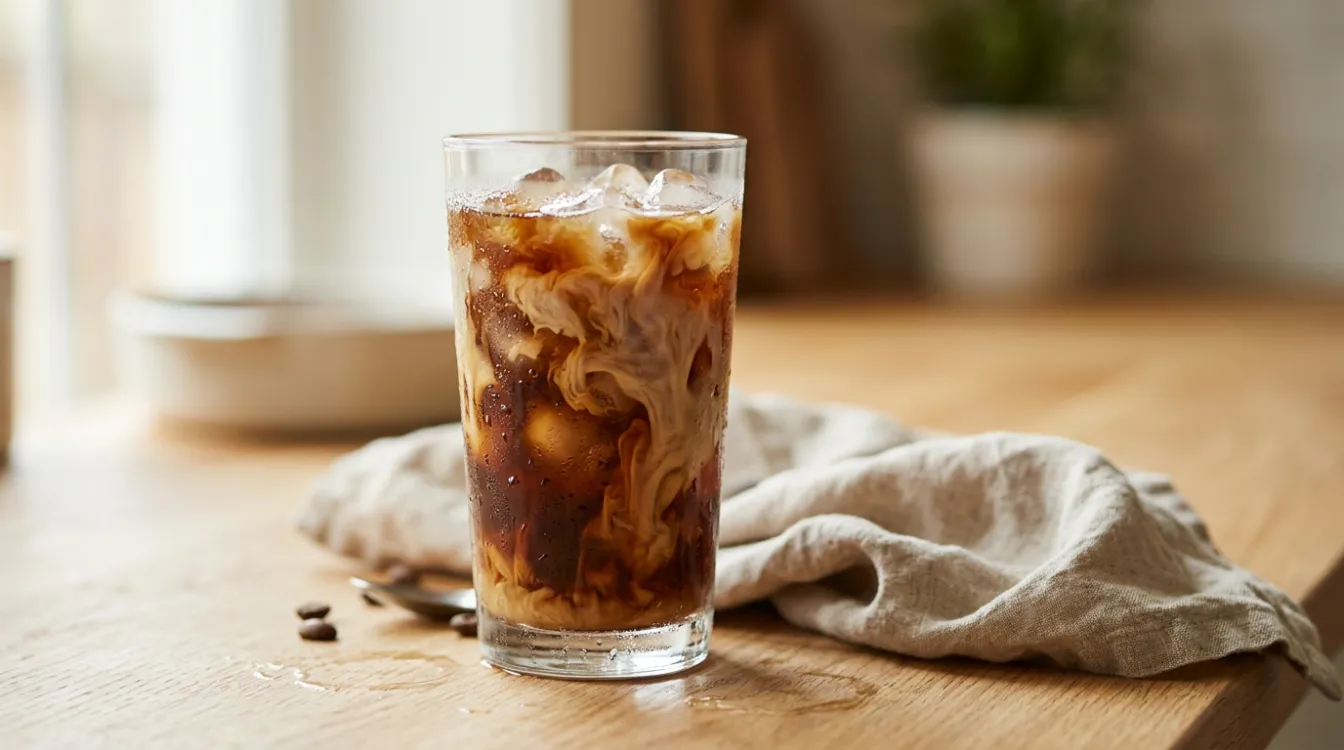
- With milk: cold brew and milk is creamy and naturally sweet-tasting. Oat milk is a great match. My guide to plant-based milks in coffee compares options.
- Cold brew tonic: cold brew over ice with tonic water and a twist of citrus.
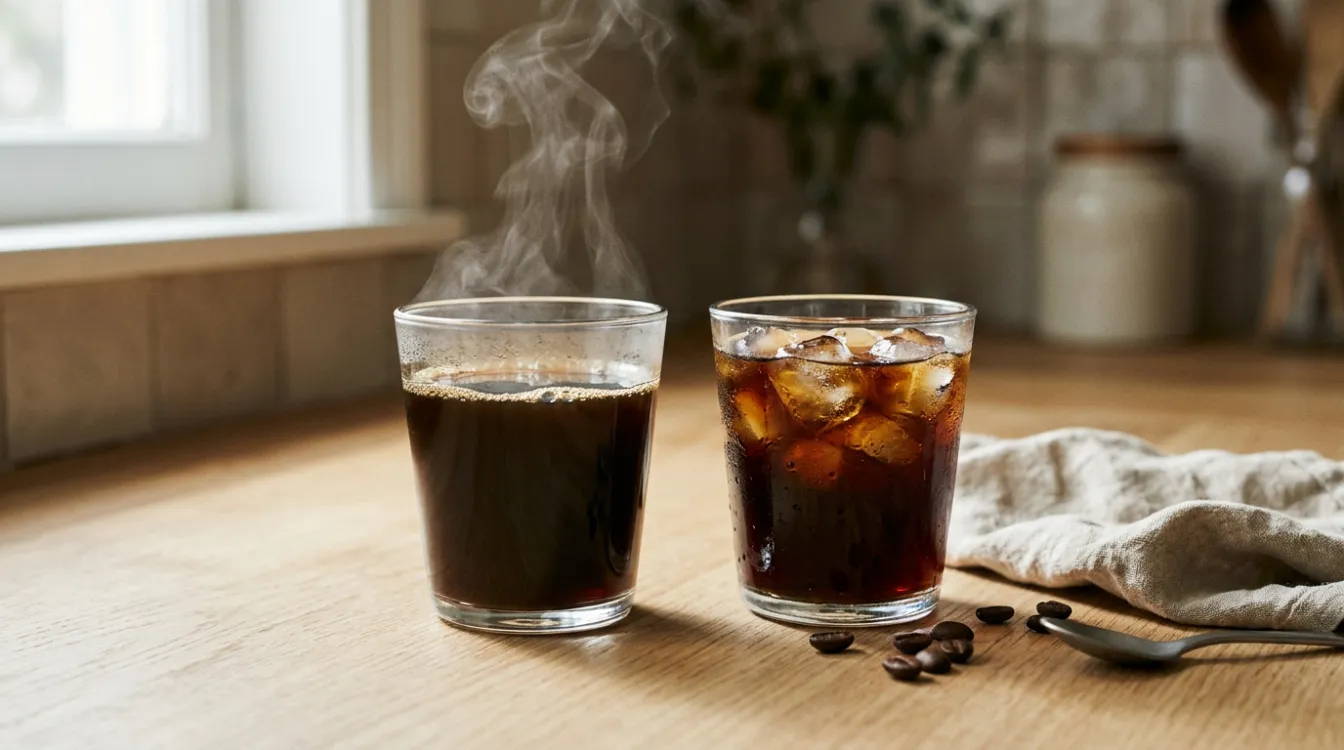
- Hot cold brew: add hot water to concentrate for a smooth, low-bitterness hot coffee.
- In cocktails and desserts: affogato-style over ice cream, or in coffee cocktails.
- Nitro: infused with nitrogen for a creamy, cascading texture.
Troubleshooting cold brew
| Problem | Likely cause | Fix |
|---|---|---|
| Weak, watery | Too little coffee, too short | Use more coffee or steep longer |
| Bitter, woody | Steeped too long, grind too fine | Shorten time or grind coarser |
| Sour, thin | Very light roast, too short | Medium roast, longer steep |
| Muddy, gritty | Poor filtering | Filter through paper |
| Flat, stale | Old beans or old concentrate | Fresh beans; use within a week |
| Off or fermented smell | Contamination, too warm | Steep in fridge, clean equipment |
Where cold brew is heading
To stand out in a crowded market, brands are moving beyond plain cold brew. New ideas include coffee-citrus hybrids such as cold brew "shandies" and lemonades, sparkling coffee, botanical infusions and lighter, fruitier single-origin cold brews.
Research questions remain too:
- Shelf life chemistry: how aroma compounds change during storage, and how to keep them.
- Extraction modeling: how particle size, water flow and time interact in large brewers.
- Sensory thresholds: exactly how much bitterness needs to drop before sweetness becomes noticeable.
Answers to those questions will help both home brewers and big producers make better cold brew.
Myths about cold brew
"Cold brew is acid-free"
It usually contains less total acid and tastes softer, but it isn't acid-free.
"Cold brew fixes bad coffee"
It softens some defects, but stale or low-grade beans still taste flat.
"Longer steeping is always stronger and better"
Past a point, extra time adds woody, bitter notes without much benefit.
"Cold brew is just cold coffee"
Iced coffee is hot coffee chilled; cold brew is a different extraction with different chemistry.
"Cold brew has much more caffeine"
Concentrate is strong, but once diluted, many servings are similar to drip coffee.
The verdict
Cold brew is more than coffee without heat. Cold water extracts selectively, pulling out acids and sweet-associated compounds while leaving many bitter ones behind. The result is smoother, rounder and less bitter, often tasting sweeter even without more sugar.
Research shows that roast profile and brewing method matter as much as roast color: fast roasts give more acidity, slow roasts more softness, and cold drip the most intensity.
For the best cold brew at home, start with good, fresh medium-roast beans, grind coarse, steep 12 to 16 hours, filter well and keep it cold.
Frequently asked questions
What is cold brew?
Coffee steeped or dripped in cold water for many hours, usually 12 to 24.
Is cold brew less acidic?
It usually contains somewhat less total acid and tastes softer, but it isn't acid-free.
Why does cold brew taste sweeter?
Less bitterness is extracted, so sweetness becomes more noticeable, even without more sugar.
How long should cold brew steep?
About 12 to 16 hours at room temperature, or 18 to 24 hours in the fridge.
What grind is best for cold brew?
Coarse for immersion, medium-fine for cold drip.
Does cold brew have more caffeine?
Concentrate is strong, but diluted servings are often similar to drip coffee.
How long does cold brew last?
Concentrate keeps about 7 to 10 days in the fridge; diluted cold brew 2 to 3 days.
Can cold brew use old beans?
It softens some flaws, but stale beans still make flat cold brew.

- Michael Reynolds, years of making cold brew at home
- Cold brew coffee, Wikipedia
- Iced coffee, Wikipedia
- Coffee preparation, Wikipedia
- Pyrazine, Wikipedia
Related guides
Iced coffee vs cold brew Nitro cold brew explained Coffee extraction explainedWritten by Michael Reynolds. Last updated November 20, 2026.