French Press vs Pour Over: Taste, Technique, Time and Which Brewer Suits You
The French press and the pour-over are the two classic ways to hand-brew coffee at home. One gives you a rich, heavy, full-bodied cup with almost no effort. The other gives you a clean, bright, nuanced cup and a calm morning ritual. I brewed the same beans in both for weeks. Here's exactly how they differ and how to make each one well.
We choose products independently. We may earn a commission through links on this page; your price stays the same. Affiliate policy
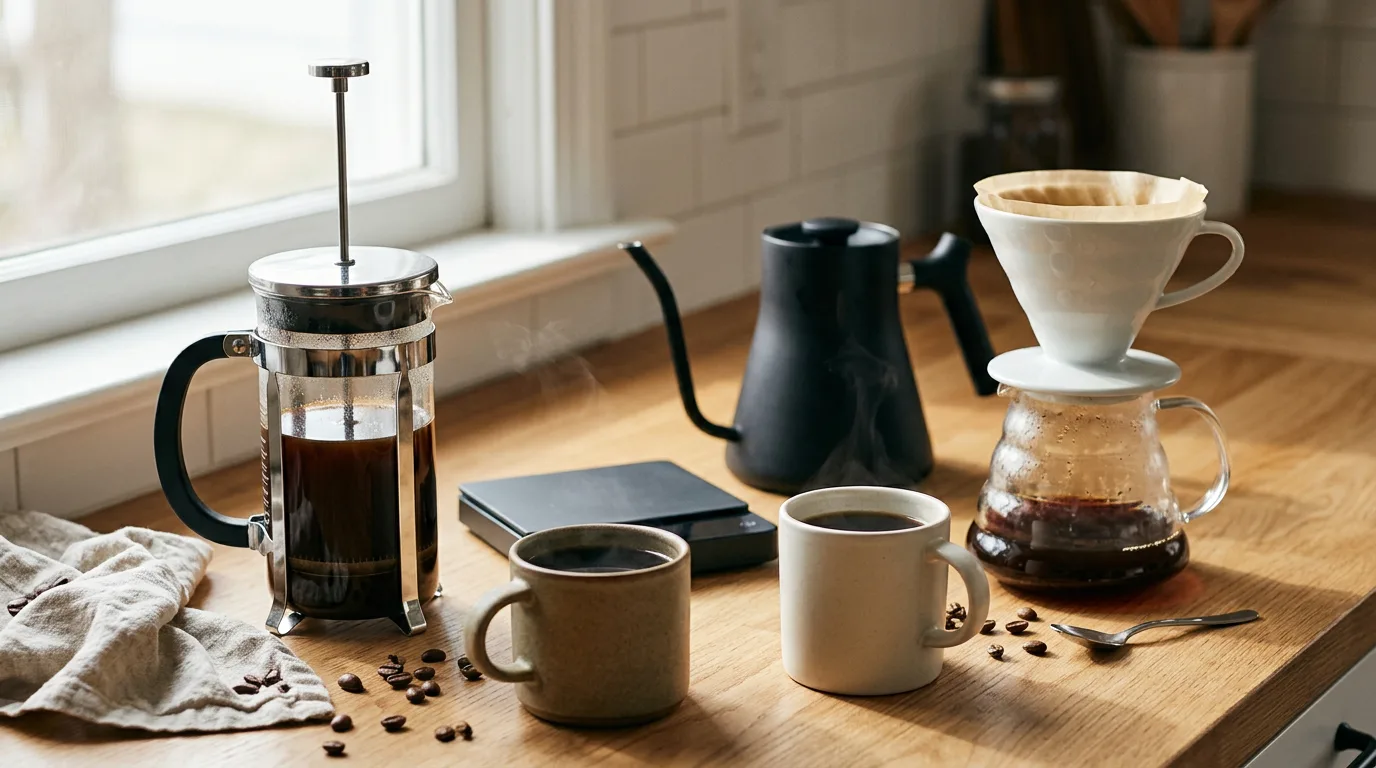
Choose a French press for a rich, heavy, full-bodied cup with almost no technique. Choose a pour-over for a clean, bright, nuanced cup and a more hands-on ritual. The French press steeps coffee in water and filters it through a metal mesh, so oils and fine particles stay in the cup. The pour-over drips water through coffee in a paper filter, which traps oils and sediment for clarity. Both benefit hugely from a scale and a kettle with temperature control.
Why I compared them
The French press was the first "proper" coffee brewer I ever owned. It was the step up from a drip machine that made me realize coffee could taste different from one bag to the next. Years later, I bought a cone dripper and fell in love with how clear and bright the coffee tasted.
Now I use both almost every week, and people constantly ask me which one they should buy. The honest answer depends on what you want from your coffee and your mornings.
Both are also among the cheapest, simplest and least wasteful ways to make excellent coffee at home. Neither needs electricity beyond a kettle, neither uses pods, and both can last for decades. If you're moving away from a drip machine or a pod brewer, either one is a big step up in flavor.
To give a proper answer, I brewed the same beans, at the same dose, in both brewers, side by side, for several weeks. I paid attention to flavor, body, time, effort, cleanup and how forgiving each one was on a sleepy morning.
What you'll learn
- How each method works and why they taste so different.
- Step-by-step recipes for both.
- The tools that help most, whichever you choose.
- Side-by-side differences in taste, time, heat and cleanup.
- Which brewer suits you, and when to use each.
French press vs pour-over at a glance
| Feature | French press | Pour-over |
|---|---|---|
| Method | Immersion (steeping) | Percolation (drip-through) |
| Filter | Reusable metal mesh | Paper cone filter |
| Body | Heavy, rich, textured | Light to medium, clean |
| Flavor | Rounded, dense, comforting | Bright, clear, nuanced |
| Sediment | Some fine silt | Almost none |
| Skill needed | Low, very forgiving | Moderate, technique matters |
| Active time | About 1 minute | 2.5-3.5 minutes of attention |
| Cleanup | Messier | Very easy |
| Ongoing cost | None | Paper filters |
A short history of both brewers
The paper-filter pour-over has a surprisingly specific origin. In 1908, Melitta Bentz, a homemaker in Dresden, Germany, fed up with bitter, gritty coffee, punched holes in a brass pot and lined it with blotting paper from her son's school notebook. Her invention became one of the world's best-known coffee companies, and paper filtering spread across Europe and beyond.
The French press, despite its name, took its familiar shape in Italy. Plunger-style coffee makers were developed in France in the 1800s, but the modern design with a mesh filter and sealed plunger was patented by Italian designers in 1929 and refined over the following decades. It became especially popular in France and later across Europe and North America.
Modern specialty pour-over took off in the early 2000s, when Japanese cone drippers with a single large hole and spiral ribs became favorites of baristas around the world. Their design gives the brewer more control over flow, and they helped make manual brewing fashionable again.
How I tested
Over several weeks, I brewed the same beans in both methods on the same mornings: a Brazilian medium roast, a washed Ethiopian light roast and a darker house blend. I used about 1.05 ounces (30 grams) of coffee for each brew, weighed everything on the same scale and used a temperature-controlled kettle.
For the French press, I used a 4-minute steep and a gentle press. For the pour-over, I used a 15-second bloom and one long, slow main pour. I tasted each cup black at several temperatures as it cooled, and noted body, clarity, sweetness, acidity, bitterness and how easy each was to repeat on a sleepy weekday.
The clearest pattern: the Brazilian and the house blend were at their best in the French press, while the Ethiopian was far more exciting as a pour-over.
Immersion vs percolation: the core difference
Everything about the two methods flows from one difference in how water meets coffee.
A French press is an immersion brewer. All the coffee sits in all the water for the whole brew. Extraction happens evenly and steadily, and then you separate the grounds with a filter at the end.
A pour-over is a percolation brewer. Fresh water flows through a bed of coffee and drains out continuously. Because new water keeps arriving, it keeps pulling flavor efficiently, and how you pour affects how evenly it extracts.
Immersion is forgiving and consistent; percolation is more efficient and more sensitive to technique. For the science behind it, see coffee extraction explained.
Two tools that improve both methods
Whichever brewer you choose, two tools make the biggest difference to consistency.
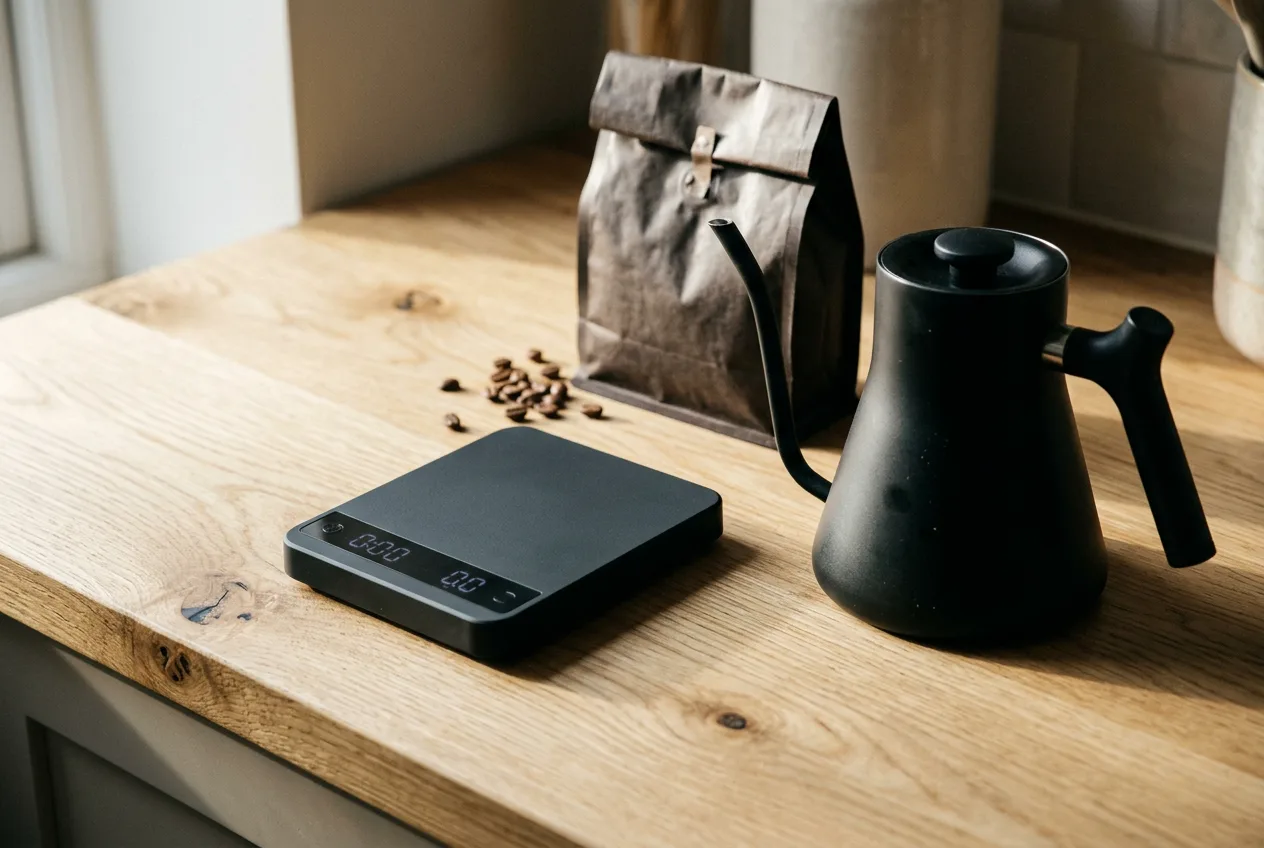
A digital scale
Scoops and eyeballing lead to coffee that's strong one day and weak the next. A scale lets you weigh the coffee and water precisely. Some coffee scales include a built-in timer and even a ratio function: enter your ratio, add the coffee, and the scale tells you how much water to pour and starts timing automatically. It's a small luxury that makes early mornings easier.
A kettle with temperature control
Water temperature directly affects how fast and how much flavor is extracted. A kettle with temperature settings removes the guesswork. For pour-over, a gooseneck spout is especially helpful, letting you pour slowly and precisely without stirring up the coffee bed.
Our tip: If you can only buy one upgrade, buy the scale. It makes every brewer more consistent, and good ones aren't expensive.
The French press explained
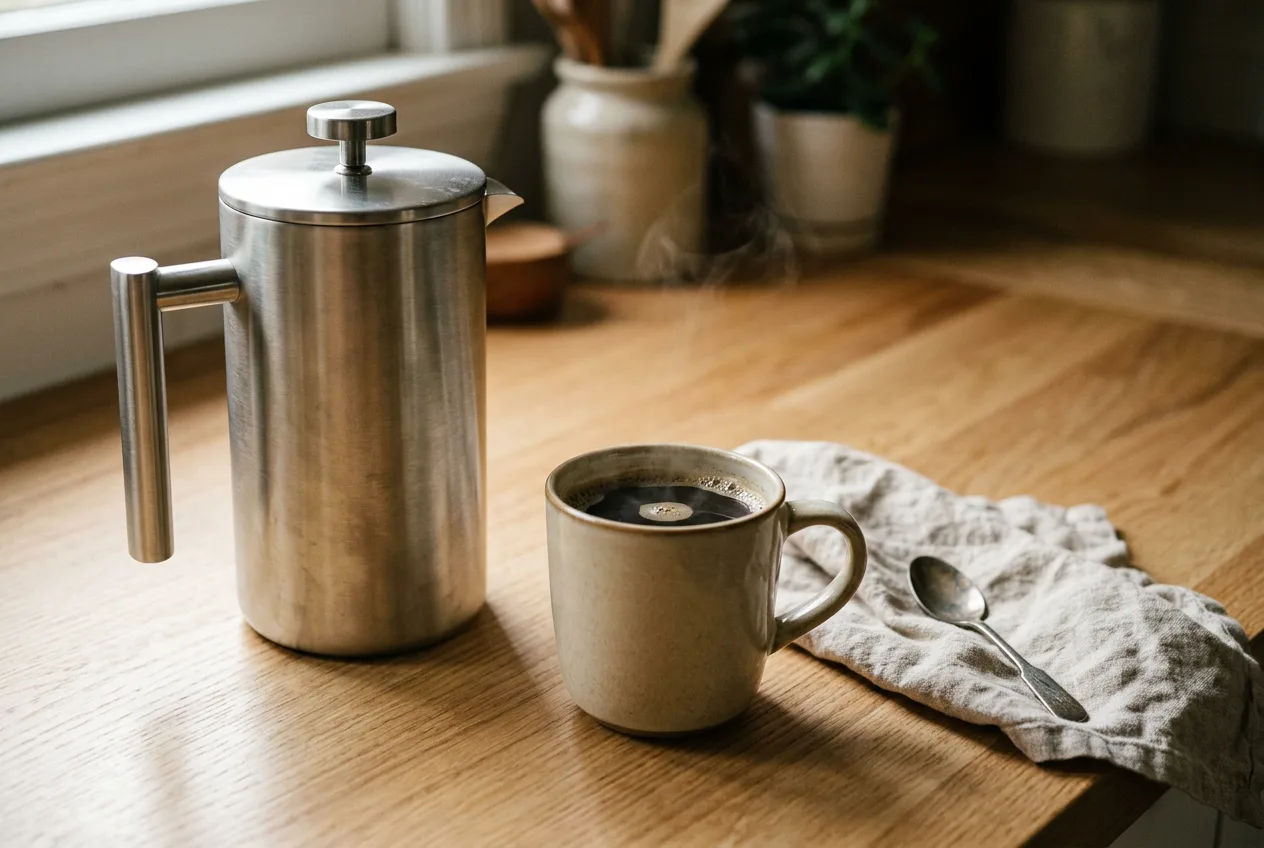
A French press is a carafe, usually glass or stainless steel, with a plunger attached to a fine metal mesh filter. You steep coarse coffee in hot water, then press the plunger to trap the grounds at the bottom.
Because the metal mesh lets natural coffee oils and very fine particles through, the coffee is full-bodied, heavy, textured and rich. It has a weight on the tongue that paper-filtered coffee doesn't.
It's a great middle ground for anyone moving up from a drip machine. You get much more control over ratio, temperature and steep time, but it's very forgiving and needs no special pouring skills.
Choosing a French press
- Classic glass: a glass carafe in a protective frame lets you watch the coffee steep and the plunger work. It's affordable but loses heat fairly quickly.
- Insulated stainless steel: double-walled models keep coffee hot much longer, during and after brewing. Ideal if you sip slowly or brew for two.
- Size: a "4-cup" press makes about two mugs; an "8-cup" makes three or four.
How to brew French press coffee
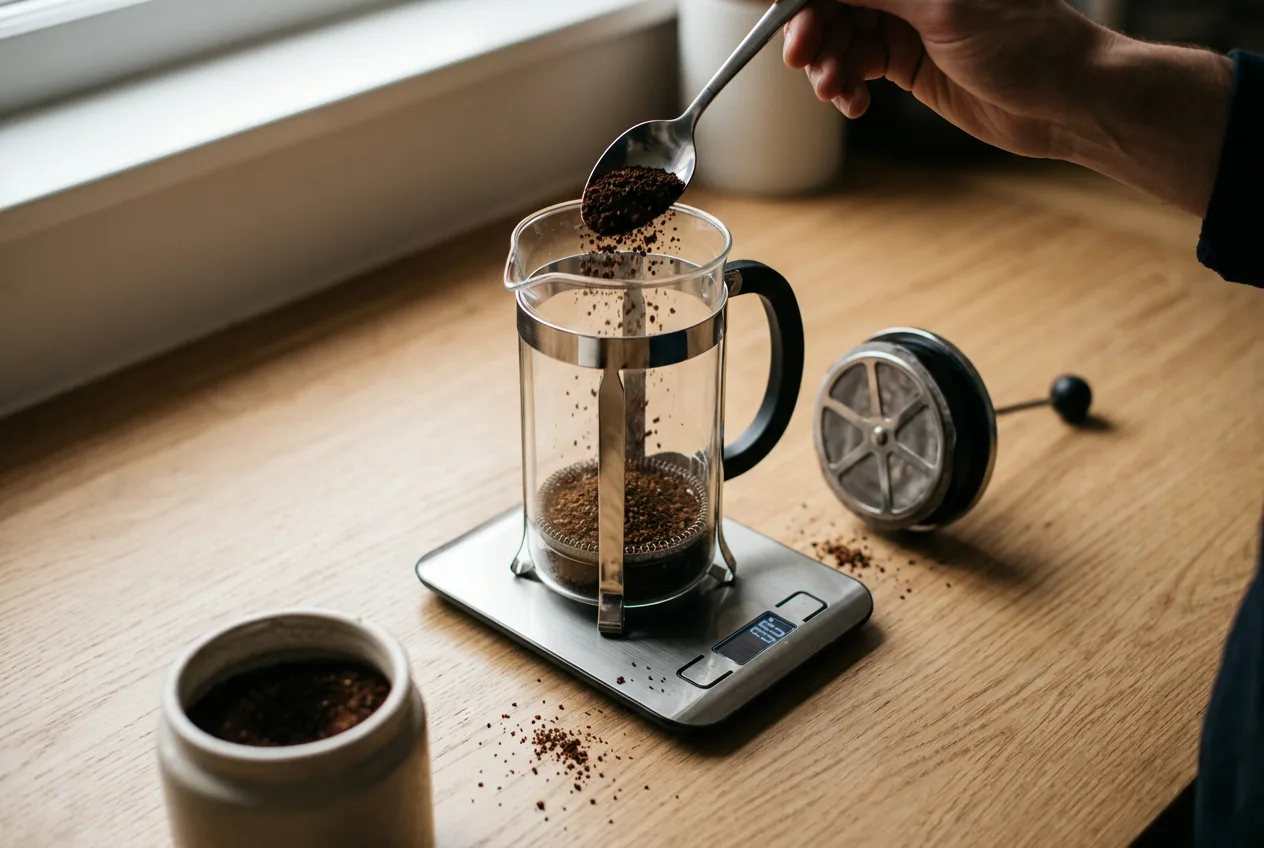
- Set up on the scalePlace the empty carafe on the scale, remove the lid and plunger, and zero the scale.
- Add the coffeeAdd 0.7 to 1.05 ounces (about 20 to 30 grams) of coarsely ground coffee. The higher end gives a bolder cup with a bit more caffeine.
- Pour the waterPour hot water over the grounds until you reach your target weight. Technique doesn't matter much; just make sure all the coffee is wet.
- Steep for 4 minutesLeave it alone. A crust of grounds will form on top.
- Move it off the scaleBefore pressing, move the press to a sturdy counter. Pressing on a scale can damage it.
- Press gentlyRest your palm on the knob and let your hand's weight push it down smoothly. Forcing it stirs up silt and can spray hot coffee.
- Pour it all outServe right away, or decant into a carafe. Coffee left sitting on the grounds keeps extracting and turns bitter.
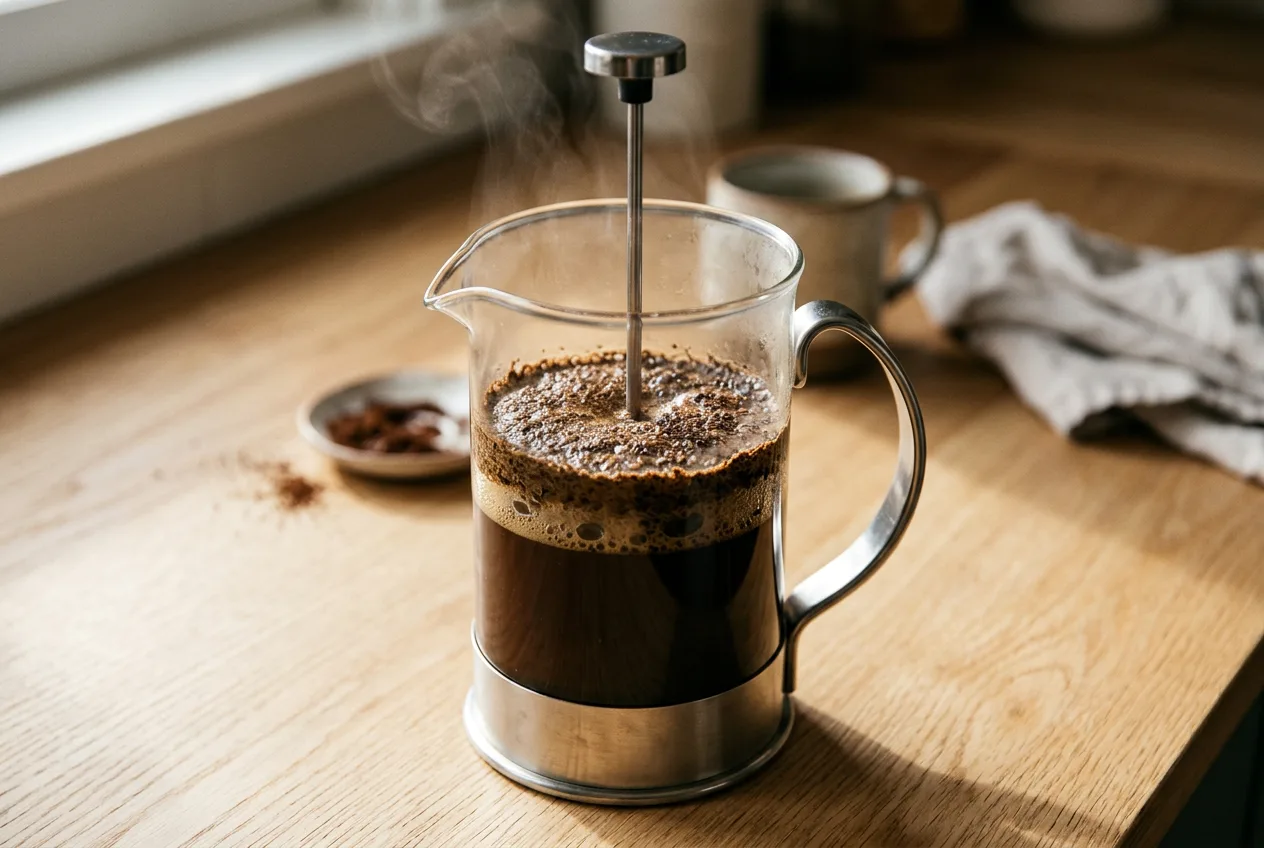
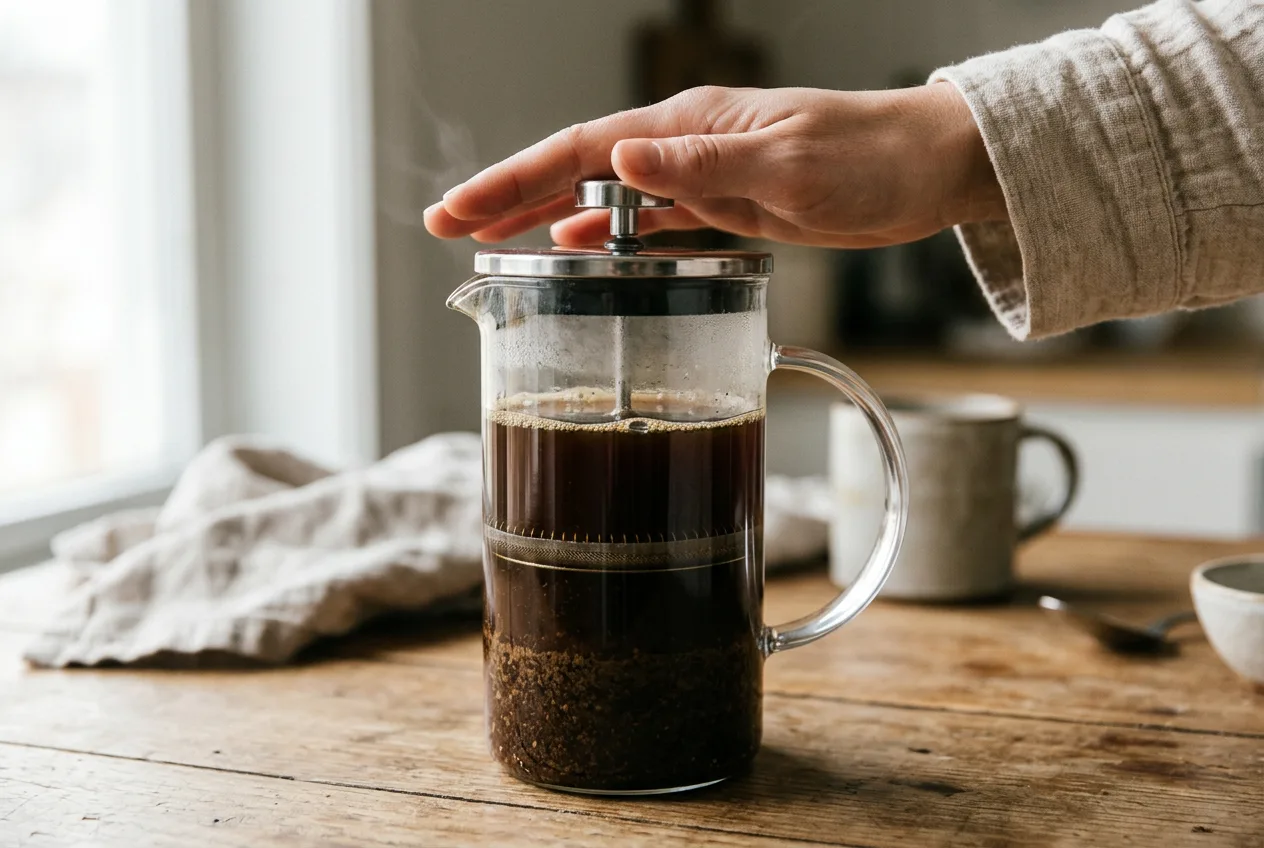
Our tip: For a cleaner French press cup, break the crust after 4 minutes, skim off the floating foam and grounds with two spoons, then wait another few minutes before pressing gently. Many fines settle to the bottom, and the cup is noticeably cleaner.
The pour-over explained
A pour-over uses a cone-shaped dripper, made of ceramic, glass, plastic or metal, lined with a paper filter. You pour hot water over the coffee in stages, and it drips through into a carafe or mug below.
Cone drippers with a steep angle and a large single hole, like the popular V60 style, are loved for clean, vibrant cups that highlight a coffee's origin character, delicate acidity and aroma.
Unlike the French press, pour-over invites you to take part. Your pour rate, height, turbulence and timing all shape the cup. Many people find it a calm, almost meditative way to start the day, and it rewards practice.
Preheating matters for pour-over
Ceramic and glass drippers absorb a surprising amount of heat. If you pour hot water onto a cold dripper, it drops the temperature of the brew right at the start and throws off your recipe.
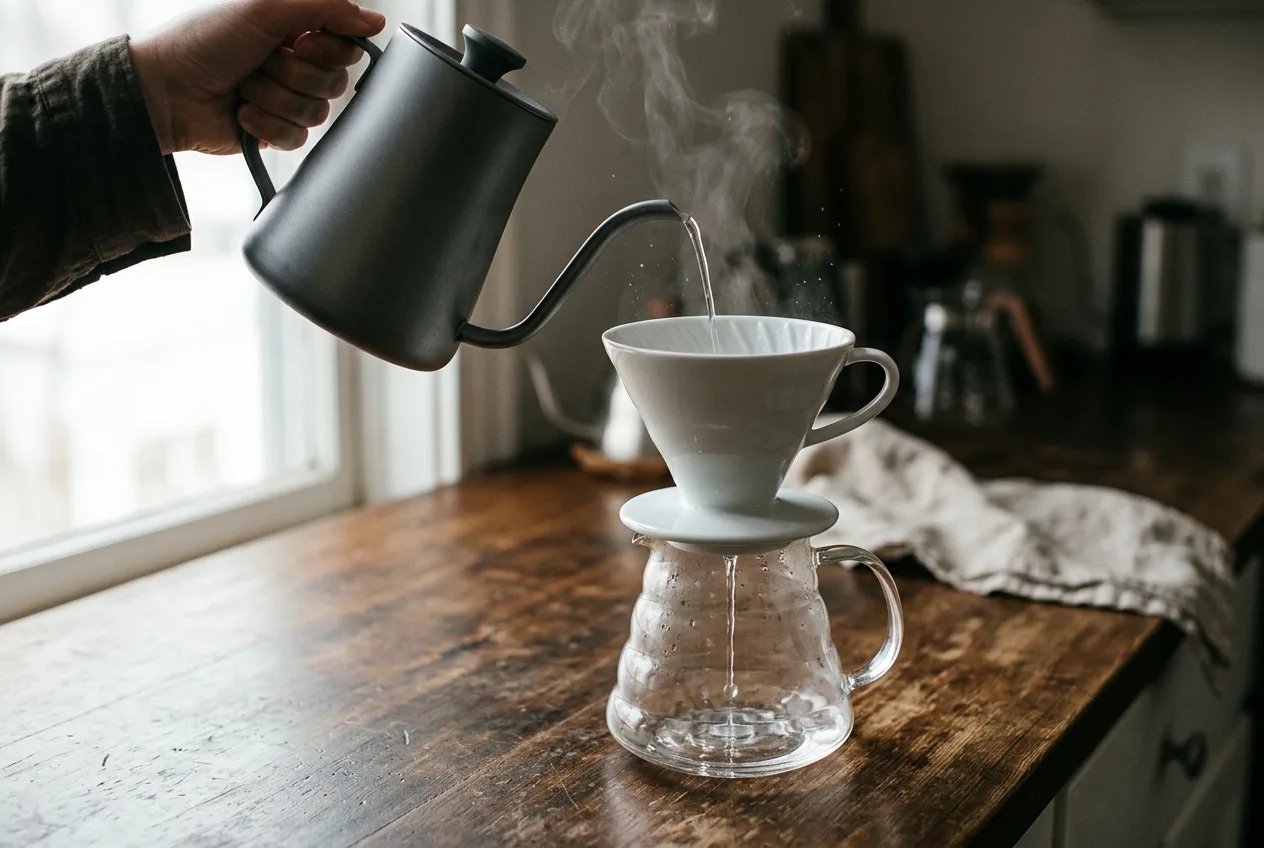
The fix is simple: before adding the filter and coffee, pour hot water around the inside of the dripper so it runs into the carafe or mug. Let it warm both, then discard the water.
How to brew pour-over coffee
- PreheatSet the empty dripper on the carafe or mug, pour hot water around it, then discard the water.
- Fold and fit the filterFold the filter along its seam so it sits snugly against the cone. Many people rinse it with hot water to remove papery taste, then discard that water.
- Add coffee and level itPut everything on the scale, zero it, and add about 1.05 ounces (30 grams) of medium-fine coffee. Shake gently to level the bed.
- BloomPour about twice the coffee's weight in water (around 2.1 ounces) to wet all the grounds.
- Wait about 15 secondsLet the coffee release gas. It bubbles and rises: that's the bloom.
- Main pourPour the rest of the water slowly in circles from the center outward, avoiding the paper, up to about 17 to 19 ounces total.
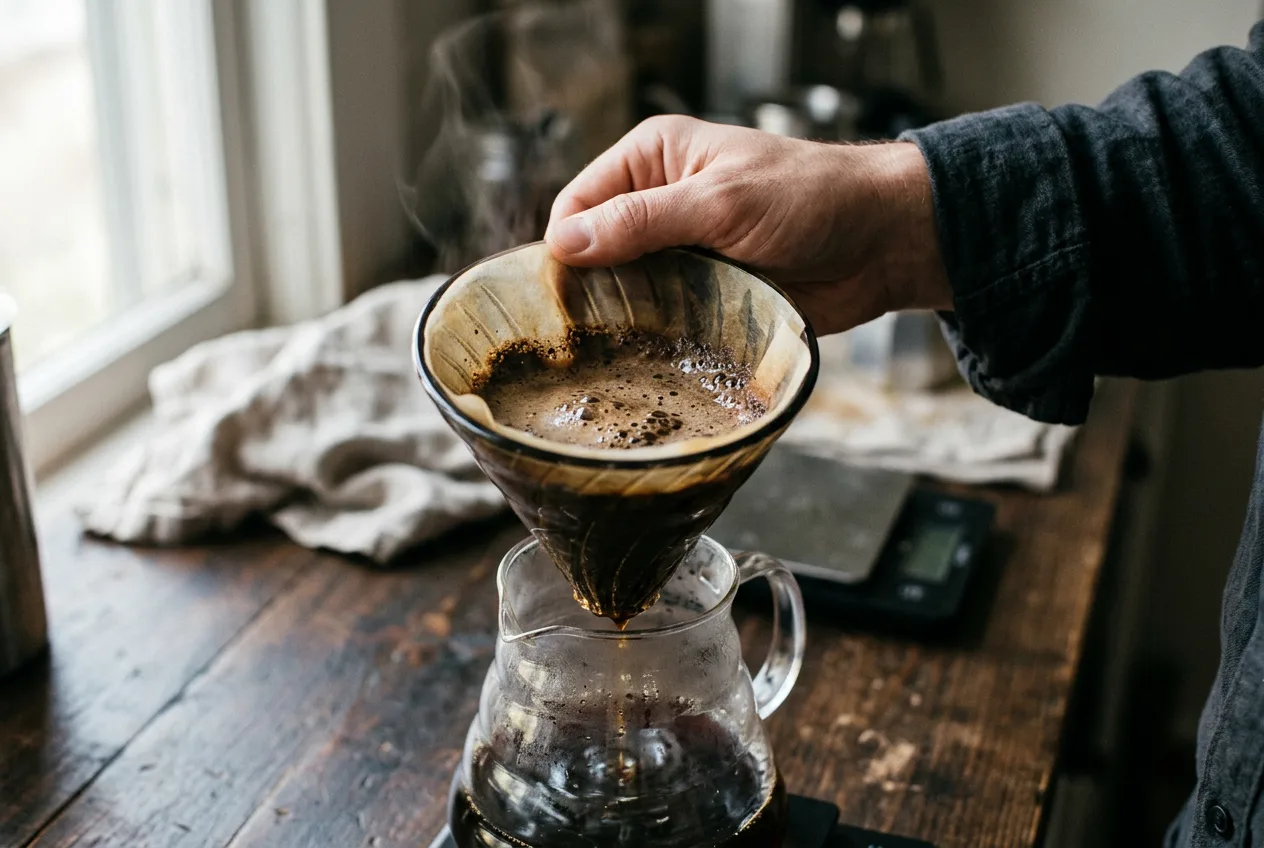
- SwirlNear the end, give the dripper a gentle swirl to flatten the bed and wash grounds off the walls.
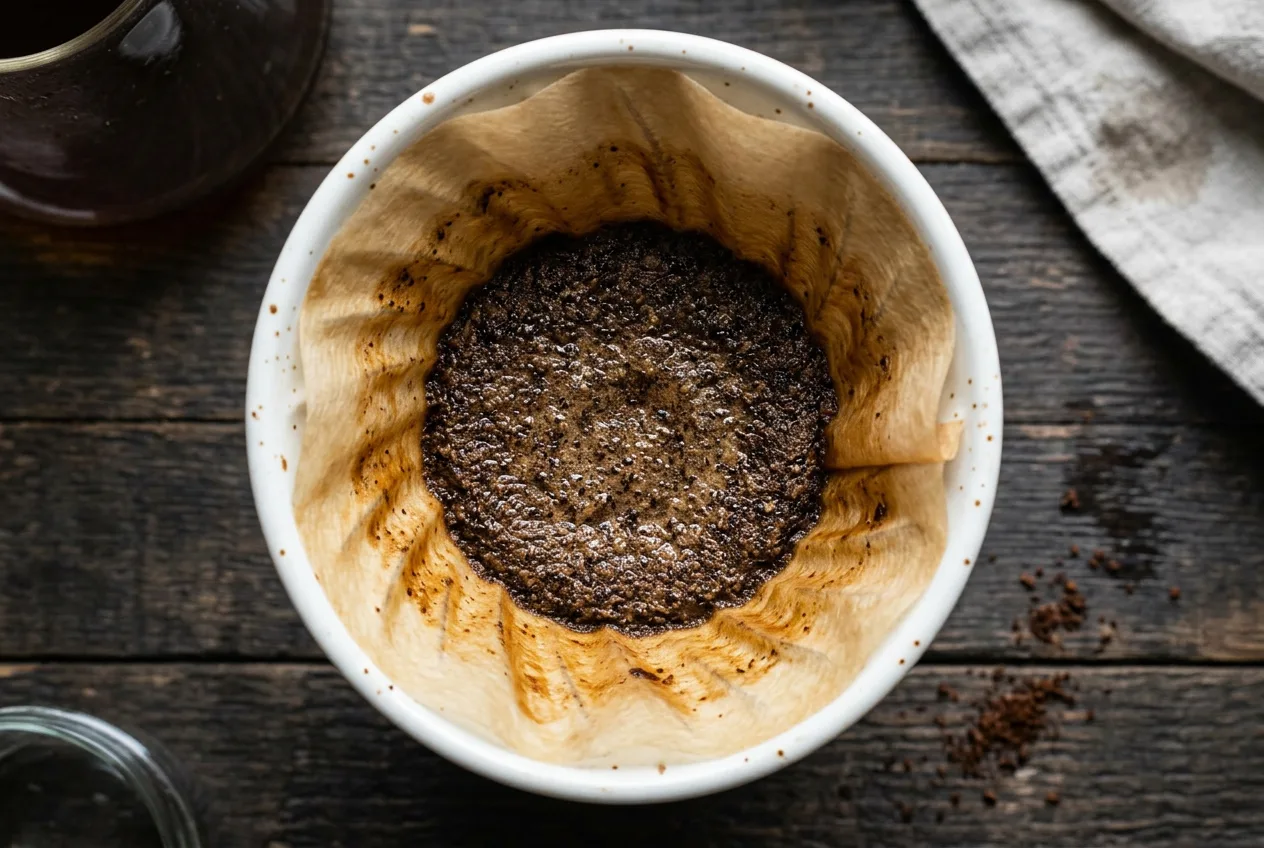
- Let it drainLet all the water drip through. A flat, even bed means even extraction.
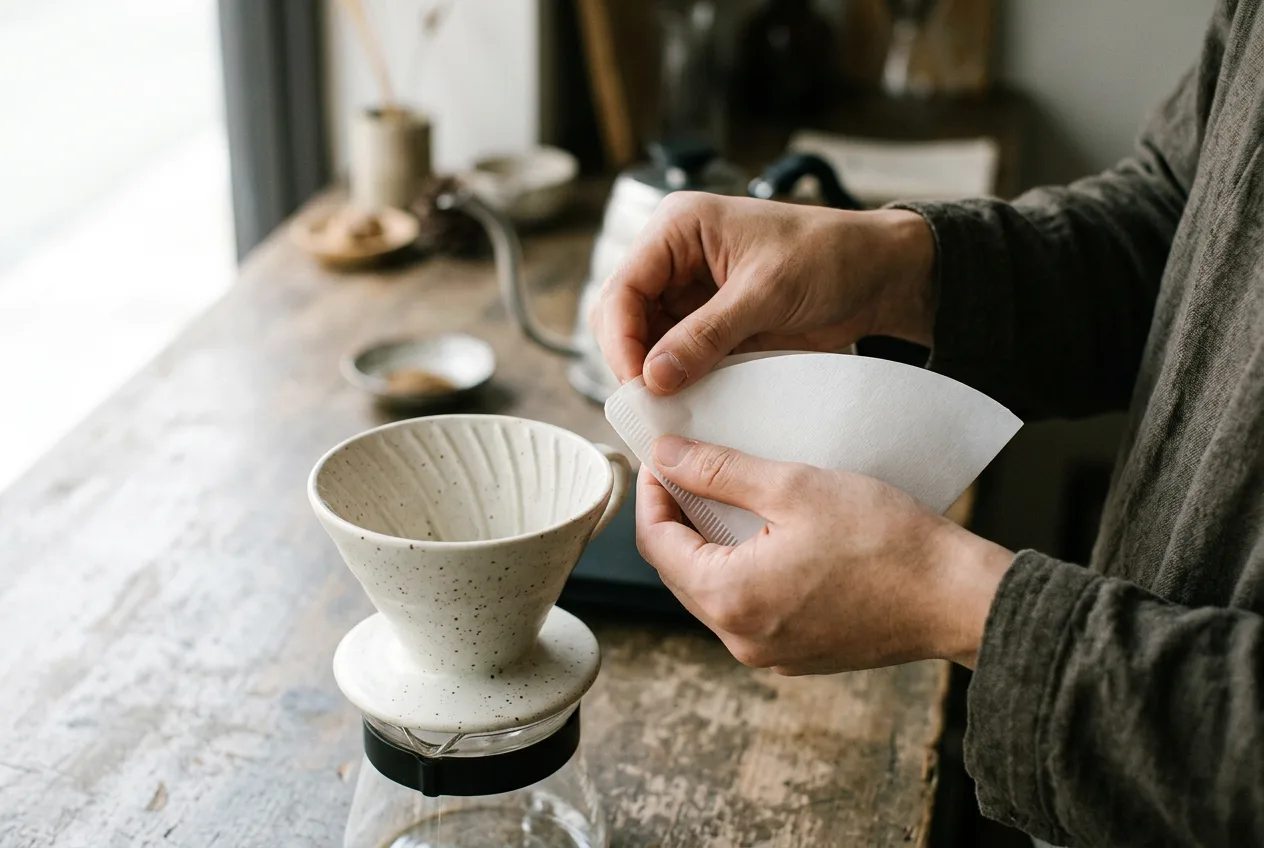
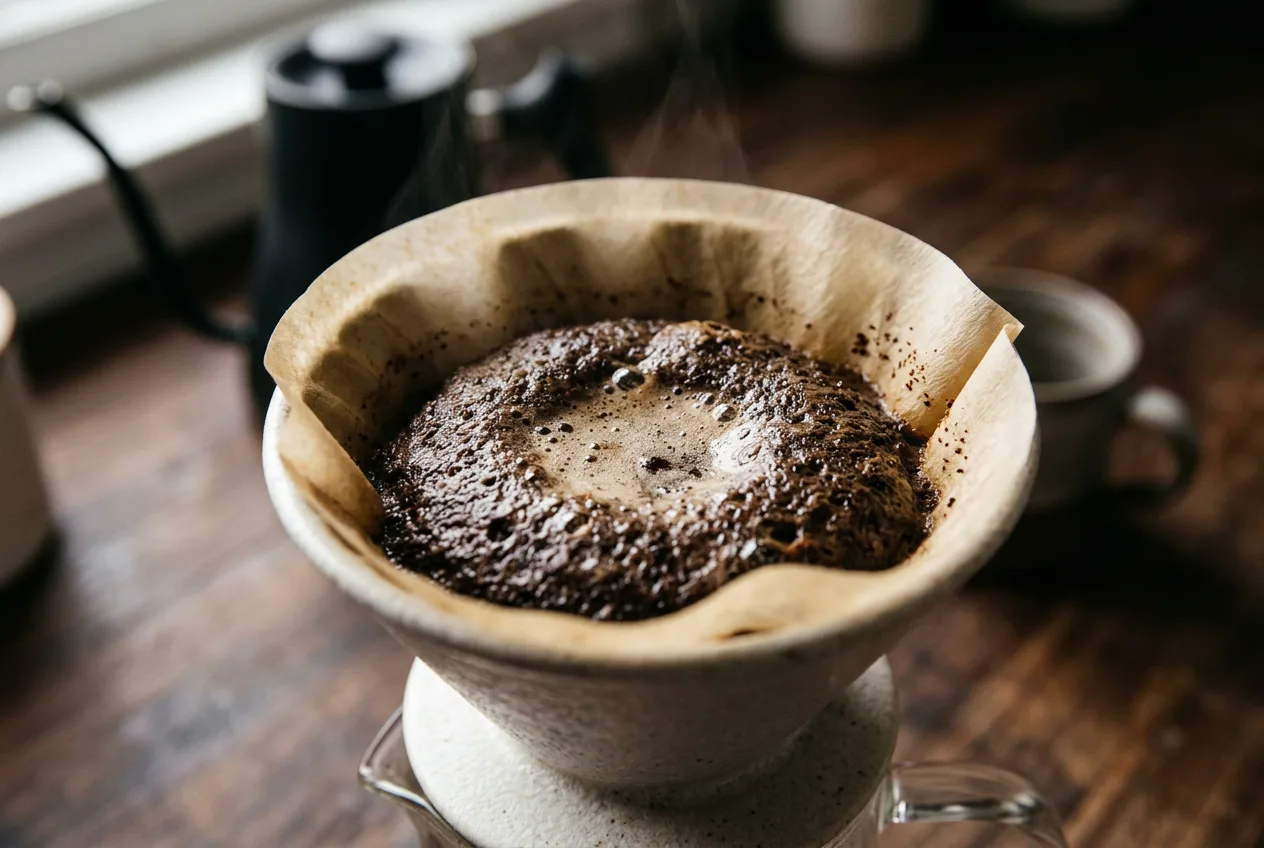
The bloom matters because fresh coffee holds carbon dioxide. When hot water hits it, the gas escapes and can push water away. Letting it vent first means the main pour extracts evenly. More in coffee freshness, resting and degassing.
Continuous pour vs pulse pouring
There are two main ways to do the main pour.
- One long, slow pour: a steady stream in circles until you reach the target. It keeps the temperature and agitation consistent.
- Pulse pouring: pour in stages, such as about 3.5 ounces at a time, letting the water level drop near the bed between pours. It lengthens contact time and can increase sweetness.
Whichever you choose, keep the kettle spout fairly low, just a few inches above the coffee, and pour gently. Pouring from high up adds turbulence that can push fines into the filter and slow the drawdown. Aim the stream at the coffee, not the paper, so water actually passes through the grounds.
Neither is wrong. I use one long pour for everyday coffee and pulse pouring when I want to coax more sweetness from a light roast.
Two of my favorite recipes
Big-batch French press for four
- DoseAbout 2.1 ounces (60 grams) of coarse coffee in an 8-cup press.
- PourAbout 34 fluid ounces (1 liter) of water just off the boil.
- Steep4 minutes, then break the crust and skim the foam.
- SettleWait 3 to 5 minutes more for the fines to sink.
- Press and decantPress gently just to the surface and pour everything into a thermal carafe.
Sweet light-roast pour-over
- Dose0.7 ounces (20 grams) of medium-fine light roast.
- BloomPour about 1.5 ounces of water at about 205°F and wait 30 to 45 seconds.
- PulseAdd the rest in four equal pulses up to about 11 ounces, letting the level drop between pours.
- SwirlGive a gentle swirl after the last pour.
- FinishAim for a total time around 3 minutes. Grind finer if it's faster and tastes sour.
Choosing a pour-over dripper
- Ceramic: holds heat well once preheated, heavy and durable. Needs thorough preheating.
- Glass: looks beautiful and lets you watch the brew; loses heat a bit faster.
- Plastic: inexpensive, light and surprisingly good at holding heat. Great for beginners and travel.
- Metal: durable and quick to heat up, ideal for camping.
- Cone vs flat-bottom: cones with one large hole give more control but need better technique; flat-bottom drippers are more forgiving.
Grind size
Grind is where people go wrong most often.
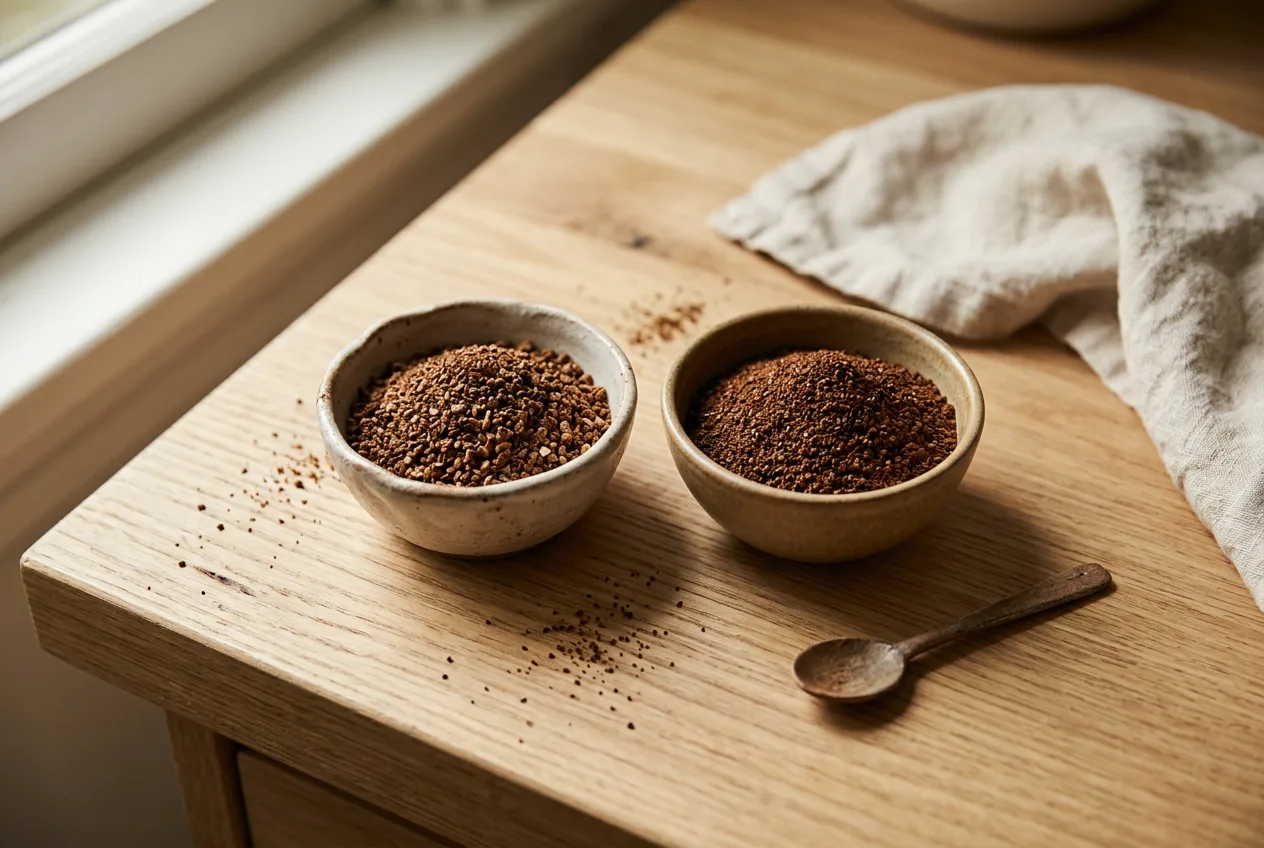
- French press: coarse, like breadcrumbs or coarse sea salt. Too fine and the coffee turns muddy and bitter, and the plunger gets hard to push.
- Pour-over: medium-fine, like table salt. Too fine and it drains slowly and tastes bitter; too coarse and it rushes through and tastes sour and thin.
A burr grinder gives much more even particles than a blade grinder, which matters for both methods. See burr vs blade grinder.
Ratios and recipes
| French press | Pour-over | |
|---|---|---|
| Coffee | 0.7-1.05 oz (20-30 g) | ~1.05 oz (30 g) |
| Water | ~11-17 fl oz | ~17-19 fl oz |
| Ratio | ~1:15 to 1:17 | ~1:16 to 1:18 |
| Water temp | ~200°F (just off the boil) | ~195-205°F |
| Grind | Coarse | Medium-fine |
| Time | 4 min steep | 2.5-3.5 min total |
These are starting points. Adjust the ratio for strength and the grind for taste. For more, see coffee brewing ratios explained.
Flavor and body
With the same beans, the two cups were strikingly different.
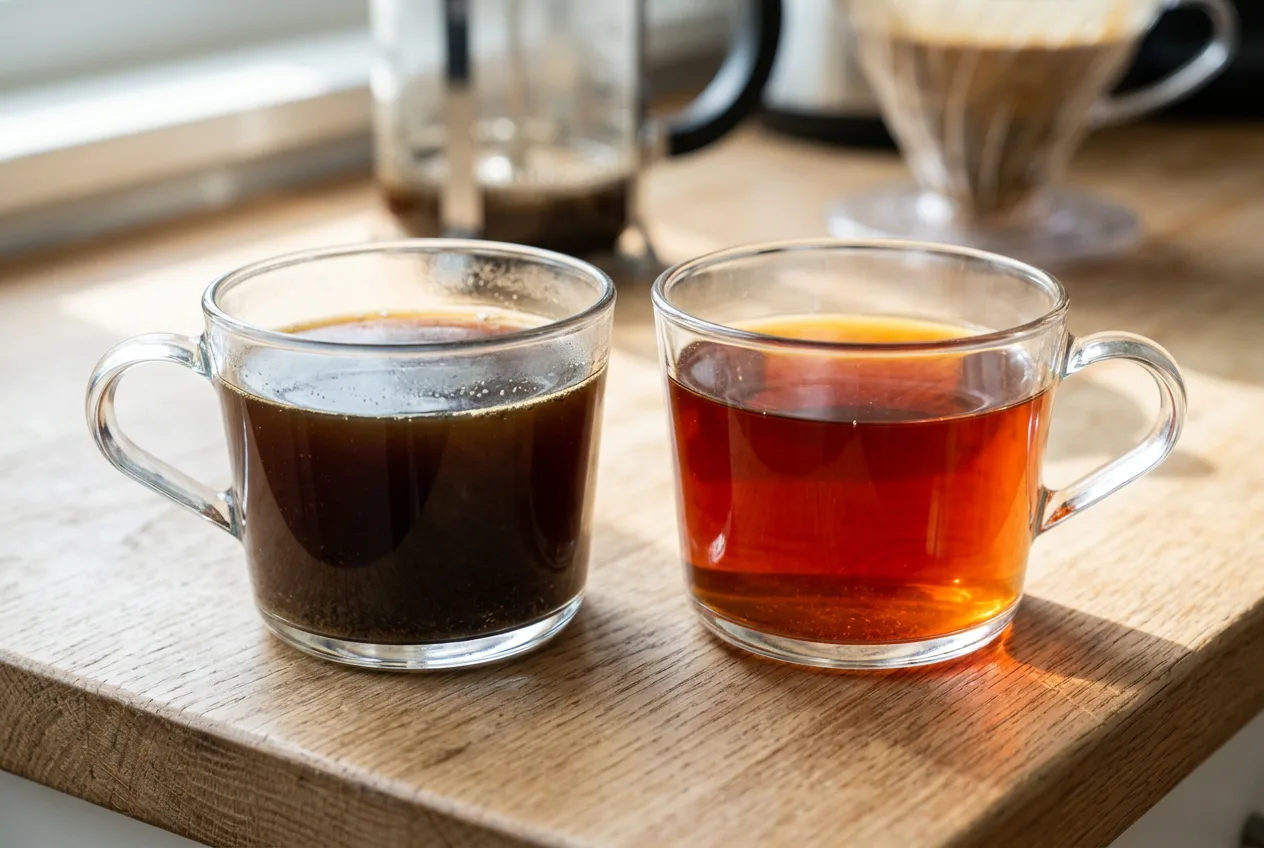
The French press was bold, heavy and textured. The metal mesh lets tiny coffee particles and natural oils stay in the cup, so it feels round, dense and comforting. Chocolate and nutty notes came forward; bright fruit was more muted.
The pour-over was clean, crisp and light-to-medium in body. The paper trapped almost all the sediment and much of the oil, so subtle floral, fruity and nutty notes stood out clearly, and the acidity felt lively rather than flat.
My side-by-side impressions (same beans)
Why paper and metal taste so different
The filter is the biggest reason the two cups taste different, even when everything else is the same.
A metal mesh has holes large enough to let tiny particles of coffee, called fines, and droplets of coffee oil pass through. Those suspended particles and oils give French press coffee its heavy, velvety, slightly cloudy body. They also coat your tongue, which softens acidity and makes the flavors feel rounder and less distinct.
A paper filter is much finer and also absorbs oil. Almost no fines get through, and much of the oil stays in the paper. The coffee is clear, lighter in body and cleaner on the finish, so subtle aromas and acidity come through more sharply.
You can see this for yourself with a simple test. Pour a little French press coffee and a little pour-over into two clear glasses and hold them up to a window. The French press will look slightly hazy, with a thin film of oil on the surface; the pour-over will look clear and bright. Let the French press sit for ten minutes and you'll see a fine layer of sediment settle at the bottom.
Interestingly, if you brew both at the same ratio, the actual strength, the amount of dissolved coffee, can be quite similar. The French press just feels stronger because of its texture. That's a good reminder that "strong" and "heavy" aren't the same thing.
Water: the ingredient people forget
Coffee is about 98% water, so the water you use matters for both methods, and especially for pour-over, which shows every detail.
- Use filtered water if your tap water tastes of chlorine or is very hard.
- Avoid distilled water; it extracts poorly and tastes flat.
- Temperature: about 195 to 205°F for both. Just off the boil works for French press; for light roasts in a pour-over, hotter water often tastes sweeter.
- Freshly boiled: water that's been reboiled many times can taste flat.
For a deeper dive, see water chemistry for coffee.
Filters compared
The French press uses a reusable stainless steel mesh. No paper filters to buy and less waste, but a little fine sediment usually ends up at the bottom of your cup. Leave the last sip.
The pour-over uses single-use paper filters. They remove fines and oils, giving a transparent, sediment-free cup and very easy cleanup. Unbleached filters and grounds can go straight into a compost bin. For more on coffee waste, see coffee pods and their environmental impact.
Technique and skill
The French press is forgiving and low-maintenance. Once coffee and water are combined, time does the work. Pouring speed, pattern and kettle shape barely matter.
Pour-over is skill-dependent and interactive. Grind size, water temperature, filter fit, bloom timing, pouring rhythm and the final swirl all affect extraction. That makes it more demanding, but also more rewarding: you can keep improving for years.
Time and convenience
A French press follows a fixed timeline: about a minute to set up, a strict 4-minute steep and 15 to 20 seconds to press. During the steep you're free to make toast, pack a lunch or check messages.
A pour-over takes roughly 2.5 to 3.5 minutes of active attention. Between preheating, blooming, pouring slowly and swirling, you're at the counter the whole time. That's either a downside or the whole point, depending on how you feel about mornings.
Consistency is another hidden time saver. Because the French press is so forgiving, you rarely have to throw a cup away and start again. A pour-over that goes wrong, with a clogged filter or a channeled bed, sometimes means a second attempt, especially while you're learning.
For brewing several cups at once, the French press is easier, especially an insulated one.
Keeping it hot
A glass French press loses heat moderately during the 4-minute steep. An insulated stainless steel press holds heat extremely well, both while brewing and afterward on your desk.
Pour-over coffee cools faster. It drips in thin streams through open air into the carafe, and ceramic or glass drippers absorb heat if not preheated. It's best enjoyed soon after brewing, or poured into a preheated thermal carafe.
Cleanup
Cleaning a French press means scooping wet grounds out of the bottom and rinsing the mesh filter thoroughly so stale oils don't build up. Every so often, take the plunger apart and wash each layer. Avoid pouring lots of grounds down the sink; they can clog pipes.
Once a week, I fill the press with hot water and a drop of dish soap, plunge it up and down a few times, then rinse well. Every month or so, I unscrew the filter assembly completely and clean each mesh layer separately. It takes a couple of minutes and makes a noticeable difference to how fresh the coffee tastes.
Pour-over cleanup is quick and tidy. Lift out the filter with the grounds inside, drop it into compost or trash, and rinse the dripper with warm water. That's it.
Best beans for each
- French press: medium to medium-dark roasts shine, with chocolate, caramel and nutty notes and lots of body. Brazilian, Sumatran and many blends are great choices.
- Pour-over: light to medium roasts and single origins show off what the paper filter does best: clarity, florals and fruit. Ethiopian and Kenyan coffees are classic pour-over picks.
- Both: freshness matters. Use beans within a few weeks of roasting and grind just before brewing.
For help choosing, see how to choose coffee beans and coffee growing regions and flavor.
Common mistakes
French press
- Grinding too fine: muddy, bitter coffee and a stiff plunger.
- Leaving coffee in the press: it keeps extracting and turns bitter. Pour it all out.
- Pressing too hard or too fast: stirs up silt and can spray hot coffee.
- Using pre-ground coffee: it's usually too fine and already stale.
- Not cleaning the mesh: old oils turn rancid and taint every cup.
Pour-over
- Skipping the scale: inconsistent strength from day to day.
- Not preheating: the brew starts too cool.
- Pouring onto the paper: water bypasses the coffee and the cup tastes weak.
- Pouring too fast: channels form and extraction is uneven.
- Skipping the bloom: trapped gas pushes water away from the grounds.
Troubleshooting
| Problem | French press fix | Pour-over fix |
|---|---|---|
| Bitter | Coarser grind, shorter steep, decant right after pressing | Coarser grind, cooler water, faster pour |
| Sour or thin | Finer grind, longer steep, more coffee | Finer grind, hotter water, slower pour |
| Muddy or gritty | Coarser, more even grind; press gently; skip the last sip | Check the filter is seated properly |
| Plunger hard to push | Grind is too fine | n/a |
| Very slow drawdown | n/a | Grind coarser; avoid too much agitation |
| Uneven bed after brewing | n/a | Level the dry bed, pour more evenly, swirl at the end |
For a full guide to fixing flavor problems, see why coffee tastes bitter or sour.
Caffeine: is there a difference?
Not much, when you use the same amount of coffee. Caffeine dissolves easily, so both methods extract most of it. The bigger factors are how much coffee you use, the type of bean and the size of your cup.
A typical 8-ounce cup from either method has roughly 80 to 120 mg of caffeine, depending on the dose and beans. A French press that steeps longer or uses more coffee will contain a little more. Robusta-heavy blends contain much more than arabica. For more, see caffeine myths debunked and arabica vs robusta.
Brewing on the go
Both methods travel well, which is one reason I love them.
- Travel French press: insulated travel mugs with a built-in plunger let you brew and drink from the same vessel.
- Plastic or metal dripper: light, unbreakable and tiny. Pack a few filters and a hand grinder.
- Hotel rooms: a kettle, a small dripper and pre-weighed doses of fresh coffee beat any in-room pod machine.
- Camping: a metal French press or a collapsible dripper works over a camp stove.
A note on cafestol and cholesterol
Coffee contains natural oils with compounds called diterpenes, mainly cafestol and kahweol. In unfiltered coffee, such as French press, boiled coffee and Turkish coffee, more of these end up in your cup. Research has found that cafestol can raise LDL cholesterol in some people when unfiltered coffee is consumed regularly in larger amounts.
Paper filters trap most of these oils, so pour-over and drip coffee contain very little. If you have high cholesterol or have been advised to watch it, it's worth favoring paper-filtered coffee or talking to your doctor. For most people, an occasional French press is not a concern. More in health benefits of coffee.
Waste and cost
Both are inexpensive to buy and among the lowest-waste ways to make coffee. A French press produces nothing but coffee grounds, which you can compost. A pour-over adds a paper filter, which is also compostable if unbleached.
Over a year, the only ongoing cost difference is paper filters, which are cheap. Either one costs far less per cup than pods or takeaway coffee.
Which is better with milk?
If you take milk, the French press has an edge. Its heavier body and rounder flavor stand up better to milk, and the result tastes rich and comforting. Pour-over coffee is so delicate that milk can wash out much of what makes it special.
For a café au lait at home, brew a slightly stronger French press, about 1:13 to 1:14, and mix it with an equal amount of hot milk. For pour-over, I'd recommend drinking it black, especially with light roasts.
Cold brew and iced coffee
Both brewers do double duty for cold coffee.
- French press cold brew: add coarse coffee and cold water at about 1:8, stir, cover and leave in the fridge for 12 to 18 hours. Press slowly and pour. Dilute with water or milk to taste.
- Iced pour-over: replace about a third to half of the brewing water with ice in the carafe. Brew hot directly onto the ice for a bright, aromatic iced coffee in minutes.
I compare the two styles in detail in iced coffee vs cold brew.
Other brewers in the same families
| Brewer | Type | Cup style |
|---|---|---|
| Immersion dripper with valve | Immersion, paper filter | French press ease, pour-over clarity |
| Hand-pressed plunger brewer | Immersion plus pressure | Clean, versatile, quick |
| Thick-filter glass carafe | Percolation | Extra clean, light body |
| Flat-bottom dripper | Percolation | More forgiving pour-over |
| Automatic drip machine | Percolation | Hands-off, batch brewing |
If you like French press convenience but want a cleaner cup, an immersion dripper with a valve is a great hybrid: steep like a French press, then release through a paper filter.
How I use both
On weekday mornings, the French press usually wins. I add coffee and water, start a timer, make breakfast, press and pour. It's almost impossible to get wrong, even half asleep.
On weekends, or when I open a bag of light-roasted single-origin coffee, I reach for the pour-over. I enjoy the few quiet minutes of pouring, and the coffee rewards the attention with flavors I'd miss in a French press.
When friends come over, the insulated French press makes four mugs at once and keeps them hot. When I'm alone and want to really taste a coffee, the pour-over is my choice.
A simple starter kit
- A burr grinderThe most important upgrade for flavor and consistency.
- A digital scaleIdeally with a timer built in.
- A kettleGooseneck with temperature control if you plan to do pour-over.
- Your brewerA French press, a cone dripper and filters, or both.
- Fresh beansRoasted within the last few weeks, stored airtight. See how to store coffee beans.
Which should you choose?
Honestly, many coffee lovers end up with both. They're cheap, they're small, and they suit different moods and beans.
Myths about French press and pour-over
- "French press coffee is always stronger." Strength depends on the ratio, not the brewer.
- "Pour-over is only for experts." A simple recipe and a scale get great results quickly.
- "You need to press the plunger hard." Gentle pressure gives a cleaner cup.
- "Leaving coffee in the press keeps it hot and fine." It keeps extracting and turns bitter.
- "Paper filters make coffee taste like paper." Not if you rinse them first.
The verdict
The French press and pour-over aren't rivals so much as two different moods. The French press is convenient, forgiving and rich, perfect for busy mornings, bigger batches and comforting medium roasts. The pour-over is clean, bright and engaging, perfect for slower mornings, light roasts and anyone who enjoys the craft.
If you're still undecided, start with the brewer that matches how you actually live, not how you imagine your mornings. If you rush out the door, the French press will make you better coffee more often. If you enjoy a few slow minutes and like exploring different beans, the pour-over will give you more to discover. And if you end up loving coffee as much as I do, you'll probably own both before long.
Whichever you pick, a digital scale and a good kettle will make the biggest difference. Weigh your coffee and water, control your temperature and time, and both methods go from guesswork to repeatable, cafe-quality coffee at home.
Frequently asked questions
Which is better, French press or pour-over?
Neither is better overall. French press gives a heavier, richer cup with little effort; pour-over gives a cleaner, brighter cup with more technique.
Is French press coffee stronger than pour-over?
Only if you use more coffee. Strength depends on the ratio. French press feels stronger because of its heavier body.
What grind do I need for each?
Coarse for French press, medium-fine for pour-over.
How long should French press coffee steep?
About 4 minutes is a good starting point.
Why do you bloom pour-over coffee?
To let carbon dioxide escape so the main pour extracts evenly.
Which is healthier?
Paper-filtered pour-over removes most cafestol, a compound in coffee oils that can raise LDL cholesterol, so it's often recommended for people watching cholesterol.
Do I need a gooseneck kettle?
Not for French press. For pour-over, it makes controlled pouring much easier.
Can I use the same beans for both?
Yes. Medium roasts work well in both; adjust the grind for each method.

- Michael Reynolds, weeks of side-by-side home brewing
- French press, Wikipedia
- Drip coffee and pour-over, Wikipedia
- Cafestol, Wikipedia
Related guides
Moka pot vs espresso Coffee brewing ratios explained Burr vs blade grinderWritten by Michael Reynolds. Last updated November 20, 2026.