Coffee Pods and Their Environmental Impact: Plastic, Aluminum and Compostable Pods Compared
Single-serve coffee pods are fast and tidy, but billions of them end up in landfills every year. Here's what pods are made of, why most aren't really recycled, how plastic, aluminum and compostable pods compare, and which brewing methods leave the least waste.
We choose products independently. We may earn a commission through links on this page; your price stays the same. Affiliate policy
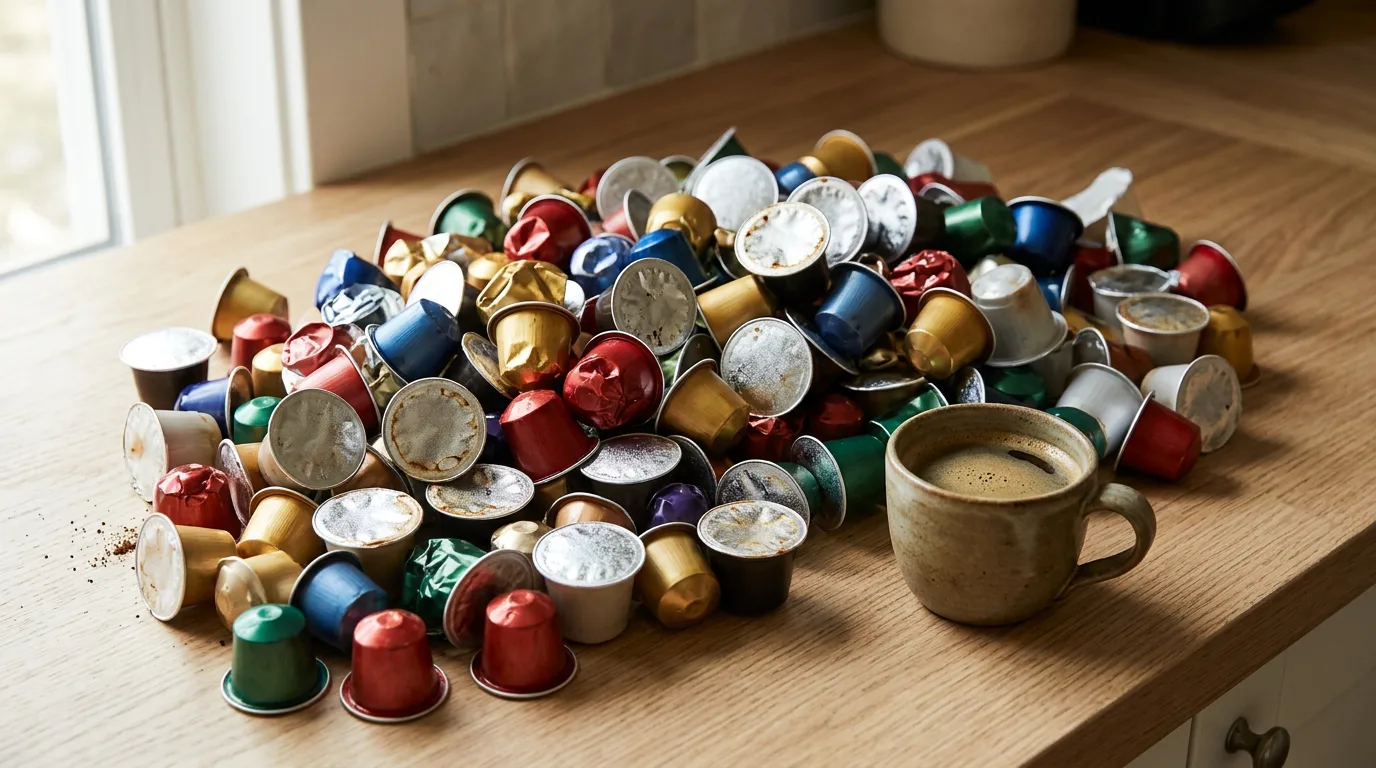
Most single-serve coffee pods end up in landfill, even when they're labeled recyclable. Plastic pods are made of several materials and are too small for most recycling facilities to sort. Aluminum capsules are easier to recycle in theory, but only if you return them through special programs. Compostable pods need industrial composting that many areas don't have. If you want the least waste per cup, a French press, a pour-over with a compostable paper filter or even instant coffee beats any pod.
Why I wrote this
For a couple of years I kept a pod machine in my kitchen next to my espresso machine. On busy mornings, it was the easy choice: drop in a pod, press a button, done.
Then one week I left the used pods in a bowl instead of tossing them, just to see. By Sunday, the bowl was overflowing. That's one household, one week. Multiply it by every kitchen and office with a pod machine and the scale is hard to picture.
So I spent some time digging into what pods are actually made of, whether they really get recycled, and how they compare with other ways of making coffee. Some of what I found surprised me. This guide puts it together, without the marketing spin from either side.
What you'll learn
- What plastic, aluminum and compostable pods are made of.
- Why most pods aren't recycled, even when labels say they can be.
- How much waste each brewing method creates per cup.
- The lowest-waste ways to make coffee at home.
- Practical tips if you want to keep your pod machine.
How big is the problem?
Estimates suggest coffee companies make around 50 billion single-serve pods every year worldwide. Most of them end up in landfill or incinerators.
In the US, coffee is one of the most-consumed drinks there is, and roughly one in four daily coffee drinkers uses a single-serve pod machine. That's a lot of small, mixed-material containers going into the trash every morning.
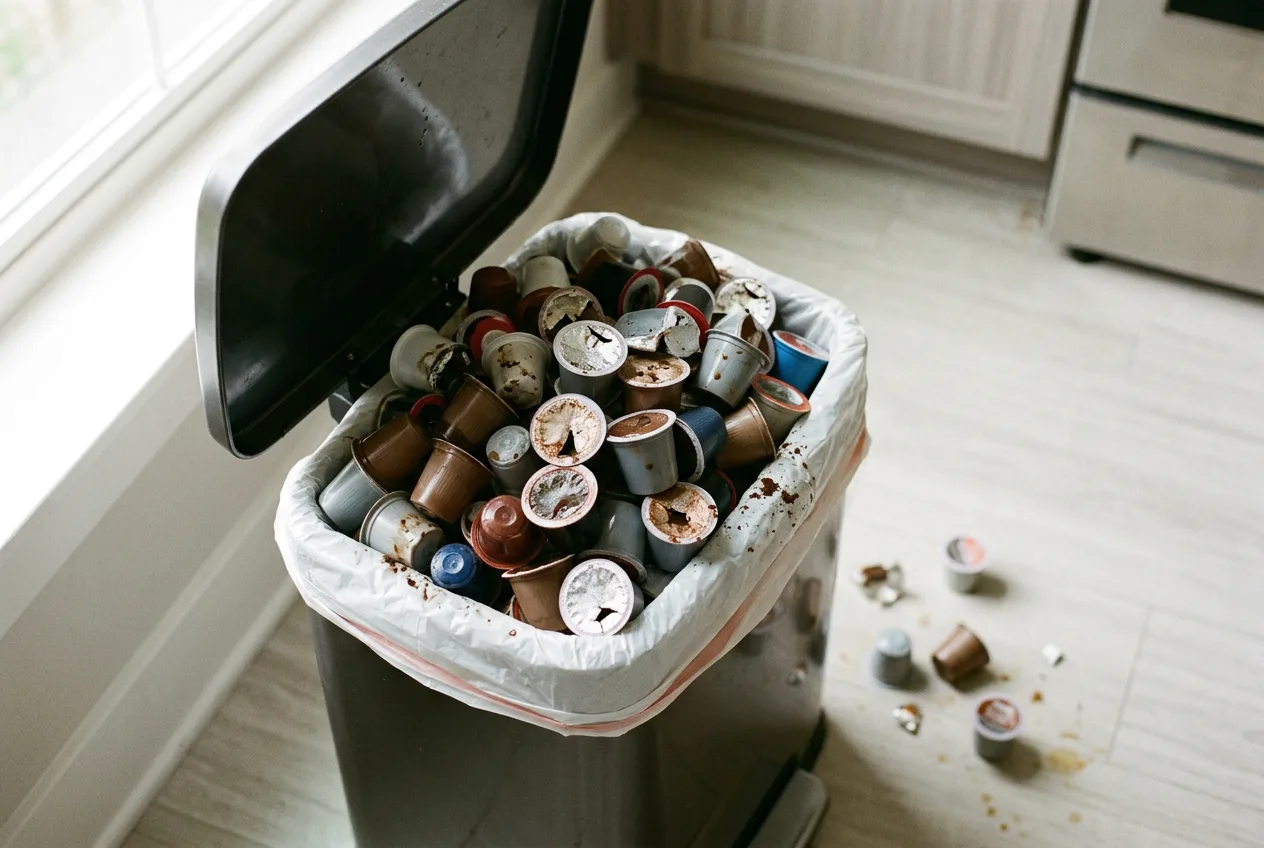
To put the number in perspective: if every one of those pods were lined up end to end, the line would wrap around the planet many times over, every single year. And unlike a coffee ground, which breaks down within months, a plastic and foil pod in a landfill can last for centuries.
The problem is not that any one pod is especially harmful. It is the sheer number of them, used once for a few seconds of brewing and then thrown away, morning after morning, in hundreds of millions of kitchens and offices.
Pod makers know this. Over the past decade, the biggest brands have spent tens of millions of dollars trying to make their pods recyclable or compostable. But the infrastructure to actually process these small, complicated items is still limited. The result is an industry trying to balance convenience with sustainability, and mostly still losing.
A short history of coffee pods
Single-serve coffee isn't new. Pre-portioned paper coffee pads existed for decades. But the sealed pod as we know it took off in two waves.
The first came from Switzerland in 1986, with sealed aluminum espresso capsules and compact home machines. The idea was to bring consistent espresso into the home without needing barista skills. It grew slowly at first, then became a premium lifestyle brand across Europe.
The second wave came from North America in the late 1990s. Plastic pods were first aimed at offices, where one shared pot of coffee often sat burning on a hot plate all afternoon. Single-serve pods let everyone make a fresh cup of whatever they liked. When home machines arrived in the 2000s, sales exploded.
By the 2010s, single-serve machines were in a large share of American kitchens and offices, and the pile of used pods had become an environmental story. Since then, the industry has been trying to keep the convenience while reducing the waste.
| When | What happened |
|---|---|
| 1986 | Aluminum espresso capsules launch in Switzerland |
| 1991 | First capsule recycling program in Europe |
| Late 1990s | Plastic pods arrive in North American offices |
| 2000s | Home pod machines boom |
| 2015 | "Kill the K-Cup" video goes viral |
| 2016 | Fully compostable pods launch in Canada |
| 2022 | $10 million settlement over recyclability claims |
| 2024 onward | Mail-in programs and plastic-free pod formats |
The three kinds of pod
Almost every pod on the market falls into one of three groups.
| Type | Made of | Best end of life | Reality |
|---|---|---|---|
| Plastic pod | Plastic cup, foil lid, paper filter, grounds | Taken apart and recycled | Usually landfill |
| Aluminum capsule | Aluminum shell, grounds | Returned and recycled | Recycled only if returned |
| Compostable pod | Plant-based ring, mesh filter, paper lid | Industrial compost | Often landfill, where it doesn't break down well |
Each has a real environmental case in theory. In practice, how it's disposed of matters more than what it's made of.
Plastic pods explained
The plastic pod took off in North America in the late 1990s and 2000s, marketed as a fast, mess-free way to make one cup of coffee. Drop it in, close the lid, and you have coffee in under a minute. The convenience drove explosive growth.
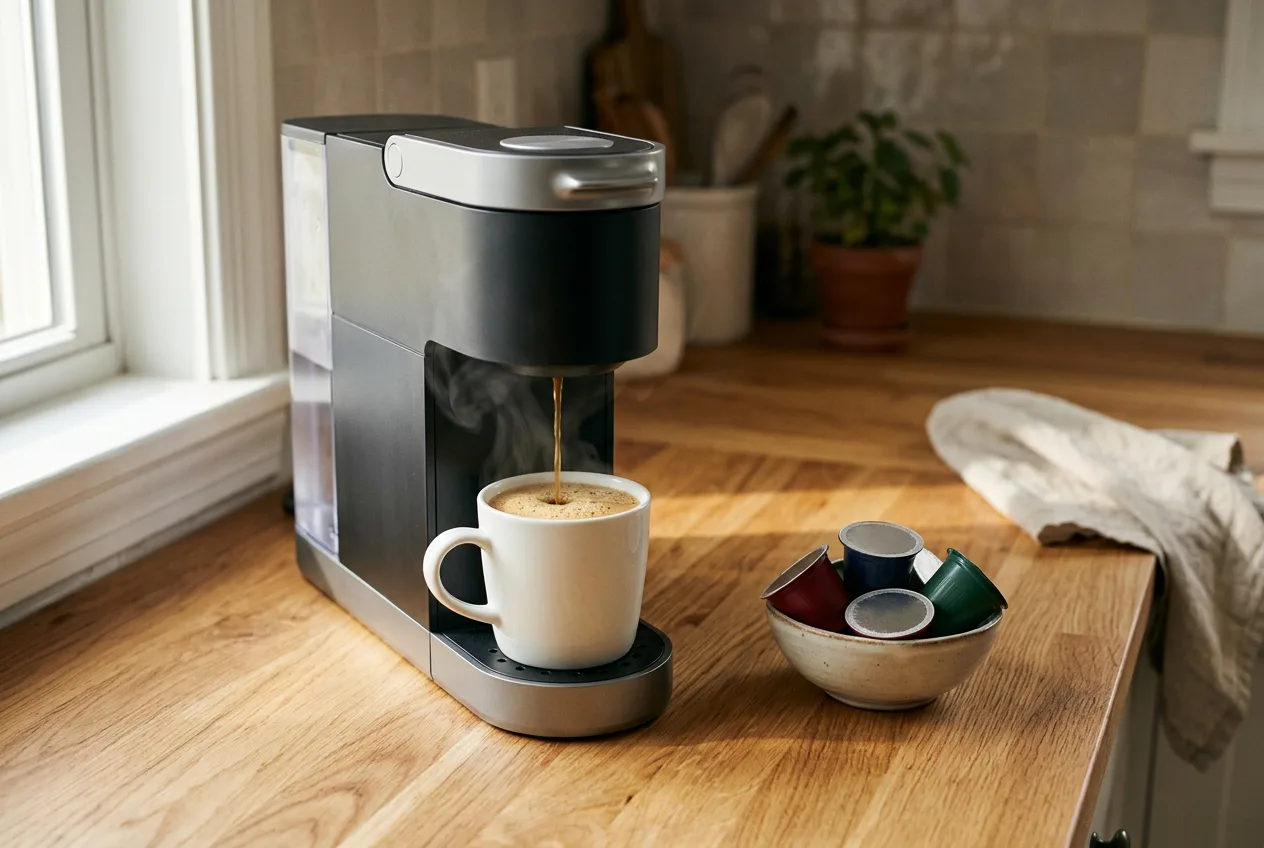
But that convenience comes from a clever, and complicated, design. A standard plastic pod has four parts:
- A rigid plastic cupUsually polypropylene, which forms the body of the pod.
- An aluminum foil lidSealed on top to keep the coffee fresh.
- Coffee groundsThe organic part, about a single serving.
- A paper filterFixed inside the cup to hold the grounds during brewing.
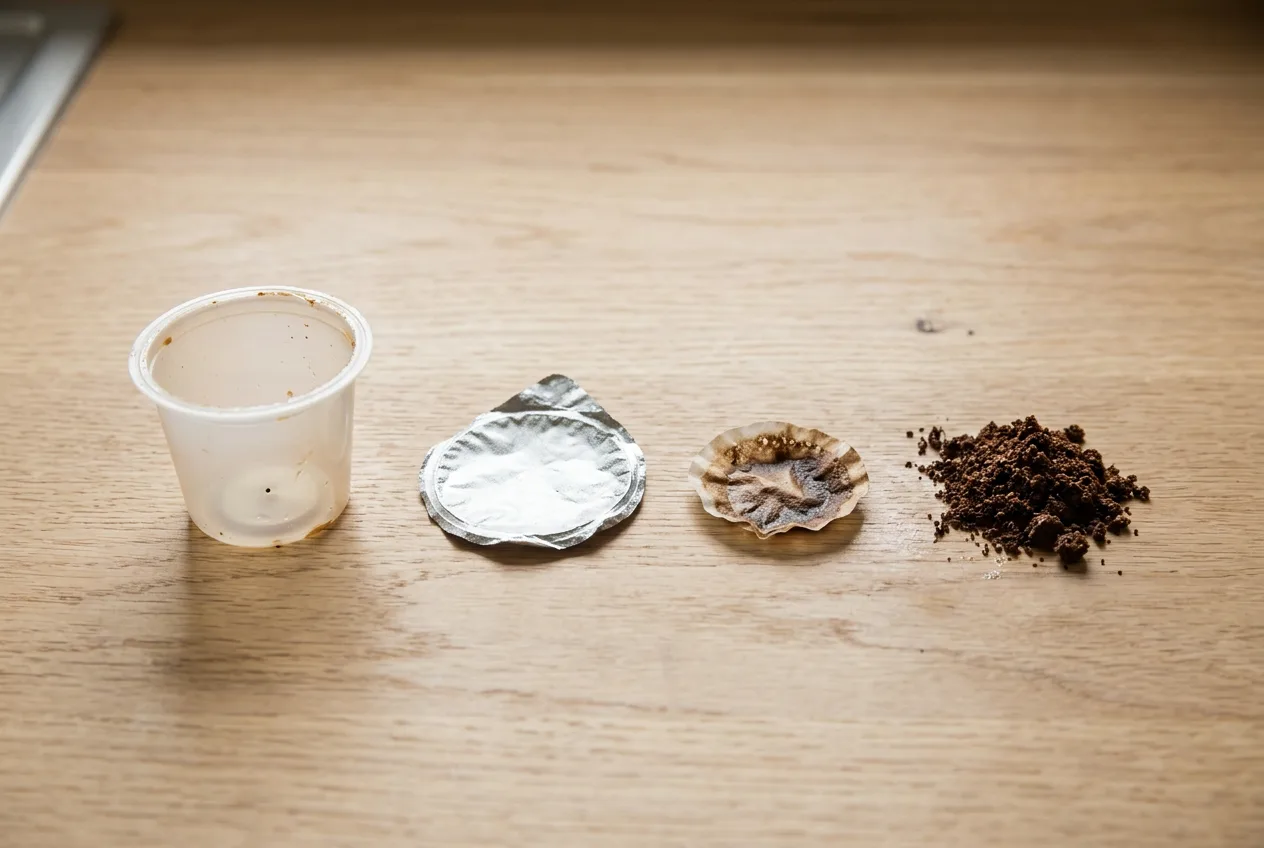
Each of these can be recycled or composted on its own. But they can't be processed together. To recycle a plastic pod properly, you'd have to wait for it to cool, peel off the foil, scoop out the wet grounds, pull out the paper filter and rinse the cup. By then, the whole point of a "no-mess" pod is gone, and most people simply don't do it.
Why "recyclable" pods often aren't recycled
Early plastic pods were made from plastic No. 7, a catch-all category for mixed or multi-layer plastics that almost no recycling facility accepts. Most facilities mainly take No. 1 (PET) and No. 2 (HDPE), and reject other types or items contaminated with food.
After public pressure, the biggest pod maker switched to No. 5 plastic, polypropylene, which is more widely accepted in principle, and began marketing its pods as recyclable.
But there's a bigger problem than the type of plastic: size. Waste researchers, including Calvin Lakhan at York University in Canada, have pointed out that pods are simply too small for standard recycling facilities to handle.
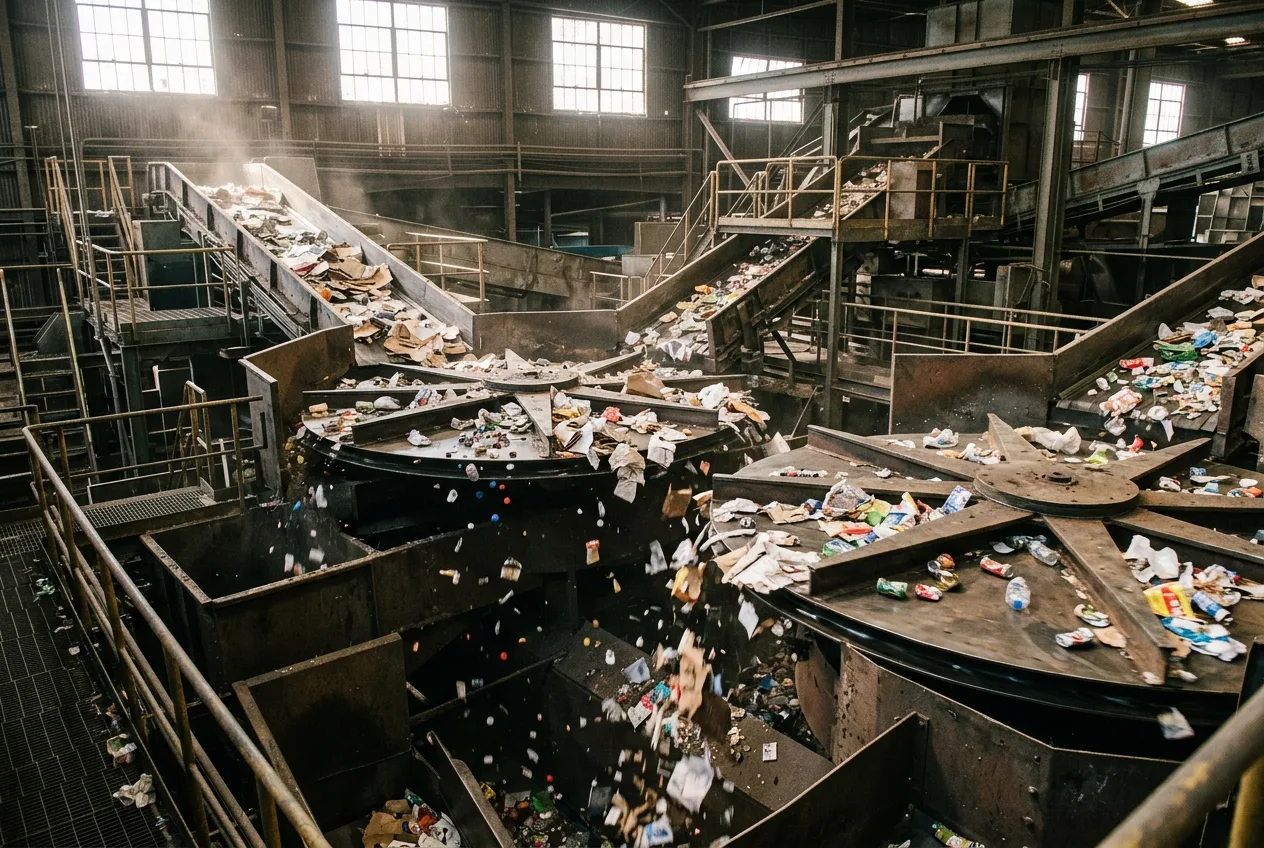
At a materials recovery facility, mixed recycling passes over screens and sorting equipment designed for bottles, cans, cartons and paper. Small items like pods, bottle caps and plastic cutlery tend to fall through the gaps and end up in the waste stream that goes to landfill, even if the plastic itself is technically recyclable.
Add the fact that overall US plastic recycling rates are estimated at only around 5%, and the odds of any given plastic pod actually becoming a new product are very low.
What happens to a typical plastic pod (rough picture)
Backlash and a lawsuit
As plastic pods became a fixture in homes and offices, the waste became hard to ignore. In 2015, a viral "Kill the K-Cup" video imagined a monster built from discarded pods attacking a city, turning pod waste into a meme.
Even John Sylvan, who invented the original pod system, said publicly that he regretted it, both because of the waste and because of what it did to people's coffee habits.
Environmental groups also went to court, arguing that marketing pods as recyclable was misleading when most communities couldn't recycle them. In 2022, the pod maker settled for $10 million and agreed to add a clear note to packaging that the pods are not recycled in many communities.
The company has since announced a mail-in recycling option for its pods and a plastic-free, compostable pod format. The catch: the new plastic-free pods need a new machine, because they don't fit older brewers.
Aluminum capsules: better material, harder logistics
The other big pod system started in Switzerland in 1986, long before plastic pods became popular in North America. Its compact espresso machines dominated Europe, and a newer line that brews full-size mugs has helped it grow in North America too.
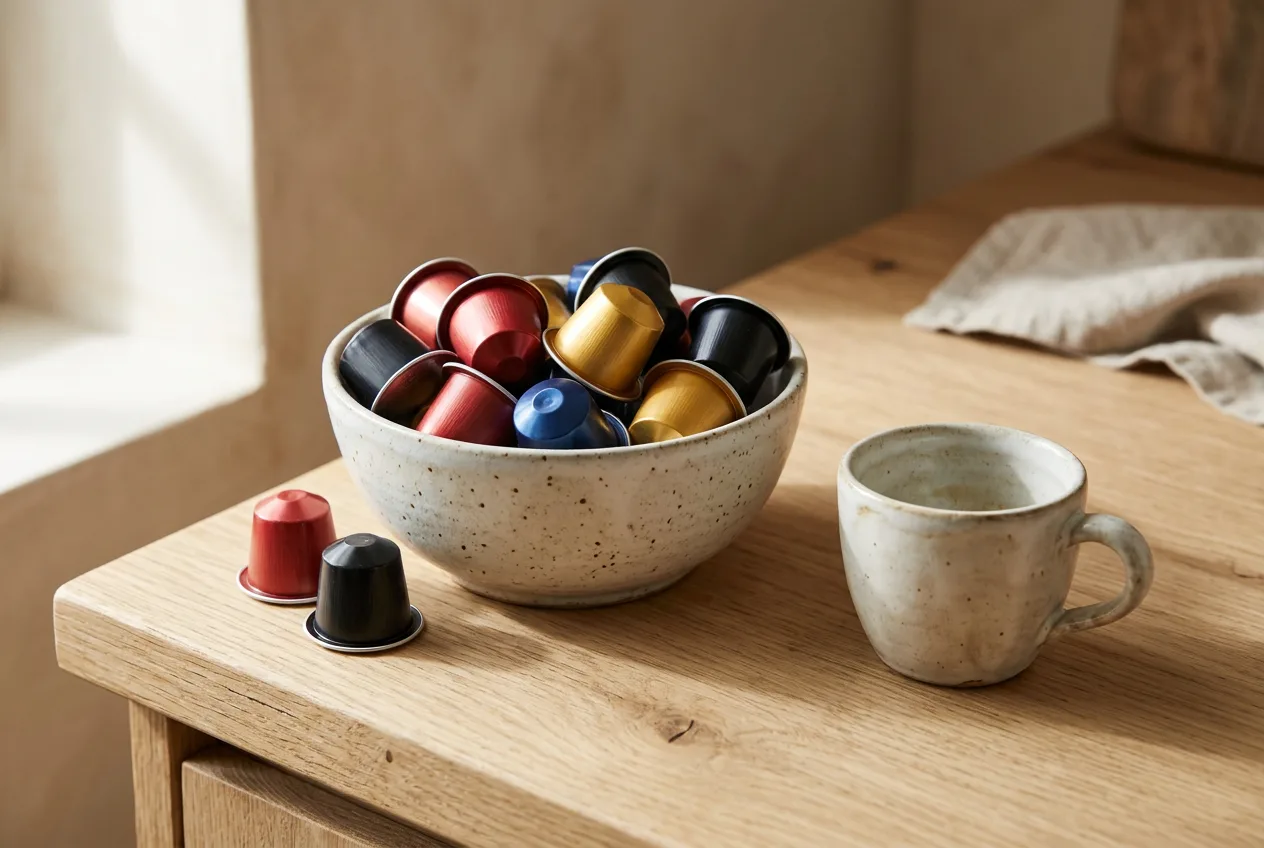
These capsules are made of aluminum, which, from a materials point of view, is a much better choice than mixed plastic. Aluminum can be melted down and recycled over and over without losing quality, and recycled aluminum uses far less energy than making new metal.
The problem is logistics. Small aluminum capsules full of wet coffee are expensive to collect and process. They're too small for many sorting lines, and the coffee inside has to be separated before the metal can be melted.
So in practice, aluminum capsules are only recycled if they're returned through a dedicated system, or if your local facility has special equipment.
Take-back programs and local upgrades
To keep capsules out of landfill, the aluminum-capsule maker built its own collection network. It started recycling in Europe in 1991 and later added mail-back bags in the US, as well as drop-off points in its boutiques.
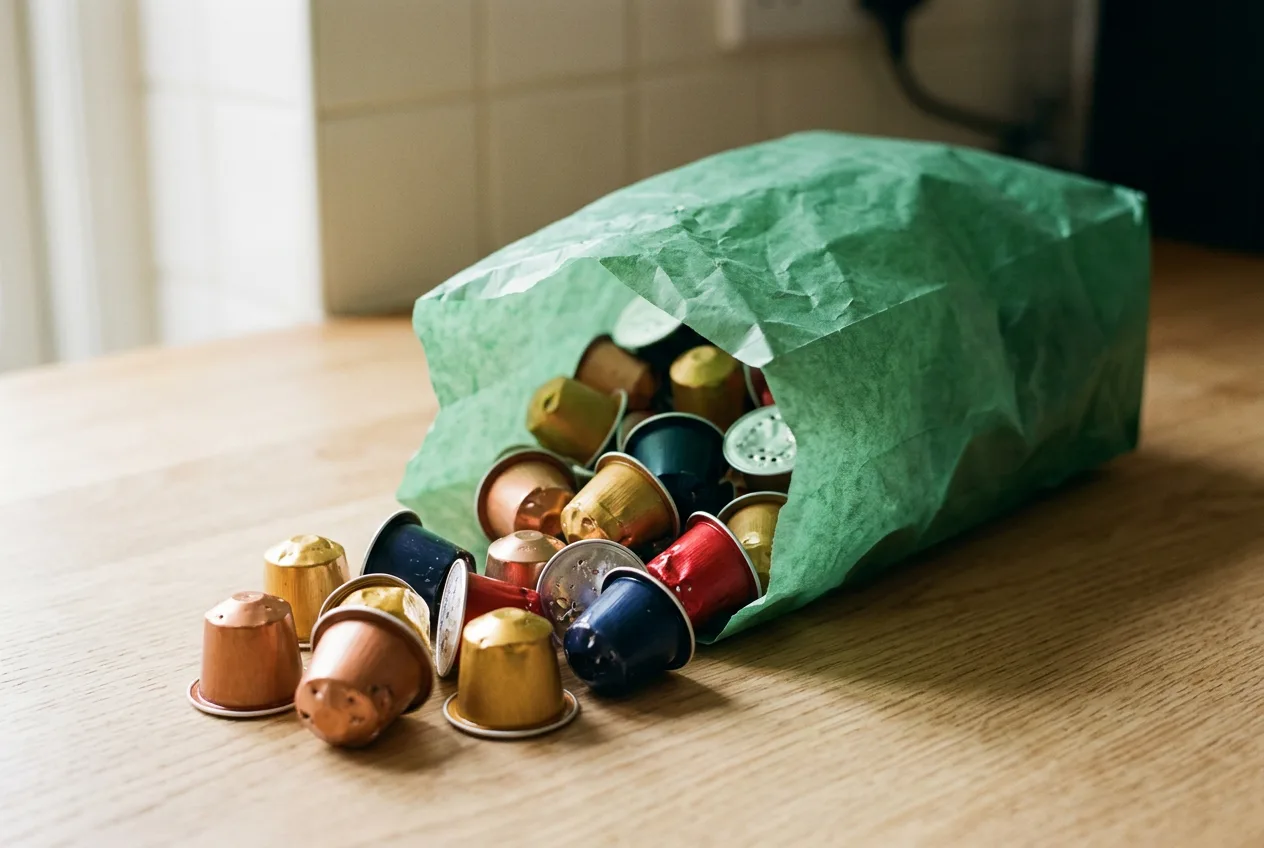
The company has also paid for upgrades at public recycling facilities so they can capture small aluminum items. In 2019, for example, it funded about $1.2 million of equipment at a New York City recycling plant, including shredders and eddy-current separators that pull small pieces of non-ferrous metal out of the waste stream. That lets New York residents put capsules straight into curbside recycling.
The company reports that roughly a third of its US customers recycle their capsules, much higher than for plastic pods. It also says it spends tens of millions of dollars a year on recycling. That's real progress, but it also shows how expensive and effort-heavy pod recycling is, and that most capsules are still not returned.
Our tip: If you use aluminum capsules, check whether your city accepts them curbside. If not, keep a mail-back bag next to the machine so returning them becomes a habit rather than a chore.
Compostable pods
With plastic recycling so unreliable, many waste experts see composting as a more promising route for single-serve coffee. If the whole pod could break down along with the grounds, there'd be nothing to separate.
One of the best-known attempts came from Club Coffee, a long-established Canadian roaster that produces coffee for many brands and retailers. Its head of innovation, Claudio Gemmiti, led a two-year project with several manufacturers to design a fully compostable pod, the PurPod100, launched in 2016.
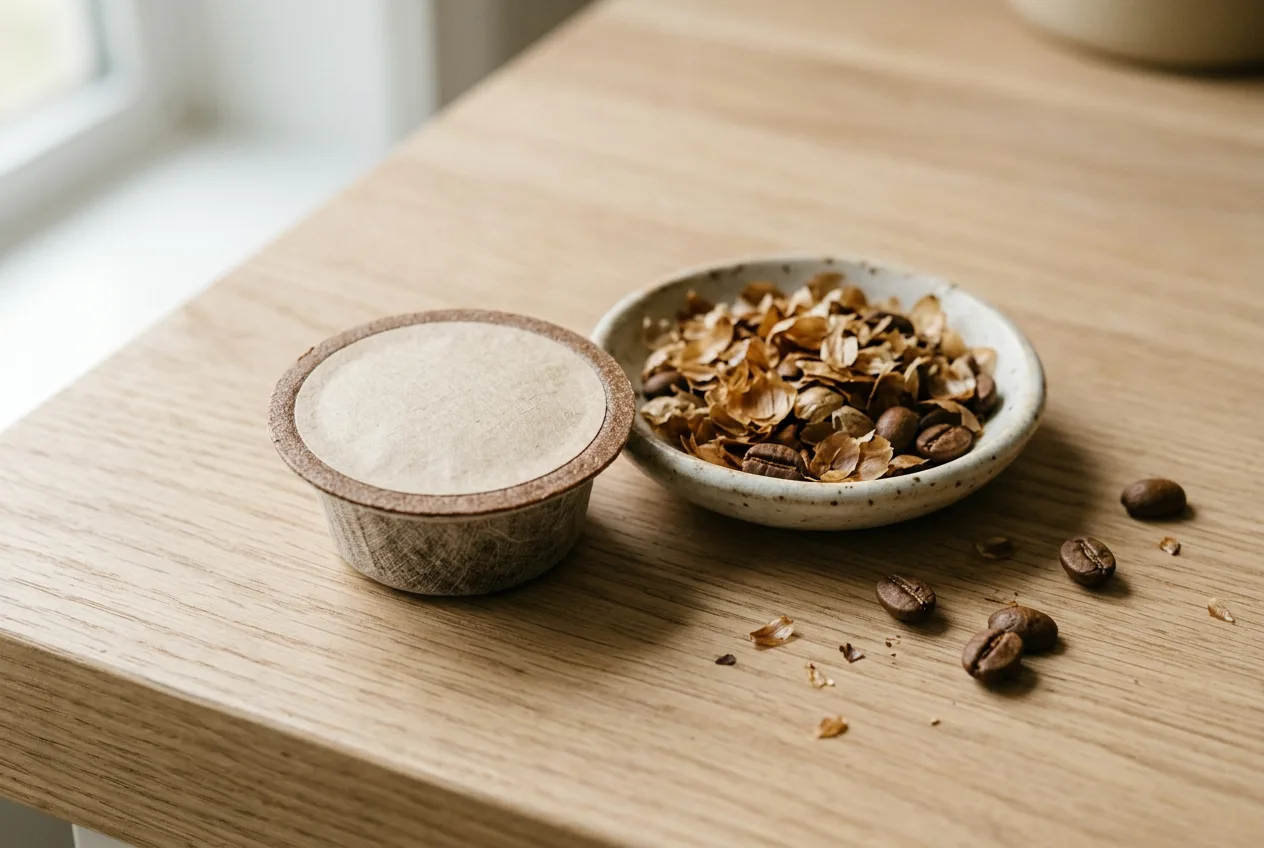
The goal was to keep the no-mess convenience of a plastic pod, with no taking apart or rinsing, while making the whole spent pod compostable. Instead of a plastic cup, it uses a mesh filter made from PLA, a bioplastic made from corn starch, held in a rigid ring and sealed with a compostable paper lid.
Turning coffee chaff into pods
The cleverest part of the compostable pod is the ring. It's partly made from coffee chaff, a byproduct of roasting.
Raw coffee beans are covered in a thin, papery skin. During roasting, it dries, turns brown and flakes off. Roasters collect it in a chaff bin. The amounts are significant, and most chaff has historically gone to landfill, where it can release methane as it breaks down.
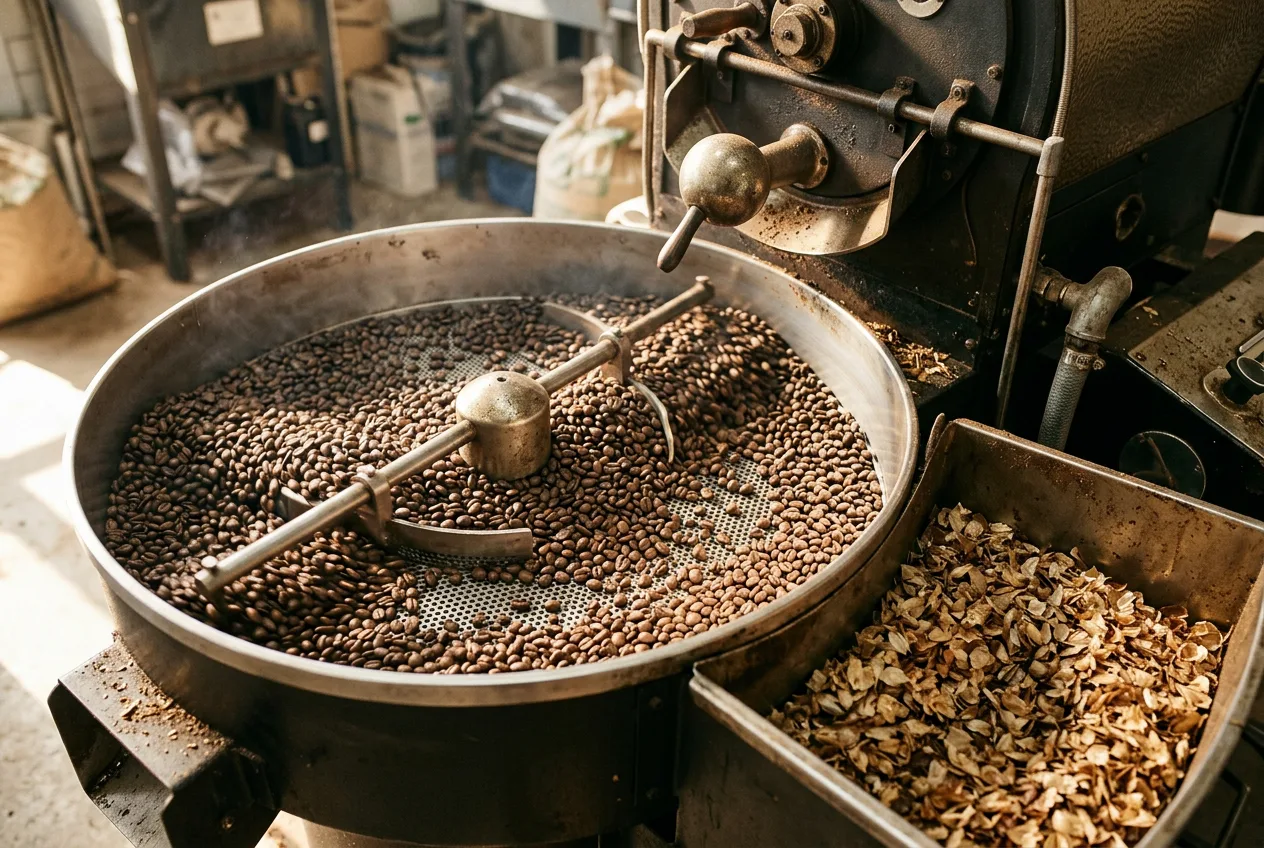
Club Coffee worked with a materials company, Competitive Green Technologies, to turn chaff into a plastic-like bioresin. About a quarter of the ring is coffee chaff, mixed with a plant-based resin and a compostable biopolymer, melted and formed into pellets.
Those pellets are then molded into rings, dozens at a time, checked by optical scanners and sent to an automated line where the mesh filter is formed, filled with coffee and sealed with a paper lid printed with compostable inks. The company says it has made more than a billion of these pods, a big number, but still small next to the tens of billions of pods used worldwide each year.
The limits of composting
Compostable pods are a real improvement on paper, but they come with important catches.
- Industrial composting only: the bioresin and PLA need sustained high temperatures and controlled conditions to break down. They won't compost properly in a typical backyard heap.
- Limited access: many towns and cities, including some big ones, don't offer industrial composting collection that accepts pods.
- Landfill problem: in a landfill, compostable pods don't break down as intended.
- Packaging: compostable pods often come in multi-layer bags that can't be recycled or composted.
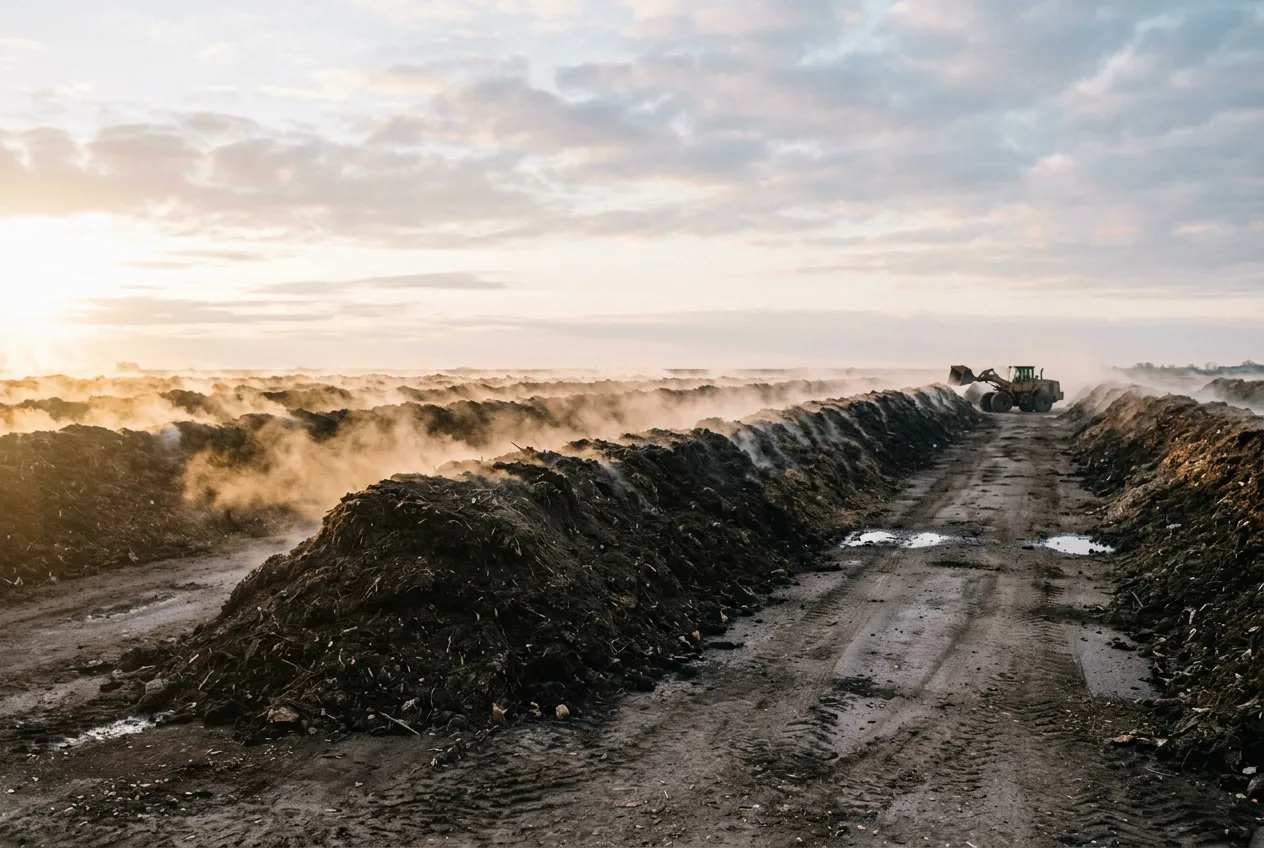
In other words, a compostable pod is only greener if it actually reaches a composting facility. Check what your local collection accepts before you switch.
Waste per cup, compared
How much waste does each method leave behind? A widely shared comparison by a well-known barista weighed the wet waste left after one cup from different methods. The numbers below are approximate, but they make the differences easy to see.
| Method | Wet waste per cup | What's in it | Where it can go |
|---|---|---|---|
| Plastic pod | ~0.88 oz | Plastic cup, foil, filter, grounds | Usually landfill |
| Aluminum capsule (mug size) | ~0.78 oz | Aluminum shell, grounds | Recycling if returned |
| Compostable pod | ~0.92 oz | Bioresin ring, PLA filter, paper lid, grounds | Industrial compost |
| Large takeaway cup | ~0.92-1.02 oz of packaging | Plastic-lined cup and lid | Usually landfill |
| Pour-over | Grounds plus a paper filter | All organic | Home or green-waste compost |
| French press | Grounds only | All organic | Home compost or garden |
| Instant coffee | Almost nothing per cup | One jar for dozens of cups | Recyclable glass jar |
The weights of the pods themselves are similar. The big difference is what the waste is made of and where it can realistically go. Pure coffee grounds and paper can be composted at home. Mixed plastic and foil can't.
The bigger footprint of coffee
It's worth keeping pods in perspective. Long before coffee reaches your kitchen, growing, processing, roasting and shipping it already creates a lot of waste and uses a lot of energy and water. Estimates suggest the global coffee supply chain produces around 23 million tons of solid waste every year, from coffee pulp and husks to packaging.
That cuts both ways. Packaging is only one part of coffee's footprint. But because the upstream cost is already high, it makes even more sense not to add a pile of avoidable packaging on top at the very end.
The choices that make the biggest difference at home are wasting less coffee (brew what you'll drink), choosing low-waste brewing methods and buying from roasters and farms that take sustainability seriously. For more on the farm side, see climate change and the future of coffee.
Is waste the whole story? Carbon footprints
Here's a twist worth knowing. Packaging waste is the most visible problem with pods, but it's not the only environmental factor. Growing coffee is the biggest part of coffee's carbon footprint, by far.
That's why some life-cycle studies have suggested that pods aren't always worse than other methods when you look at total carbon emissions. Pods use a precise dose of coffee for each cup. With a drip machine or a French press, many people brew more than they drink and pour the rest away, wasting coffee that had a big footprint to grow, process and ship.
The takeaway isn't that pods are green. It's that the best thing you can do for coffee's footprint is not to waste coffee. Brew the amount you'll actually drink, whatever method you use, and then deal with the waste responsibly. A French press used for exactly one or two cups, with the grounds composted, is still hard to beat.
Our tip: Weigh your coffee and water once to find out how much you really need for your usual mug. It stops you from brewing extra you'll pour away. My guide to coffee brewing ratios has simple starting points.
Do pods even taste good?
It's a fair question if you're deciding whether to switch. Pod coffee is pre-ground, and ground coffee goes stale quickly once it's exposed to air. Pods are usually sealed and flushed with nitrogen to slow that down, which helps, but the coffee was still ground weeks or months before you brew it.
Most pod machines also brew quickly, with a fixed amount of coffee and water. That suits some coffees and not others. Aluminum espresso-style capsules generally taste better than plastic pods for drip-style coffee, partly because aluminum blocks oxygen very well.
In my side-by-side tests, freshly ground coffee in a French press, pour-over or even a reusable pod beat standard plastic pods every time. Good capsules came closer, especially with milk. For the freshest flavor, nothing replaces grinding beans just before brewing. See coffee freshness, resting and degassing.
Pods at the office
Offices are where pods first took off, and they're still a big source of pod waste. A busy office can go through hundreds of pods a week.
- Bean-to-cup machines: grind fresh beans for each cup and leave only grounds, which some machines collect for compost.
- Batch brewers with thermal carafes: brew a pot that stays hot and fresh for a couple of hours.
- Capsule return boxes: if you stay with capsules, set up a collection box and assign someone to send it off.
- Grounds for the garden: some offices give spent grounds to staff for their gardens.
Switching an office from pods to a bean-to-cup machine or batch brewer can remove tens of thousands of pods a year from the waste stream.
Low-waste alternatives to pods
Pour-over
A pour-over cone with a paper filter is one of the best options if you care about flavor and low waste. Hot water drips through the coffee into your cup, and the only thing left is the filter full of grounds.
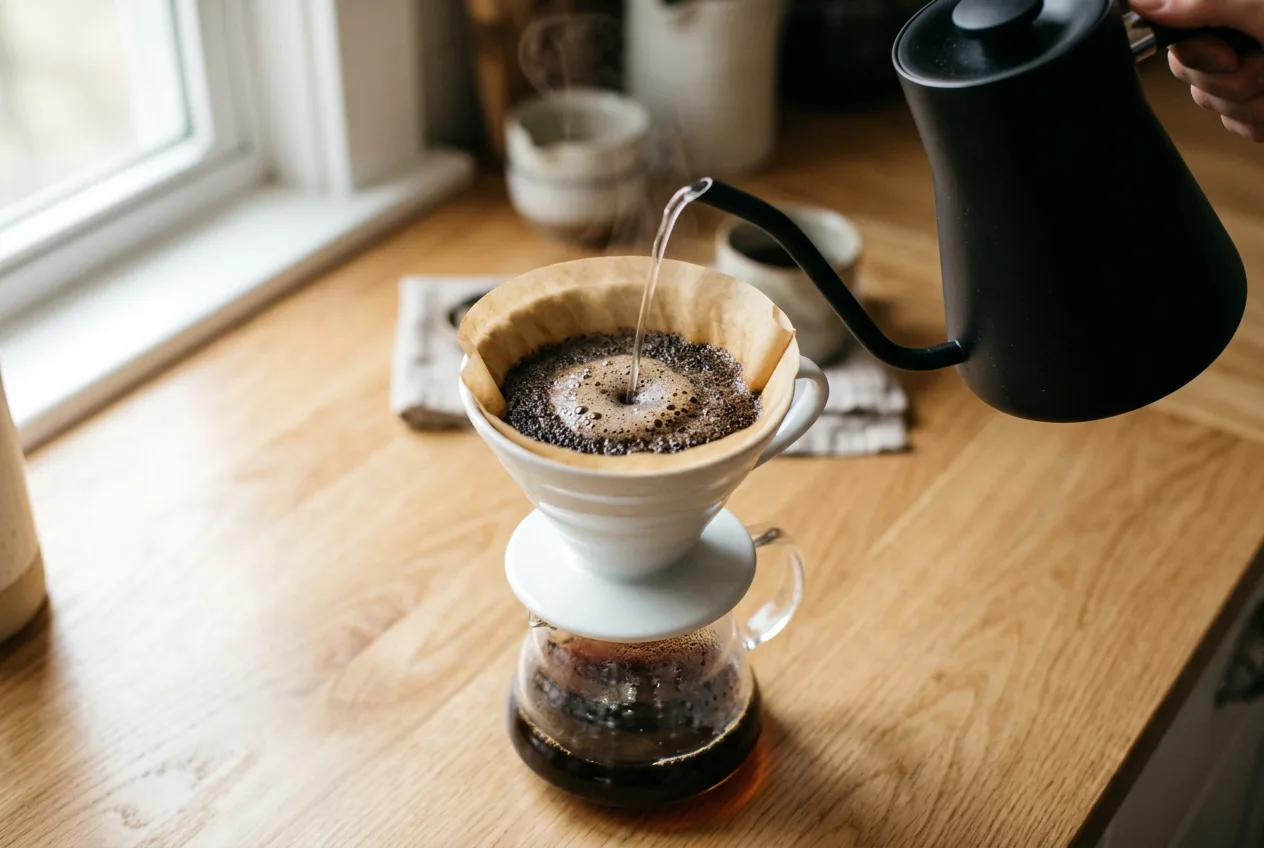
If you use unbleached paper filters, both the filter and the grounds can go into a home compost bin or green-waste collection, where they break down in a few months.
French press
For the lowest packaging waste of all, the French press is hard to beat. It's a simple carafe with a reusable metal mesh plunger: no paper filters, no plastic, no aluminum.
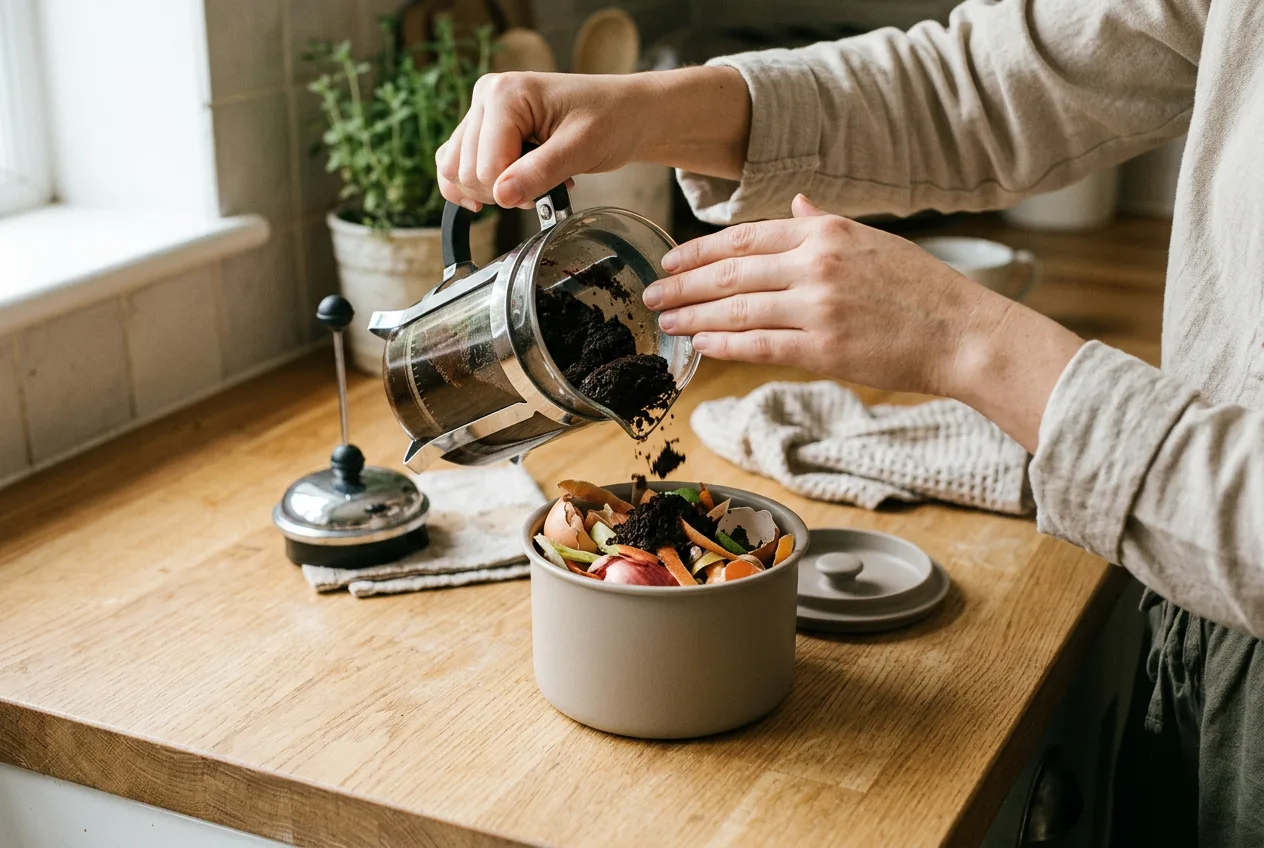
When you're done, all that's left is wet coffee grounds. You can tip them into a compost bin, use them in the garden or put them in organic waste. Zero packaging per cup. I compare the two methods in detail in French press vs pour over.
Instant coffee
This one surprises people. If your main goal is a fast, easy cup with minimal waste, instant coffee is remarkably efficient.
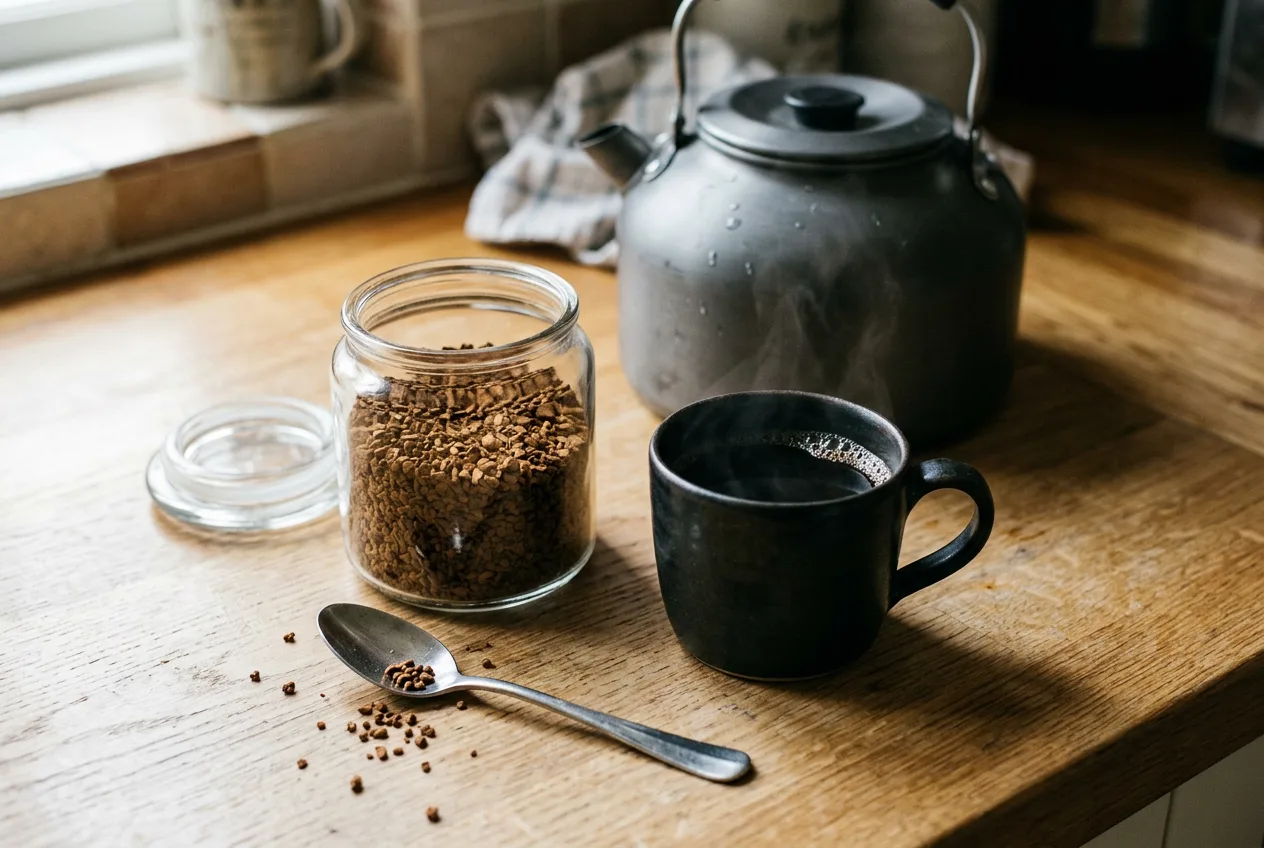
Industrial extraction pulls far more soluble material out of each bean than home brewing can, so it uses fewer beans per cup. At home, it dissolves completely: no grounds, no filters, no pods, just one recyclable jar or pouch after dozens of cups.
The trade-off is flavor. Most instant coffee is made from lower-grade beans and tastes flatter and more bitter. Still, plenty of coffee professionals would say a good instant coffee tastes at least as good as a typical pod. Learn more in how instant coffee is made.
Other options
- Moka pot: no filters, just grounds. See moka pot vs espresso.
- Espresso machine: grounds only, if you grind your own beans.
- Drip machine with a reusable filter: brew a pot, compost the grounds.
- Cold brew: a big batch at once, grounds only.
Reusable pods: a middle ground
If you love your pod machine, reusable pods are worth considering. They're small refillable cups, usually stainless steel or plastic with a metal mesh, that fit most pod machines.
- Pros: almost no packaging waste, cheaper per cup, and you can use any coffee you like.
- Cons: you have to fill, empty and rinse them, which takes away some of the convenience.
- Tips: use a medium grind, don't overfill, and rinse right after use so oils don't build up.
In my testing, a good reusable pod with fresh, medium-ground coffee made a noticeably better cup than most store-bought pods, simply because the coffee was fresher.
How to recycle pods properly
If you're going to keep using pods, here's how to give them the best chance of being recycled or composted.
Plastic pods
- Let it coolHot pods are messy and can burn your fingers.
- Peel off the foil lidPut it with aluminum recycling only if your area accepts small foil pieces; otherwise trash it.
- Empty the groundsCompost them or add them to green waste.
- Remove the filterMost paper filters can be composted with the grounds.
- Rinse and check locallyOnly put the cup in recycling if your local program accepts small No. 5 plastics, or use a mail-in program.
Aluminum capsules
- Use the brand's take-back bag or drop-off point.
- Check curbside rules: some cities now accept capsules directly.
- Don't crush them unless your program says to.
Compostable pods
- Confirm your city's organics program accepts them.
- Don't put them in a backyard compost and expect them to break down quickly.
- Never put them in plastic recycling, where they're contamination.
Uses for spent coffee grounds
Whichever low-waste method you choose, you'll end up with used grounds. They're surprisingly useful.
- Compost: grounds count as "green" material and add nitrogen.
- Garden: a thin layer mixed into soil or mulch, not a thick crust.
- Fridge deodorizer: a bowl of dried grounds absorbs odors.
- Gentle scrub: for greasy pans, with a little dish soap.
- Worm bins: worms like small amounts of coffee grounds.
If you don't have a garden or compost bin, many cities now collect food scraps and coffee grounds in a separate organics bin, and some cafes and community gardens are happy to take used grounds off your hands. A small lidded caddy on the counter makes it easy: empty the French press or filter into it, and take it out with the rest of your food waste a couple of times a week.
Just don't pour large amounts of grounds down the sink. They can build up in pipes.
The cost side
Pods aren't just more wasteful. They're usually more expensive per cup too. When you divide the price of a box of pods by the coffee inside, you're often paying far more per pound of coffee than for a bag of good whole beans.
| Method | Cost per cup | Waste | Effort |
|---|---|---|---|
| Plastic or aluminum pods | High | High | Very low |
| Reusable pod | Low | Very low | Low to medium |
| French press | Low | Lowest | Medium |
| Pour-over | Low | Very low | Medium to high |
| Instant coffee | Very low | Very low | Lowest |
| Takeaway coffee | Highest | High | None |
Switching from pods to a French press or pour-over can save a noticeable amount of money over a year, as well as a lot of trash.
My one-month switch experiment
After the week of collecting pods in a bowl, I tried a simple experiment: for a month, I stopped using pods completely and tracked what changed.
- Waste: my coffee trash went from a bowl of pods every few days to a small compost caddy of grounds and paper filters, emptied twice a week.
- Time: a French press added about four minutes to my morning, but I could make breakfast while it steeped. Pour-over took a bit more attention.
- Taste: fresh-ground coffee tasted noticeably better, especially black.
- Cost: a bag of good whole beans lasted about as long as several boxes of pods, at a lower total cost.
- Convenience: the only time I really missed pods was on early, rushed mornings before travel.
At the end of the month I kept a reusable pod for those rushed mornings and moved the pod machine to a cupboard. It's an easy change, and I haven't looked back.
Governments step in
Pod waste has caught the attention of regulators too. One of the earliest moves came in 2016, when the German city of Hamburg stopped buying single-serve coffee pods for its government offices, citing the waste they create.
More broadly, the European Union has adopted new packaging rules that push the whole packaging industry toward recyclable or compostable designs, with specific attention to small single-use items such as coffee pods and tea bags. As these rules take effect over the coming years, expect more compostable and paper-based pods in European shops, and more pressure on manufacturers everywhere.
In North America, regulation has mostly come through consumer protection rather than packaging law, as with the lawsuit over recyclability claims. Some states and cities are also introducing "truth in labeling" rules that limit when a product can be called recyclable.
If you buy pods, what to look for
If pods are staying in your kitchen, a few choices make a real difference.
- Match the pod to your local systemChoose aluminum if you'll return them or your city accepts them; compostable only if you have industrial composting.
- Check the certificationLook for recognized industrial compostability certification rather than vague "eco" wording.
- Look at the outer packagingRecyclable cardboard boxes are better than multi-layer plastic bags.
- Buy what you'll usePods go stale too. Large bulk boxes that sit for months aren't a bargain.
- Mix in a reusable podUse it for your favorite beans on slower mornings.
Small changes add up. A household that switches from plastic pods it throws away to returned aluminum or reusable pods can keep hundreds of pods a year out of landfill.
Which option should you choose?
Our tip: You don't have to go all-in. Using a French press or pour-over on weekends and pods only on rushed weekday mornings can cut your pod waste by more than half without changing your routine much.
Myths about coffee pods
- "If the label says recyclable, it will be recycled." Most pods are too small for typical sorting equipment, and many communities don't accept them.
- "Compostable pods break down in my garden." Most need industrial composting conditions.
- "Aluminum pods are always recycled." Only if they're returned or your local facility can handle them.
- "Pods are better for the environment because you don't waste coffee." Pods do help avoid brewing too much, but you can get the same benefit by brewing a single cup any other way.
- "Instant coffee is the worst option." For waste per cup, it's one of the best.
The verdict
Coffee pods solved one problem, making a single quick cup with no mess, and created another: tens of billions of small, mixed-material containers a year that are hard to recycle.
Aluminum capsules are better if you return them. Compostable pods are better if you have industrial composting. Plastic pods are the hardest to deal with, despite the recyclable labels. And none of them comes close to the simplicity of a French press, a pour-over or even a jar of instant coffee.
It's also worth remembering that the most sustainable machine is often the one you already own. Throwing out a working pod machine to buy something new creates waste of its own. Using what you have more thoughtfully, with returned capsules, reusable pods or fewer pods overall, is a perfectly good place to start.
The coffee industry will keep inventing new pod materials, and regulations will keep tightening. But the basic choice is already in your hands every morning: a few seconds of convenience, or a few minutes of brewing that leaves nothing behind but grounds for the garden.
If you love the convenience of pods, reusable pods or a "pods only when rushed" rule are easy compromises. If you're ready to change, a $30 French press might be the greenest kitchen upgrade you make this year.
Frequently asked questions
Are coffee pods bad for the environment?
Most create more waste than other brewing methods, and the majority end up in landfill, especially plastic pods.
Can you recycle plastic coffee pods?
Only if you take them apart and your local program accepts small No. 5 plastics, or you use a mail-in program. Most recycling facilities lose them during sorting.
Are aluminum coffee capsules recyclable?
Yes, aluminum is very recyclable, but capsules usually need to go through a take-back program or a facility with special equipment.
Do compostable coffee pods really compost?
They break down in industrial composting facilities, but not reliably in a backyard compost or a landfill.
What is the most eco-friendly way to make coffee?
A French press leaves only coffee grounds, which you can compost. Pour-over with unbleached filters is a close second.
Is instant coffee more sustainable than pods?
For waste per cup, yes. It leaves no grounds or pods, just one jar for many cups.
Are reusable coffee pods worth it?
For many people, yes. They cut waste and cost, though they take a little more effort.
What can I do with used coffee grounds?
Compost them, use a little in the garden, deodorize the fridge or use them as a gentle scrub.

- Michael Reynolds, home testing with pod machines, reusable pods and manual brewers
- Coffee capsule, Wikipedia
- K-Cup, Wikipedia
- Materials recovery facility, Wikipedia
- Polylactic acid, Wikipedia
Related guides
How instant coffee is made Coffee brewing ratios explained Climate change and the future of coffeeWritten by Michael Reynolds. Last updated November 20, 2026.