Is Decaf Coffee Healthy? How It's Made, What It Keeps and What to Watch Out For
Decaf has an image problem: some people think it's pointless, others worry it's full of chemicals. I drink decaf most afternoons, so I dug into how it's made, what it keeps from regular coffee, what it loses and how creamers, syrups and sweeteners change its health picture.
We choose products independently. We may earn a commission through links on this page; your price stays the same. Affiliate policy
Decaf is safe and keeps most of coffee's beneficial compounds, including polyphenols, chlorogenic acids and antioxidants, roughly 90 to 95% in many cases. It's linked with lower risk of type 2 diabetes and lower mortality in studies, much like regular coffee. Regulated solvent methods leave only trace residues within strict limits, and solvent-free Swiss Water and CO2 decafs are widely available. The bigger health concerns are usually sugary creamers, syrups and, for people with kidney disease, phosphate additives.
Is decaf coffee actually healthy?
Decaf has an image problem. Some people see it as pointless ("what's the point of coffee without caffeine?"), while others worry it's full of chemicals left over from the decaffeination process.
I drink decaf most afternoons and evenings, and I've had my share of skeptical looks when ordering it. So I dug into how decaf is made, what it keeps from regular coffee, what it loses, and how the things we add to coffee, like creamers, syrups and sweeteners, affect its health picture.
The short answer: properly made decaf is safe, keeps most of coffee's beneficial compounds and shares many of regular coffee's health associations. The bigger health questions usually come from what you put in your cup.
Decaf coffee at a glance
| Question | Short answer |
|---|---|
| Is decaf caffeine-free? | No, but it has much less caffeine than regular coffee |
| Are decaf chemicals dangerous? | Regulated methods leave only trace residues considered safe |
| Solvent-free options? | Swiss Water Process and CO2 processing |
| Does decaf keep antioxidants? | Yes, much of coffee's polyphenols and chlorogenic acids remain |
| Health associations? | Lower risk of type 2 diabetes, liver benefits and lower mortality in studies |
| Does decaf cause reflux? | It can, but generally less than regular coffee |
| Biggest health risk? | Often sugary creamers, syrups and phosphate additives, not the decaf |
What exactly is decaf coffee?
Decaf is coffee that has had most of its caffeine removed before roasting. Caffeine is extracted from green (unroasted) coffee beans, which are then dried, roasted and sold like any other coffee.
Decaf isn't completely caffeine-free. In the United States, decaf coffee generally has at least 97% of its caffeine removed. A typical cup of decaf contains only a few milligrams of caffeine, compared with around 80 to 100 milligrams or more in a regular cup. People who are extremely sensitive or medically required to avoid caffeine should keep that small amount in mind.
How decaf is made: the main methods
There are several ways to remove caffeine from coffee. All are designed to extract caffeine while keeping as much flavor as possible.
Methylene chloride process
Methylene chloride is a solvent that binds to caffeine. Green beans are soaked or steamed and then exposed to the solvent, which pulls caffeine out. Afterward, the beans are rinsed, steamed and dried, and later roasted at high temperatures.
These steps leave only trace amounts of the solvent. The FDA allows a maximum residue of 10 parts per million in decaf coffee, and actual levels are typically far below that. Residues within regulatory limits are considered safe, and there's no established evidence that regulated decaf causes cancer or organ damage. Methylene chloride has been the subject of petitions and debate, and some consumers simply prefer to avoid solvent-processed decaf, which is easy to do.
Ethyl acetate ("sugarcane") process
Ethyl acetate is a compound found naturally in fruit and also made from sugarcane. It's used in a similar way to methylene chloride. Coffees processed this way are often labeled "naturally decaffeinated" or "sugarcane decaf." Many specialty roasters use it because it can preserve sweet, fruity flavors.
Swiss Water Process
This method uses only water and activated carbon filters. Green beans are soaked in water saturated with coffee's soluble compounds (except caffeine), so caffeine moves out of the beans while most flavor compounds stay. The water then passes through carbon filters that trap the caffeine. It's a popular choice for people who want a solvent-free decaf.
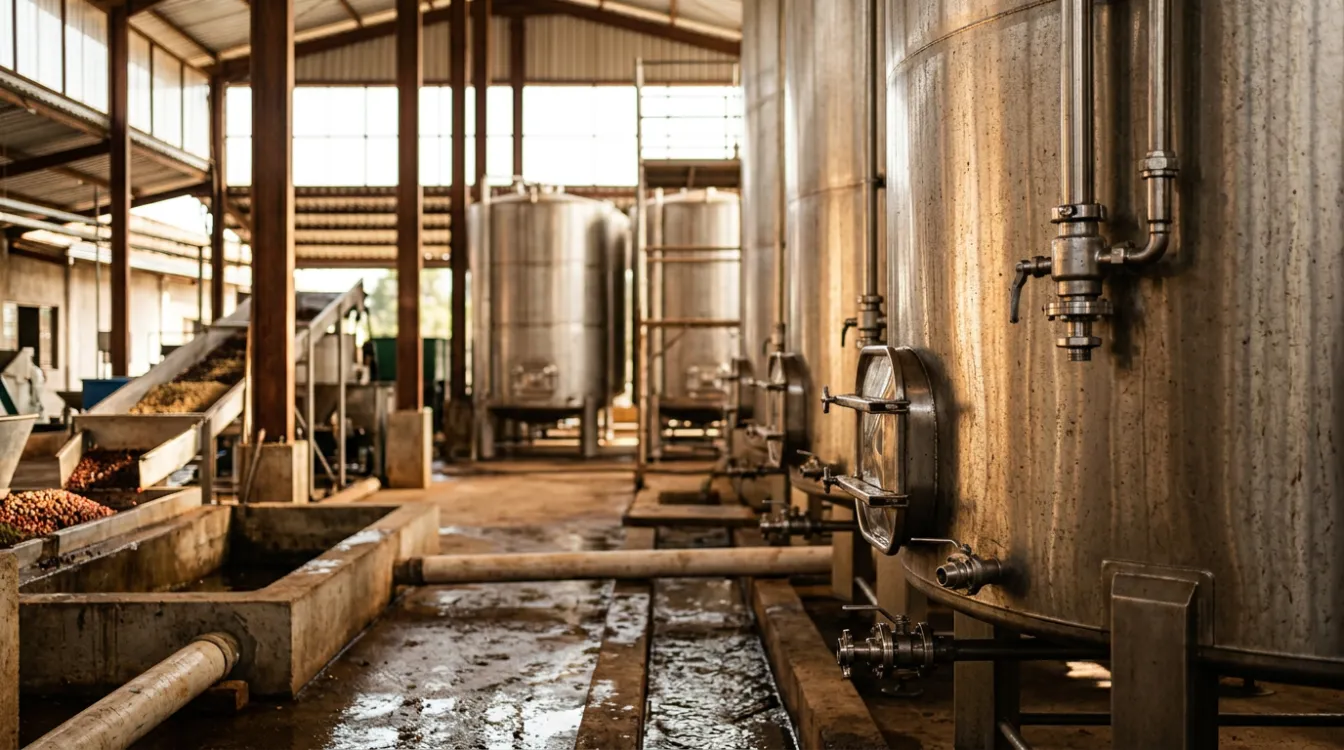
Supercritical carbon dioxide process
Here, carbon dioxide under high pressure and controlled temperature acts like a solvent, selectively extracting caffeine. It's another solvent-free method and is good at preserving flavor. Because the equipment is expensive, it's often used for large commercial batches.
| Method | Solvent used | Notes |
|---|---|---|
| Methylene chloride | Yes (regulated) | Common, efficient, trace residues within strict limits |
| Ethyl acetate | Yes (naturally occurring compound) | Often called sugarcane or natural decaf |
| Swiss Water Process | No | Water and carbon filtration |
| Supercritical CO2 | No | Carbon dioxide under pressure |
All of these methods are considered safe when properly regulated. If you'd rather avoid solvents, look for "Swiss Water Process" or "CO2" on the bag.
A short history of decaf
Decaf has been around for more than a century. The first commercially successful process was developed in Germany in the early 1900s by coffee merchant Ludwig Roselius. According to the often-told story, a shipment of coffee beans soaked in seawater during transport lost much of its caffeine but kept its flavor, inspiring experiments with decaffeination.
Roselius's early process used steam and a solvent called benzene to remove caffeine. Benzene was later found to be harmful and is no longer used. Over the following decades, the industry moved to safer solvents, and then to solvent-free methods.
- Early 1900s: first commercial decaf using benzene.
- Mid-20th century: safer solvents such as methylene chloride and ethyl acetate become standard.
- 1980s: the Swiss Water Process is commercialized as a solvent-free alternative.
- Later decades: supercritical CO2 decaffeination is developed for large-scale use.
Today's decaf is made under strict food safety rules, and the range of methods means you can choose the one that suits your preferences.
How much caffeine is in decaf?
Decaf isn't caffeine-free, but the amount is small.
| Drink | Typical caffeine (approximate) |
|---|---|
| Regular brewed coffee, 8 oz | 80-100 mg or more |
| Espresso, single shot | 60-75 mg |
| Decaf brewed coffee, 8 oz | About 2-15 mg |
| Decaf espresso, single shot | About 0-15 mg |
| Black tea, 8 oz | 40-50 mg |
| Green tea, 8 oz | 25-35 mg |
Caffeine varies with the coffee, method and serving size. Large café decafs contain more than small home cups, simply because there's more coffee in them.
For almost everyone, these levels are too low to cause noticeable stimulation. But if you're extremely sensitive or medically advised to avoid caffeine entirely, keep in mind that several large decafs add up.
Decaf and sleep
One of the best reasons to drink decaf is protecting sleep. Caffeine can stay in the body for many hours, and even an afternoon coffee can reduce sleep quality for some people.
Switching afternoon and evening cups to decaf lets you keep the comfort of a warm coffee without the stimulant. For most people, the small amount of caffeine in decaf doesn't affect sleep. Highly sensitive people may want to stop even decaf a few hours before bed.
Decaf during pregnancy
Health authorities commonly advise limiting caffeine during pregnancy, and many people switch to decaf or half-caf. Decaf lets you enjoy coffee while keeping caffeine low.
If you prefer to avoid solvents during pregnancy, Swiss Water or CO2 decafs are easy options. As always, follow your doctor's or midwife's guidance on caffeine limits.
Why decaf used to taste bad, and why it's better now
For years, decaf had a reputation for tasting flat, papery or bitter. There were good reasons:
- Roasters often used lower-quality beans for decaf.
- Decaf sat on shelves for a long time because fewer people bought it.
- Some older processes stripped out more flavor.
- Decaf beans roast differently, and roasters didn't always adjust.
Today, specialty roasters decaffeinate high-quality coffees, roast them carefully and sell them fresh. Some of the best decafs I've tasted had clear chocolate, caramel and fruit notes that I'd happily drink at any time of day.
Decaf's reputation is slowly catching up with its quality. More cafés now offer decaf espresso on every drink, specialty roasters enter decafs in competitions, and some coffee lovers drink decaf exclusively because they love the taste but not the caffeine. If you tried decaf years ago and gave up on it, it's well worth trying again with a fresh bag from a good roaster.
Decaf still has health benefits
Removing caffeine doesn't remove most of coffee's other compounds. Decaf keeps many of the substances researchers think may contribute to coffee's health associations:
- Polyphenols: plant compounds with antioxidant properties.
- Chlorogenic acids: linked to effects on glucose metabolism.
- Other antioxidants: which help neutralize free radicals.
Estimates suggest decaf retains roughly 90 to 95% of many of these compounds, though the exact amount varies with the coffee and method.
Liver health
Coffee drinking is associated with better liver health and lower risk of some liver diseases, and decaf appears to share some of these associations.
Type 2 diabetes
Large observational studies link both regular and decaf coffee with a lower risk of developing type 2 diabetes.
Longevity
Studies of large populations have associated coffee drinking, including decaf, with lower overall mortality. As always with observational studies, these are associations rather than proof. My article on coffee and longevity covers the research in more detail.
What decaf doesn't give you
The main thing decaf removes is caffeine. That means:
- Little stimulation of the central nervous system.
- No real caffeine-driven alertness boost.
- Minimal effect on sleep for most people.
- Less effect on heart rate, anxiety and jitteriness.
For people who feel anxious, restless or have palpitations after regular coffee, or who sleep badly, decaf is ideal. You get the taste, the ritual and much of the plant chemistry, without the stimulant.

Decaf, digestion and the bathroom effect
Many people are surprised to learn that decaf can also send them to the bathroom. Coffee affects the digestive system through more than just caffeine.
- Gastrin: coffee stimulates gastrin, a hormone that increases stomach acid production.
- Cholecystokinin: coffee can trigger this hormone, which helps regulate the gallbladder and digestive enzymes.
- Colon activity: coffee increases contractions in the colon, which creates the familiar urge to go.
Both regular and decaf coffee can have these effects, although caffeine adds to them. For people with constipation, a morning coffee, even decaf, can help. For people with urgency or loose stools, smaller, weaker cups or decaf may be gentler.
Decaf and heartburn
Coffee can trigger heartburn in sensitive people. Decaf generally causes less reflux than regular coffee, but it can still cause symptoms. Coffee doesn't automatically damage the stomach lining or cause ulcers.
If coffee gives you heartburn, it may help to:
- Avoid drinking it on an empty stomach.
- Try medium roasts.
- Try cold brew, which some people find gentler.
- Drink smaller amounts.
- Avoid high-fat creamers and chocolate syrups if they trigger symptoms.
Putting decaf's antioxidants in perspective
Coffee is one of the largest sources of antioxidants in many people's diets, simply because people drink it so often. That's true of decaf too. But antioxidants aren't magic, and more isn't always better.
The best way to think about decaf's antioxidants is as one helpful part of an overall diet that also includes fruit, vegetables, whole grains, nuts, legumes and other plant foods. Decaf can be a pleasant, low-calorie way to add some of these compounds, especially when you drink it black or with a little milk. It doesn't replace the benefits of a varied diet, but it can fit nicely within one.
It's also worth noting that roasting changes coffee's antioxidant profile. Lighter roasts tend to keep more chlorogenic acids, while darker roasts develop other compounds, such as melanoidins, during roasting. Both regular and decaf coffees follow the same pattern, so choose the roast you enjoy most.
Is coffee itself bad for your kidneys?
Because this guide discusses phosphate additives and kidney disease, it's worth clarifying: coffee itself isn't generally considered harmful to the kidneys for healthy people. Several observational studies have even linked moderate coffee drinking with a lower risk of chronic kidney disease.
Black coffee contains relatively little phosphorus and potassium per cup compared with many foods, although very large amounts add up. People with advanced kidney disease may have specific limits on fluids, potassium and phosphorus, so their coffee intake should be discussed with their care team. For most people, the main kidney-related concern in coffee drinks is phosphate additives in creamers and some plant milks, not the coffee itself.
Decaf and blood pressure
Caffeine can cause a temporary rise in blood pressure, particularly in people who don't drink coffee regularly or who are sensitive to caffeine. Decaf has much less of this effect.
People with high blood pressure who notice a spike after regular coffee may find decaf a better everyday choice. Long-term studies of moderate coffee drinking generally don't show a strong link with sustained high blood pressure in regular drinkers, but individual responses vary, so it's worth monitoring your own readings if you're concerned.
Decaf and anxiety
Caffeine can trigger or worsen anxiety, restlessness and a racing heart, especially at higher doses or in sensitive people. Switching to decaf is one of the simplest changes people with anxiety can try.
Many people tell me the ritual of a warm cup is part of what calms them, and decaf keeps that ritual without the stimulant. If you're switching because of anxiety, taper gradually to avoid withdrawal symptoms, which can themselves feel unsettling.
Is decaf processing sustainable?
Decaffeination adds an extra industrial step, which uses water and energy. Different methods have different footprints: water-based processes use a lot of water, though facilities often recycle it, while CO2 processes need energy for high-pressure equipment. The caffeine removed is often sold for use in drinks and medicines, so it isn't wasted.
For most coffee drinkers, the bigger environmental questions are about how the coffee was grown and traded. My guide to coffee certifications explains what different labels mean.
Coffee creamers: what you add matters most
In my experience, the biggest nutritional problem with coffee, decaf or regular, isn't the coffee. It's what goes in it.
Many flavored creamers contain:
- Added sugars.
- Processed or hydrogenated oils.
- Artificial flavors.
- Emulsifiers and stabilizers.
- Phosphate additives.
Some flavored creamers contain around 4 to 6 grams of sugar per tablespoon. That doesn't sound like much, but several tablespoons across a few cups a day adds up quickly. Regularly using sweetened creamers can add significant calories and sugar, which matters especially for people managing weight, diabetes or metabolic health.
Why phosphate additives matter for kidney health
Phosphate additives deserve special attention, particularly for people with chronic kidney disease.
Phosphorus is an essential mineral, needed for bones, teeth, energy production and healthy cells. Healthy kidneys remove excess phosphorus through urine. When kidney function declines, phosphorus can build up in the blood, a condition called hyperphosphatemia.
High phosphorus levels in people with kidney disease are linked to:
- Imbalances in calcium and phosphorus.
- Increased parathyroid hormone activity.
- Bone and mineral disorders.
- Calcification of blood vessels and soft tissues.
- Higher cardiovascular risk.
The type of phosphorus matters. Inorganic phosphate additives are absorbed very efficiently, estimated at around 90 to 100%, while naturally occurring phosphorus in many whole foods is absorbed less, roughly 40 to 60%. That makes additives a significant source for people who need to limit phosphorus.
How to spot phosphate additives
Look for these on ingredient lists:
- Codes such as E339, E340, E451 and E452.
- Any ingredient containing the word "phosphate," such as dipotassium phosphate, disodium phosphate, sodium phosphate, potassium phosphate or sodium polyphosphate.
These additives help stabilize drinks, prevent separation, improve texture and control acidity. They're common in creamers and many plant-based milks. Plant-based doesn't automatically mean kidney-friendly.
For people with chronic kidney disease, simpler options may include a small splash of whole milk or unsweetened almond, soy or oat milk without phosphate additives. Dietary needs vary a lot with kidney function, so people with kidney disease should get individual advice from their doctor or a renal dietitian. My guide to plant-based milks in coffee compares the most common options.
Artificial sweeteners and natural alternatives
Many people use sweeteners to cut sugar in their coffee. Two common ones are:
- Sucralose: a non-caloric sweetener that doesn't raise blood glucose like sugar.
- Acesulfame potassium (acesulfame K): a high-intensity sweetener, often combined with others.
Approved sweeteners are considered safe within established intake limits. Researchers are still studying their long-term effects on the gut microbiome, glucose metabolism and insulin sensitivity. Some studies suggest possible effects, but the evidence is mixed, and it isn't established that normal use causes insulin resistance in everyone.
Plant-based alternatives include:
- Stevia: a plant-derived sweetener without significant calories.
- Monk fruit: sweet thanks to natural compounds called mogrosides, also with negligible calories.
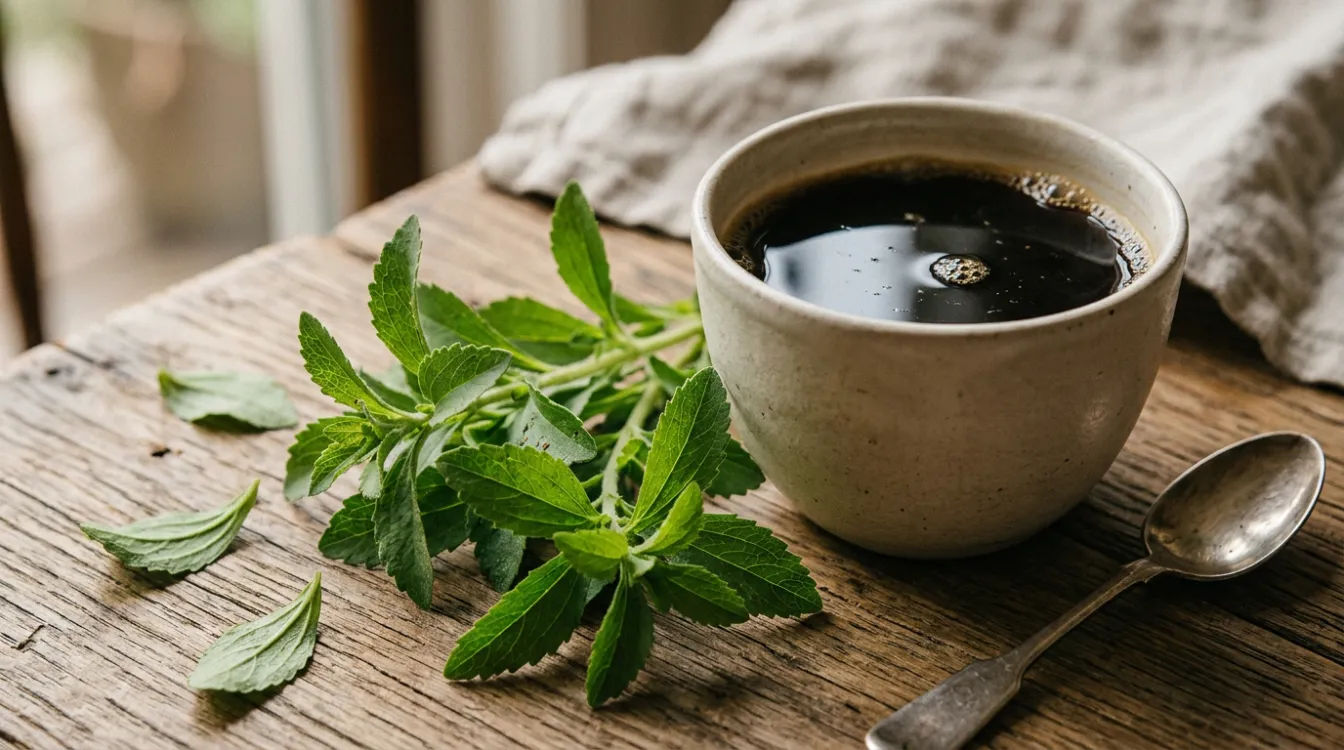
Another option is to gradually reduce sweetness over a few weeks. Taste adapts surprisingly quickly, and many people end up enjoying coffee's natural flavor more.
Flavored syrups and whipped cream
Flavored café drinks can contain far more calories and sugar than plain coffee. Caramel, vanilla, chocolate sauces, sweetened cream and whipped cream can turn a coffee into a dessert.
A medium flavored latte with several additions may contain roughly 200 to 350 calories and 30 to 50 grams of sugar, depending on size, recipe, milk and the number of syrup pumps. That applies whether the base is decaf or regular.
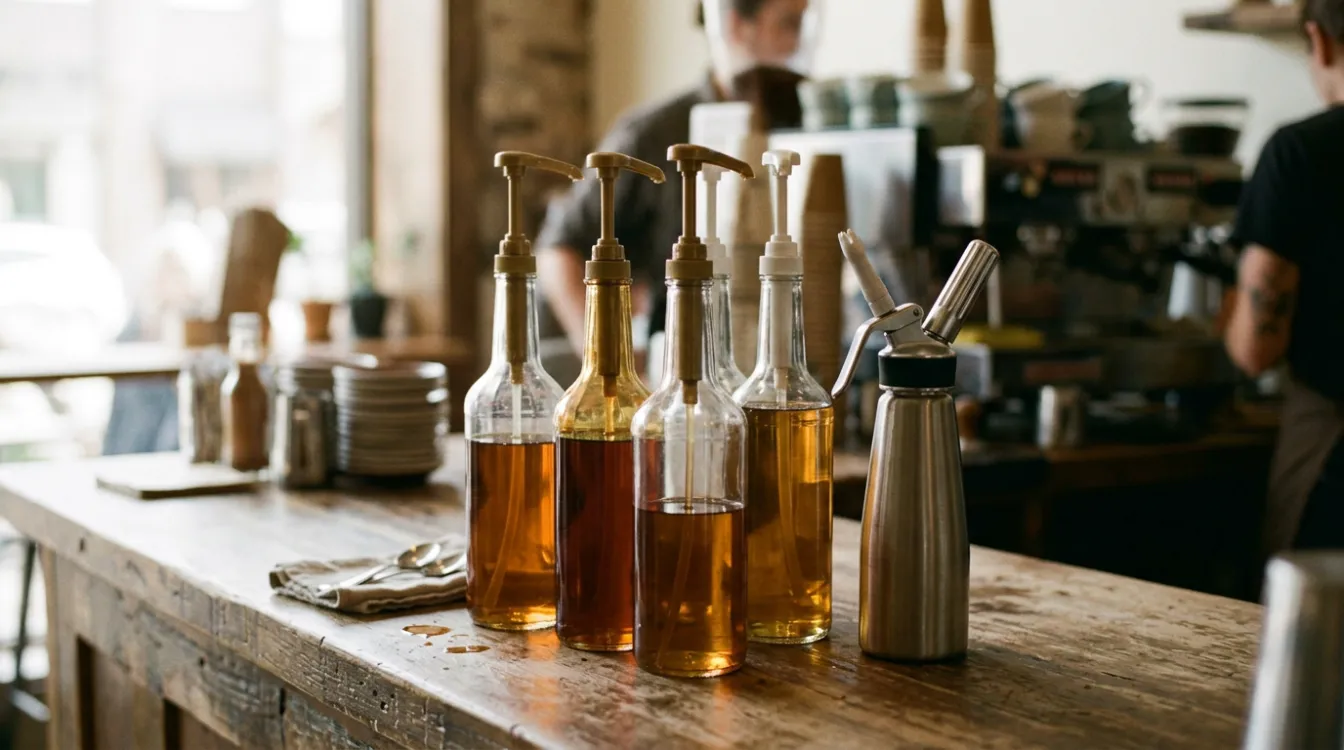
Practical tips:
- Ask for fewer syrup pumps.
- Choose unsweetened milk alternatives.
- Skip the whipped cream most days.
- Order smaller sizes.
- Save heavily flavored drinks for occasional treats.
Does coffee weaken bones?
The idea that coffee weakens bones comes from caffeine's small effect on calcium loss in urine. Decaf has very little caffeine, so it has even less effect.
For regular coffee too, updated research and systematic reviews suggest moderate coffee drinking isn't associated with higher fracture risk when calcium intake is adequate. Calcium, vitamin D, regular weight-bearing exercise and overall diet matter far more for bone health.
Does coffee dehydrate you?
Caffeine has a mild diuretic effect, but coffee is mostly water. For moderate intake, the water in coffee more than makes up for any extra urination, so coffee contributes to hydration. Decaf, with very little caffeine, has even less diuretic effect. Water should still be your main drink, and people on fluid restrictions should follow medical advice.
Is coffee a natural laxative?
Coffee, including decaf, can stimulate bowel movements through gastrin, serotonin-related pathways and direct effects on the muscles of the colon. This is why a morning cup helps some people with constipation.
If coffee causes too much urgency or loose stools, try:
- Weaker coffee.
- Smaller servings.
- Half-caf or decaf.
- Paying attention to other triggers, such as dairy or sweeteners.
Persistent digestive symptoms shouldn't automatically be blamed on coffee and may need a doctor's evaluation.
How to brew better decaf
Decaf behaves a little differently from regular coffee, so a few adjustments help.
- Grind a bit coarser or finer as needed: decaf beans are often more porous and can extract faster. If decaf tastes bitter, try a slightly coarser grind; if it tastes sour or thin, go finer.
- Use fresh beans: decaf can stale faster than regular coffee, so buy small amounts.
- Watch espresso shots: decaf shots often run faster. You may need a finer grind or slightly higher dose to hit your usual shot time. My guide to espresso brew time explains how to dial in.
- Lower water temperature slightly: for darker decafs, slightly cooler water can reduce bitterness.
- Store it well: airtight, cool and dry, or frozen in portions if you drink decaf only occasionally.
Healthier swaps for common coffee add-ins
| Instead of | Try | Why |
|---|---|---|
| Sweetened flavored creamer | Splash of whole milk or unsweetened milk alternative | Less sugar and fewer additives |
| Several pumps of syrup | One pump, or a dash of cinnamon | Big sugar reduction, similar comfort |
| Whipped cream | A light dusting of cocoa | Fewer calories, chocolate flavor |
| Sugar | Gradually less sugar, or stevia or monk fruit | Lower sugar intake |
| Creamer with phosphate additives (kidney disease) | Additive-free unsweetened milk alternative | Less absorbable phosphorus |
| Large flavored latte daily | Small latte or plain coffee most days | Fewer calories and less sugar |
These small changes can make a bigger difference to your health than choosing between regular and decaf.
A simple guide to healthier coffee
- Choose your baseRegular if you tolerate caffeine well; decaf for afternoons, sensitivity or sleep.
- Keep additions simpleA little milk or an unsweetened milk alternative.
- Limit added sugarSave syrups and whipped cream for occasional treats.
- Read labelsEspecially for phosphate additives if you have kidney disease.
- Watch your stomachAdjust strength, timing and type if you get reflux or urgency.
- Mind the clockRegular coffee earlier, decaf later.
My own decaf routine
I drink regular coffee in the morning, usually one or two cups, and switch to decaf after lunch. I keep a bag of Swiss Water decaf in the cupboard and a few frozen portions of special decafs for weekends.
In the afternoon I usually make a decaf pour-over, black. On cold evenings, a small decaf flat white with whole milk is my treat. It gives me the comfort of coffee without affecting my sleep, and I genuinely look forward to it.
Common decaf mistakes
- Buying a huge bag: if you only drink decaf occasionally, a large bag will go stale before you finish it. Buy small or freeze portions.
- Treating decaf as second-class: use the same care with grind, ratio and water temperature as you would for regular coffee.
- Assuming all decaf tastes the same: origin, roast and method all matter. Try a few until you find one you love.
- Forgetting the grinder: if you grind regular and decaf in the same grinder, leftover regular grounds can add caffeine. Purge the grinder with a few grams of decaf first.
- Loading it with sugar: a sweet decaf latte still carries the sugar and calories of any sweet drink.
Avoiding these mistakes is the difference between decaf as a sad compromise and decaf as a genuine pleasure.
Ordering decaf in a café
Many cafés now take decaf as seriously as their regular coffee, but quality still varies. A few tips:
- Ask which decaf they use. Good cafés will know the origin and method.
- Choose espresso drinks or pour-over when you can. Batch-brewed decaf may sit for a while if few people order it.
- Try it black first. It's the best way to judge whether a café's decaf is any good.
- Ask for half-caf if you want a gentler lift rather than none at all.
- Remember that decaf lattes are still lattes. The calories and sugar come from the milk and syrups, not the decaf.
In my experience, a café that serves a genuinely good decaf usually pays attention to quality across its whole menu.
Decaf cold brew and iced coffee
Decaf works well for cold brew and iced coffee, which is great news for warm afternoons and evenings. Use a fresh, medium-roast decaf, grind coarsely and steep for 12 to 18 hours. Decaf can extract a little faster than regular coffee, so taste it earlier. My guide to the science of cold brew explains the method in detail.
Decaf cold brew concentrate keeps well in the fridge, so you can have a smooth, low-caffeine iced coffee ready whenever you want one.
Serving decaf to guests
When I host dinners, I always make a pot of decaf alongside the regular coffee. Many guests appreciate the option, especially in the evening, and a good decaf with dessert is a lovely way to end a meal without anyone lying awake later.
Label the pots clearly, keep both fresh and, if you're making espresso drinks, use separate grinders or purge the grinder between coffees so the decaf stays genuinely low in caffeine.
How to read a decaf label
Decaf bags don't always explain how the coffee was decaffeinated, but there are clues.
- "Swiss Water Process" or "SWP": water and carbon filtration, no solvents.
- "CO2 process" or "Mountain Water/CO2": solvent-free methods using carbon dioxide or water.
- "Sugarcane decaf," "natural decaf" or "EA process": ethyl acetate.
- "Decaffeinated" with no method listed: often methylene chloride, but not always; ask the roaster if it matters to you.
- Roast date: as with any coffee, fresher is better.
- Origin details: country, region and tasting notes help you choose a decaf you'll enjoy.
If you care about the method, specialty roasters are usually happy to tell you exactly how their decaf was made.
Are there naturally low-caffeine coffees?
A few coffee plants naturally produce less caffeine. The best-known example is Laurina, also called Bourbon Pointu, an arabica variety with roughly half the caffeine of typical arabica. Some wild coffee species have very little caffeine, and researchers have been exploring them as possible sources of naturally low-caffeine coffee.
These coffees are rare and usually sold in small quantities, so they aren't a practical everyday alternative for most people. But they're a fascinating option for coffee lovers who want something different. My guide to coffee varieties explains how varieties differ.
Decaf vs half-caf vs tea
| Option | Caffeine | Flavor | Best for |
|---|---|---|---|
| Regular coffee | Highest | Full coffee flavor | Mornings, people who tolerate caffeine |
| Half-caf | About half | Full coffee flavor | Cutting back gradually |
| Decaf coffee | Very low | Coffee flavor, sometimes slightly milder | Afternoons, sensitive people, pregnancy |
| Green or black tea | Low to moderate | Different, often lighter | A gentler lift, people with coffee reflux |
| Herbal tea | None | Varies widely | Evenings, caffeine-free days |
Decaf, medications and health conditions
Some medications interact with caffeine, either increasing its effects or being affected by it. Examples include certain antibiotics, some antidepressants, some heart medications and stimulants. People taking these may be advised to limit caffeine, and decaf can be a helpful alternative.
Decaf can also suit people with:
- Anxiety or panic disorders.
- Insomnia.
- Heart rhythm problems.
- High blood pressure that's sensitive to caffeine.
- Reflux that's worse with caffeine.
- Bladder urgency.
If you have a health condition or take regular medication, ask your doctor or pharmacist whether caffeine is a concern and whether decaf is a good choice for you.
Is decaf OK for teenagers?
Teenagers are often advised to limit caffeine, especially from energy drinks and large café drinks. Decaf can let teens enjoy coffee drinks with friends without much caffeine. Just watch the sugar in flavored drinks, which is usually the bigger issue.
Who might benefit from decaf?
Decaf is a great choice for people who:
- Feel anxious, jittery or restless after caffeine.
- Have trouble sleeping or want coffee later in the day.
- Experience palpitations or have been advised to limit caffeine.
- Are pregnant and following caffeine limits.
- Have reflux that's worse with regular coffee.
- Want to cut back without giving up the coffee ritual.
- Are tapering off caffeine. My guide on what happens when you quit coffee covers how to do that comfortably.
How to choose a decaf that tastes great
Decaf has improved enormously. Many specialty roasters now offer decafs that taste every bit as good as their regular coffees.
- Check the method: Swiss Water, CO2 and ethyl acetate (sugarcane) decafs are popular with specialty roasters.
- Look for a roast date: decaf goes stale like any coffee, and some decafs age faster, so freshness matters.
- Buy whole beans: grind just before brewing.
- Choose origins you like: decaf is made from all kinds of coffees, from chocolatey Colombians to fruity Ethiopians.
- Store it properly: keep it airtight, cool and dry. If you drink decaf only occasionally, freeze it in small portions. My guide on whether you can freeze coffee explains how.
Myths about decaf coffee
"Decaf is full of dangerous chemicals"
Regulated methods leave only trace residues, and solvent-free options are widely available.
"Decaf has no health benefits"
It keeps most of coffee's antioxidants and is linked to lower diabetes risk and mortality in studies.
"Decaf has zero caffeine"
It contains a small amount, usually only a few milligrams per cup.
"Decaf won't affect your stomach"
It can still stimulate digestion and cause reflux in some people, though usually less than regular coffee.
"Decaf tastes bad"
Older decafs often did, but good modern decafs from fresh, quality beans can taste excellent.
The verdict: is decaf healthy?
Yes, for most people decaf is a healthy choice. Properly regulated decaffeination is safe, and if you'd rather avoid solvents, Swiss Water and CO2 decafs are easy to find. Decaf keeps most of coffee's polyphenols, chlorogenic acids and antioxidants, and it shares many of regular coffee's health associations, including lower risk of type 2 diabetes and lower mortality.
What decaf mostly removes is the caffeine, making it ideal for people sensitive to stimulants, people who drink coffee later in the day and anyone cutting back.
The bigger health questions are about what you add: sugary creamers, syrups, whipped cream and, for people with kidney disease, phosphate additives. Keep your coffee simple, choose your base according to your caffeine tolerance and enjoy it.
Frequently asked questions
Is decaf coffee healthy?
Yes, for most people. It keeps most of coffee's beneficial compounds with very little caffeine.
Does decaf have caffeine?
A little, usually only a few milligrams per cup.
Are decaf chemicals safe?
Regulated methods leave only trace residues considered safe.
What is Swiss Water decaf?
Decaf made using only water and carbon filtration, without chemical solvents.
Does decaf cause acid reflux?
It can, but usually less than regular coffee.
Does decaf make you poop?
It can; coffee stimulates the colon even without caffeine.
Are coffee creamers bad for you?
Many contain added sugar, oils and phosphate additives, so simple additions are better.
Should people with kidney disease avoid some creamers?
Yes, phosphate additives can be a concern; ask a doctor or renal dietitian.

- Michael Reynolds, daily decaf drinker
- Decaffeination, Wikipedia
- Swiss Water Process, Wikipedia
- Phosphorus diet for kidney disease, National Kidney Foundation
- Health effects of coffee, Wikipedia
Related guides
Coffee and longevity What happens when you quit coffee Plant-based milks in coffeeWritten by Michael Reynolds. Last updated November 20, 2026.