De’Longhi Classic vs De’Longhi Classic Signature
The De’Longhi Classic and the De’Longhi Classic Signature share a name and a traditional look, but they are different machines inside. The Classic is a 15-bar thermoblock machine with a 51 mm portafilter, a pressure gauge and a 57 oz tank. The Classic Signature puts the internals of a slim De’Longhi Dedica into a traditional body, with a central gauge, top buttons and a cup warmer. I used each as my everyday espresso machine for four weeks to find out which is better for you.
We choose products independently. We may earn a commission when you buy through our links. Affiliate policy
Jargon helpNew to espresso? Tap any dotted term to see what it means.
In this comparison
For most people, buy the De’Longhi Classic. Its 51 mm portafilter made slightly better espresso, it takes cheap upgrades like a bottomless portafilter and a single-wall basket, and its steam wand made better milk. Buy the Classic Signature if you want the quickest, simplest routine and like its traditional look with a central gauge and cup warmer.
The two machines
Specs checked November 24, 2026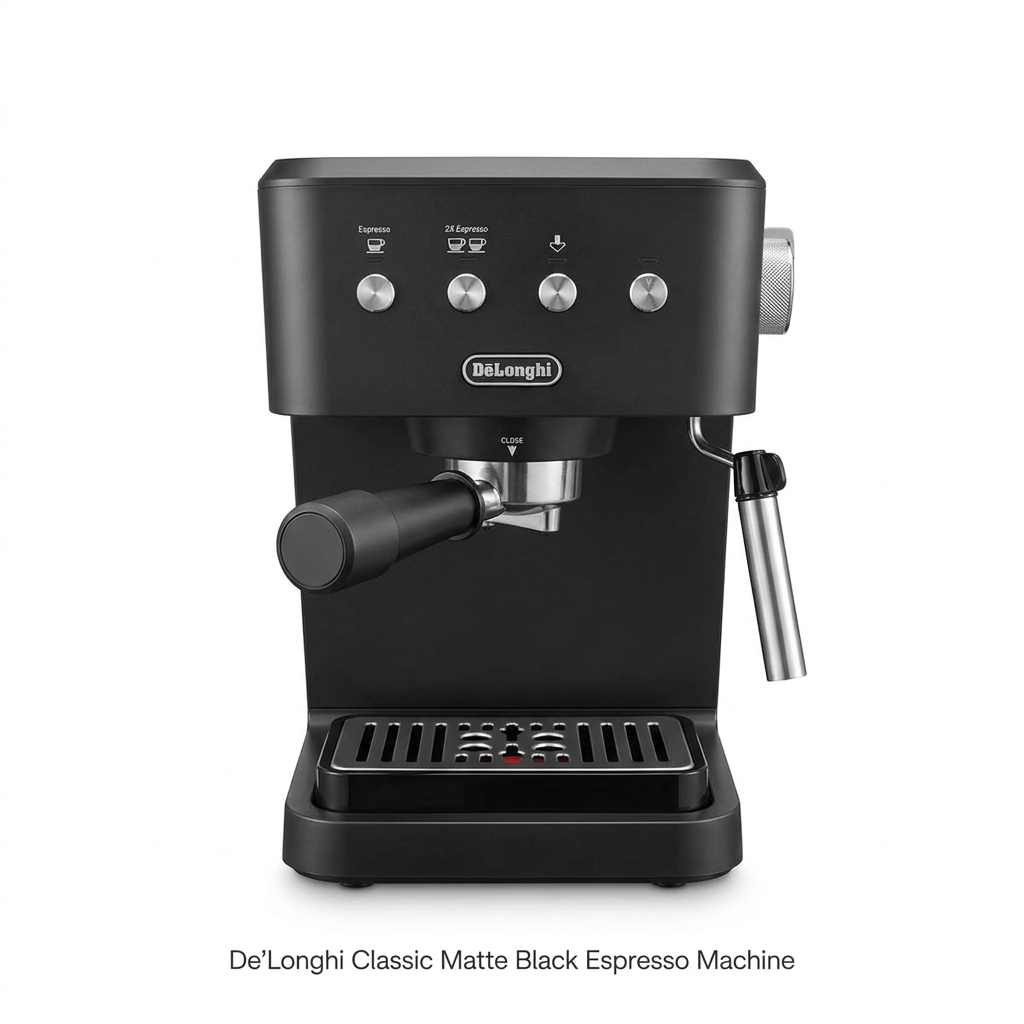
15-bar thermoblock machine with a pressure gauge, a 51 mm portafilter that takes upgrades and a 57 oz tank.
Check price on Amazon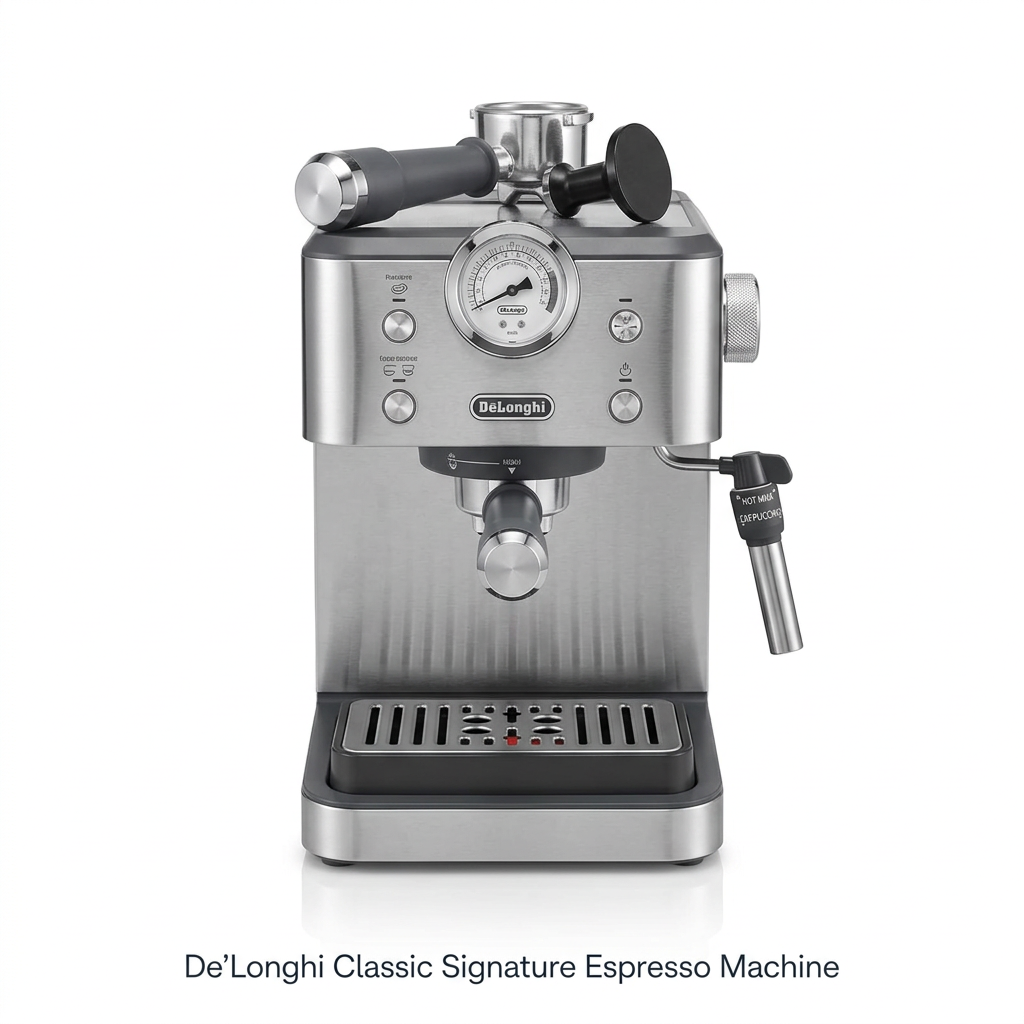
Dedica internals in a traditional body, with a central gauge, top buttons, a cup warmer and a fast heat-up.
See Today’s PriceClassic vs Classic Signature at a glance
- Both are light, affordable pump espresso machines with pressure gauges.
- The Classic made slightly better espresso and milk, and takes cheap upgrades.
- The Signature was quicker to heat and simpler day to day.
- Both are light enough to slide when locking the portafilter, so hold them.
Head to head
The best result in each row is marked, based on my four weeks with each machine and the manufacturer specs.
The two are close overall; the Classic wins on coffee and upgrades, the Signature on speed and ease.
| Spec | Classic | Classic Signature |
|---|---|---|
| Espressomy tasting | Fuller, more even ✓ Best | Good, a little thinner |
| Milk | Better foam ✓ Best | Good |
| Ease of use | Easy | Easiest ✓ Best |
| Heat-up | Quick | About 15 s ✓ Best |
| Portafilter | 51 mm, takes upgrades ✓ Best | Proprietary, plastic-heavy |
| Pressure gauge | Yes | Yes, central |
| Cup warmer | No | Yes ✓ Best |
| Water tank | 57 oz ✓ Best | Larger than the Dedica’s |
| Descaling help | A/B lines on the tank ✓ Best | Standard |
| Rows won | 5 | 3 |
The Classic wins five rows and the Signature three, with the gauge a tie.
Is It On Sale? Check NowClassic vs Classic Signature pros and cons
De’Longhi Classic
- Good espresso with a pressure gauge
- 51 mm portafilter takes cheap upgrades
- Big 57 oz tank with A/B descaling lines
- Light portafilter out of the box
- Frothing sleeve needs a trick for microfoam
- Light body moves when locking in
De’Longhi Classic Signature
- Heats in about 15 seconds
- Simple top buttons and a central gauge
- Cup warmer and a traditional look
- Hollow, plastic-heavy proprietary portafilter
- No milk pitcher or single-wall basket included
- Light, so it slides when locking in
Who should buy which machine?
- Better espresso and milk
- Cheap upgrades later
- A bigger tank
- The quickest routine
- A traditional look with a cup warmer
- Simple one-touch buttons
What is different inside
Both use a thermoblock✕ThermoblockA heater that warms water as it passes through a heated metal block, so it is ready quickly without a full boiler. and a pump, not a boiler, so both heat quickly and make real pump espresso.
The Classic is rated at 15 bar, with a pressure gauge on the front, a 51 mm portafilter with angled tabs and a 57 oz water tank.
The Classic Signature uses the same internals as the slim De’Longhi Dedica, in a wider, traditional body. It keeps the Dedica’s fast heat-up and simple buttons, and adds a central gauge, a cup warmer and a larger tank than the Dedica.
The biggest practical difference is the portafilter: the Classic’s accepts standard 51 mm accessories; the Signature’s is proprietary.
| Inside | Classic | Classic Signature |
|---|---|---|
| Heater | Thermoblock | Thermoblock (Dedica internals) |
| Pressure | 15 bar, gauge | Gauge, central |
| Portafilter | 51 mm, angled tabs | Proprietary |
| Tank | 57 oz | Larger than the Dedica’s |
If you are weighing the slim original too, my De’Longhi Dedica review covers it.
In use, the shared thermoblock idea means both behave similarly: quick to heat, a short pause between brewing and steaming, and a steady but modest amount of steam. The differences you feel day to day come from the parts around the thermoblock, the portafilter, the wand and the controls, rather than from the heating system itself.
Design, size and build
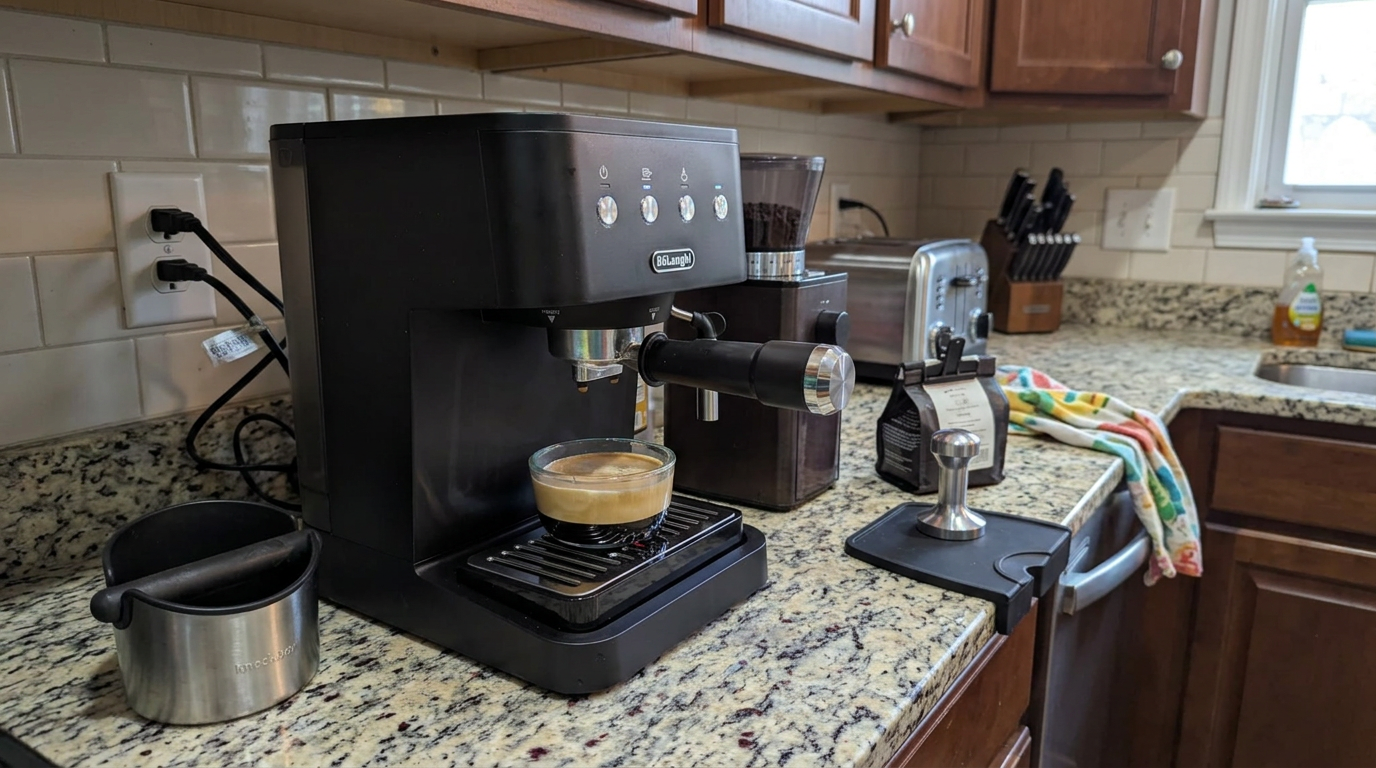
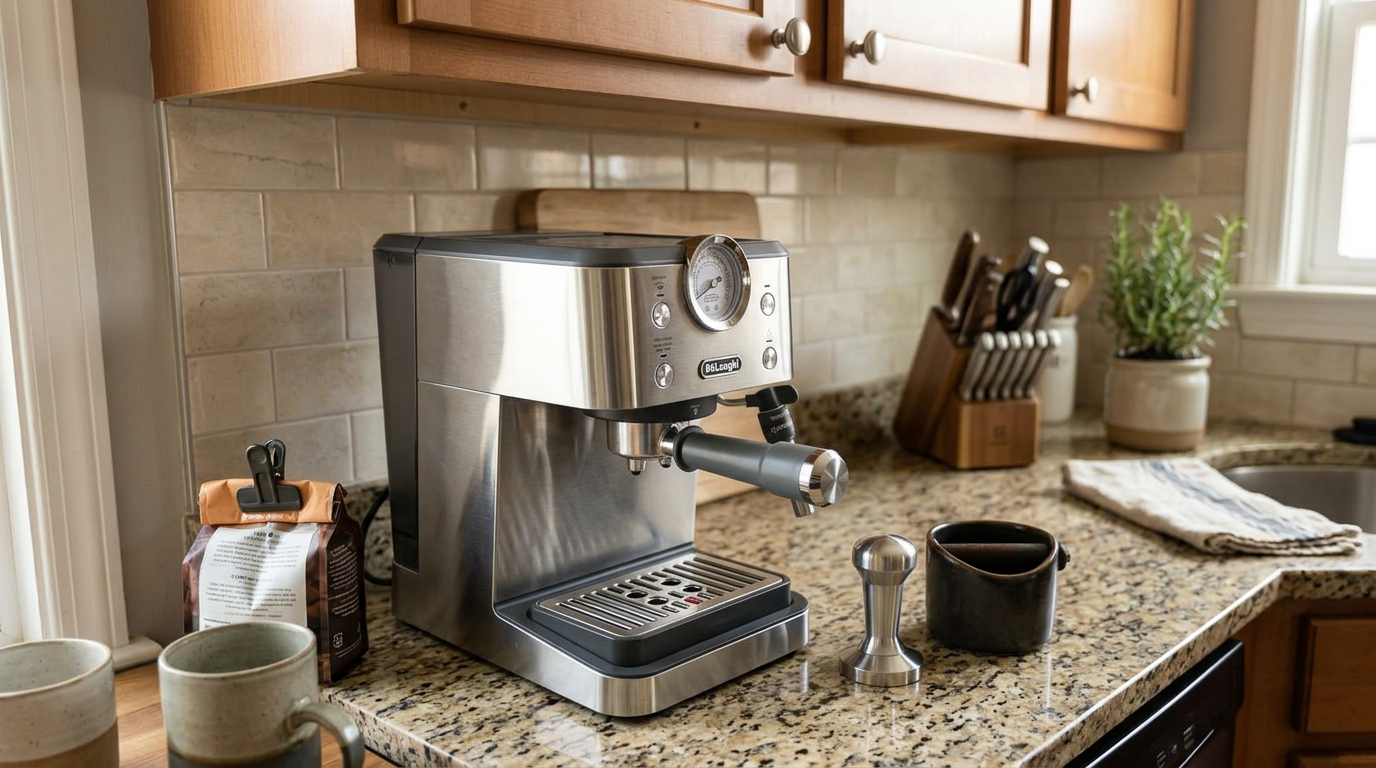
The Classic I tested was the matte black version. It is about 8.9 x 11.1 x 12 inches and about 9 pounds, with a round gauge on the front, a rotary selector and a steam knob. The matte finish hid fingerprints well.
The Classic Signature has a traditional, slightly retro body with the gauge in the center, buttons on top and a cup warmer plate on the lid.
Both are light. The upside is that they are easy to move and store; the downside is that both slid backwards on the counter when I twisted the portafilter in, so I held the machine with my other hand.
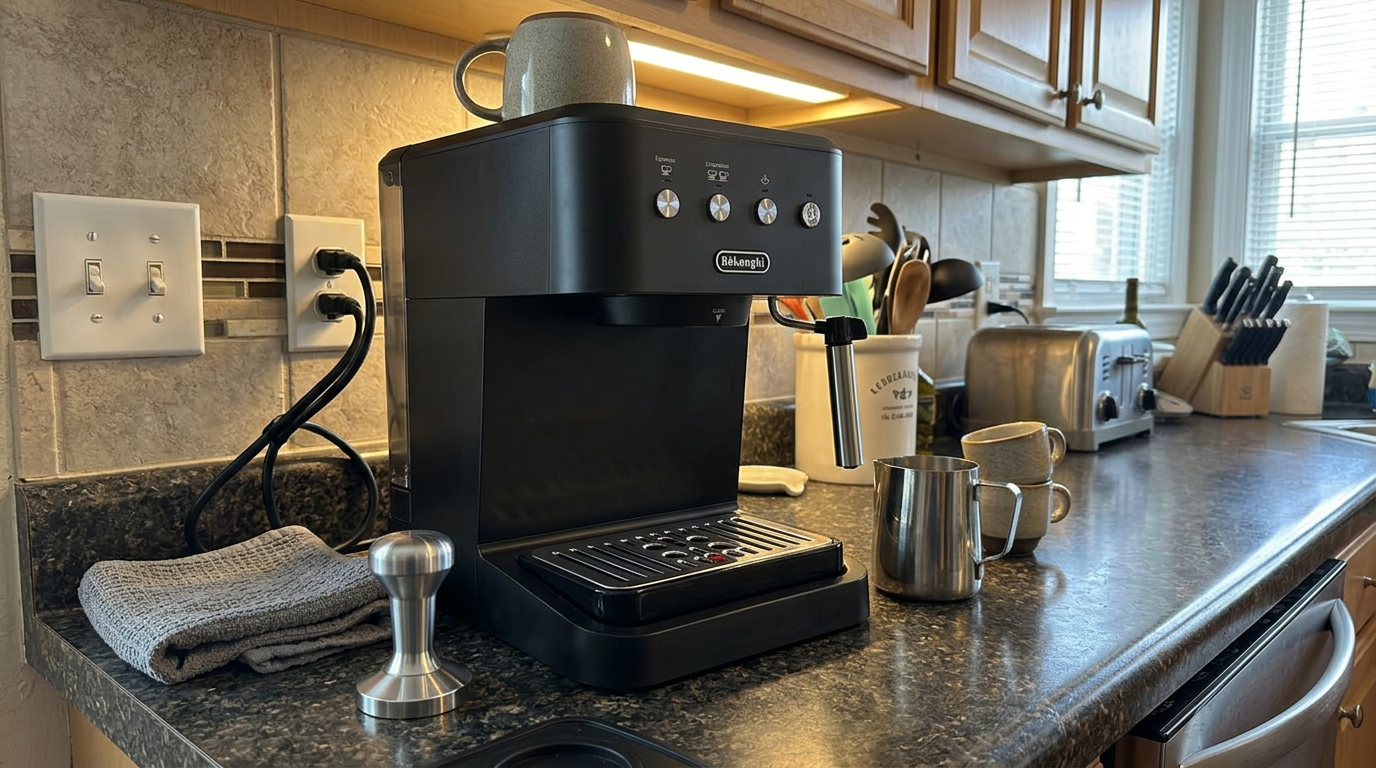
The Classic’s matte black finish and front gauge.
Our tip: Hold either machine with your free hand when you lock in the portafilter so it does not slide.
On my counter, the Classic’s matte black blended in better with dark appliances, while the Signature’s traditional styling looked more like a small café machine. If the machine will live on display, look closely at both finishes; looks were the Signature’s strongest argument after speed.
Setup and first shot
Both took about 15 minutes to unbox, rinse and prime. I ran a couple of tanks of water through the group and wand before the first shot.
On the Classic, my first shots with pressurized baskets were drinkable right away. On the Classic Signature, the same was true, and the quick heat-up made it the faster of the two to get going.
Neither includes much extra. The Signature came without a milk pitcher and without a single-wall basket, so I bought a small pitcher for both.
| Setup step | Classic | Classic Signature |
|---|---|---|
| Unbox to first shot | About 15 min | About 15 min |
| First shot quality | Drinkable | Drinkable |
| Missing from the box | Better tamper | Milk pitcher, single-wall basket |
| Trickiest part | Locking in without sliding | Locking in without sliding |
One tip from setup: rinse the portafilter, baskets and drip tray in warm water before first use, and pull a few blank shots through the group to clear any manufacturing taste. On both, my first two or three shots tasted slightly metallic until I had flushed a full tank of water through.
Controls and gauge
The Classic uses a rotary selector for brew and steam, with a separate steam knob and a gauge on the front. It is simple, and the gauge showed me when my grind or tamp was off.
The Classic Signature has buttons on top for one shot, two shots and steam, and a central gauge that is easy to read from where you stand. It was the simpler of the two day to day.
| Control | Classic | Classic Signature |
|---|---|---|
| Brewing | Rotary selector | One- and two-shot buttons |
| Steam | Selector and knob | Button and knob |
| Gauge | Front | Central, easy to read |
| Learning time | A day | Minutes |
On both, the gauge is a guide rather than a precise measurement, but it was useful for spotting shots that ran far too fast or too slow.
The Signature’s top buttons were easier for guests, too: everyone in my household worked out how to make a double shot without asking. The Classic’s rotary selector needed a quick explanation the first time, but after that it was just as easy, and I liked having the steam knob to control the steam power.
Heat-up and speed
The Classic Signature heated in about 15 seconds, and my whole routine for one espresso took about a minute. That is the Dedica internals at work.
The Classic was also quick, but I let it run a blank shot through the portafilter to warm the metal before brewing, which added a minute or so.
Ready to brew from cold
My timings; I flushed the Classic to warm the portafilter.
Our tip: Run a blank shot through the empty portafilter before brewing to warm it up on either machine.
In practice, both are fast enough for a weekday morning. The difference is that the Signature is ready before you have finished grinding, while the Classic benefits from a short flush to warm its portafilter. If you make one quick espresso before work, the Signature’s speed is a real advantage.
Espresso quality
Both make real pump espresso with crema, and both are a step up from steam machines.
The Classic made the fuller, more even shots. With about 14 g of coffee in the double basket and a slightly coarser grind than I would use on a bigger machine, it gave sweet, chocolatey espresso with medium-dark beans. Once I added a single-wall basket and a bottomless portafilter, the shots improved again.
The Classic Signature made good espresso with a dose of 13 to 14 g, but it was a little thinner, and its pressurized basket gave crema that looked better than it tasted. A cheap third-party single-wall basket helped noticeably.
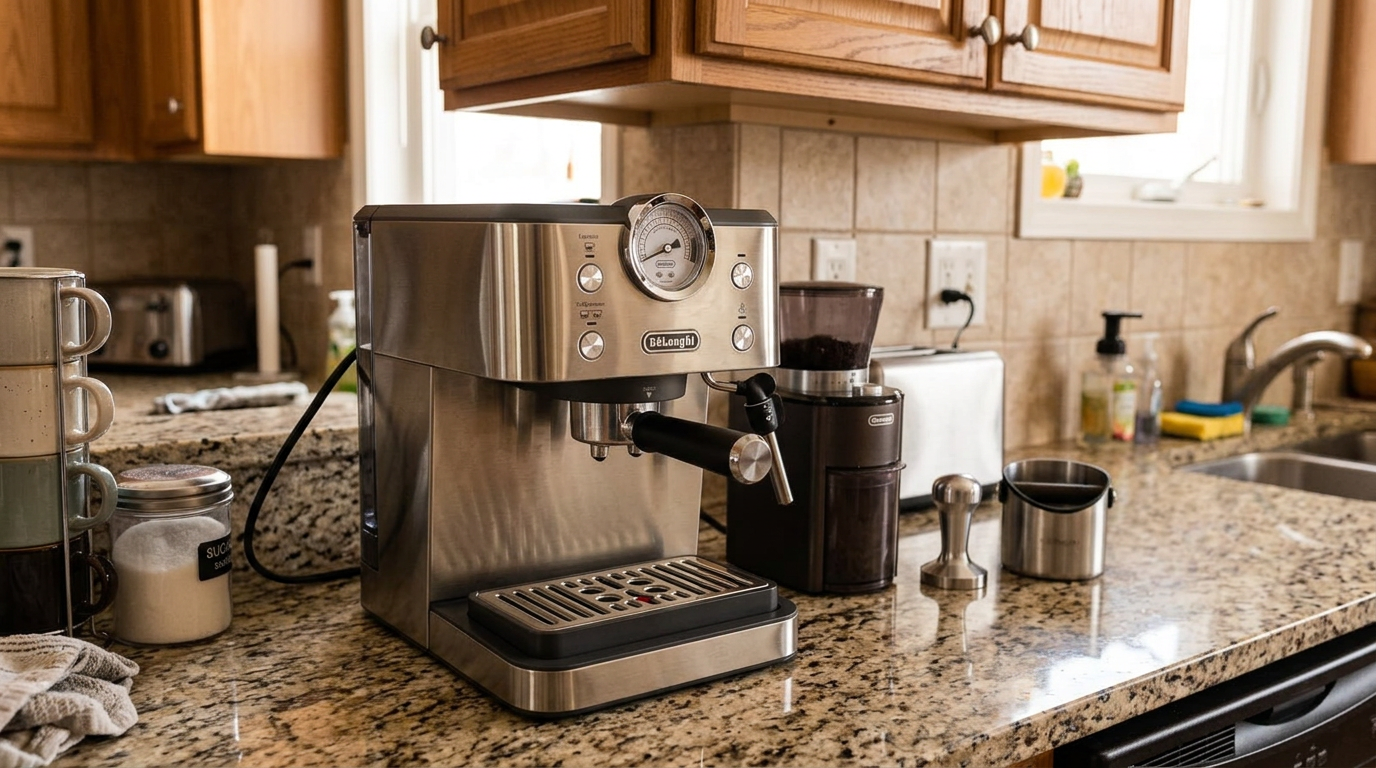
The Classic Signature’s traditional body with a central gauge.
My espresso ratings
Ratings out of 10 from my single reviews.
| What you taste | Likely cause | Fix |
|---|---|---|
| Sour, thin | Grind too coarse, shot too fast | Finer grind |
| Bitter | Grind too fine, shot too long | Slightly coarser |
| Big, bubbly crema, flat taste | Pressurized basket | Try a single-wall basket with fresh, finely ground coffee |
My guide to espresso pressure explains what the gauge is really telling you.
Reveal Today’s DealTo compare fairly, I pulled shots from the same bag of medium-dark beans on both, at the same dose and ratio, every morning for a week. In blind side-by-side tastings, I picked the Classic’s shot as the better one most of the time, mostly for its fuller texture and longer finish. Under milk, the gap narrowed, and in a cappuccino the two were hard to tell apart.
Portafilters and baskets
The Classic’s portafilter is a 51 mm design with angled tabs. Out of the box it feels light, but it fits standard 51 mm accessories, which opens the door to cheap upgrades.
The Classic Signature’s portafilter is proprietary, hollow and plastic-heavy. It works, but it feels cheap and limits your choices. A low-cost third-party single-wall basket did fit and worked well in my testing.
| Portafilter | Classic | Classic Signature |
|---|---|---|
| Size | 51 mm, angled tabs | Proprietary |
| Feel | Light | Hollow, plastic-heavy |
| Upgrades | Wide choice | Limited |
| Single-wall basket | Fits standard 51 mm | Cheap third-party one worked |
My guide to coffee grind size explains why single-wall baskets need a finer, fresher grind.
In daily use, the Classic’s angled tabs locked in smoothly once I held the machine steady. The Signature’s portafilter locked in fine too, but it felt light and hollow in the hand and lost heat faster, which is another reason I flushed hot water through it before every shot.
Upgrades I tested
On the Classic, I tested a bottomless portafilter with a single-wall basket. It was the biggest improvement of the whole test: the shots were richer, and the bottomless design showed me immediately when my distribution was uneven.
On the Classic Signature, the only upgrade that made sense was a cheap single-wall basket. It helped, but the proprietary portafilter limits how far you can go.
| Upgrade | Classic | Classic Signature |
|---|---|---|
| Bottomless portafilter | Yes, tested | Not practical |
| Single-wall basket | Yes, tested | Yes, tested |
| Better tamper | Recommended | Recommended |
| Result | Big step up | Modest step up |
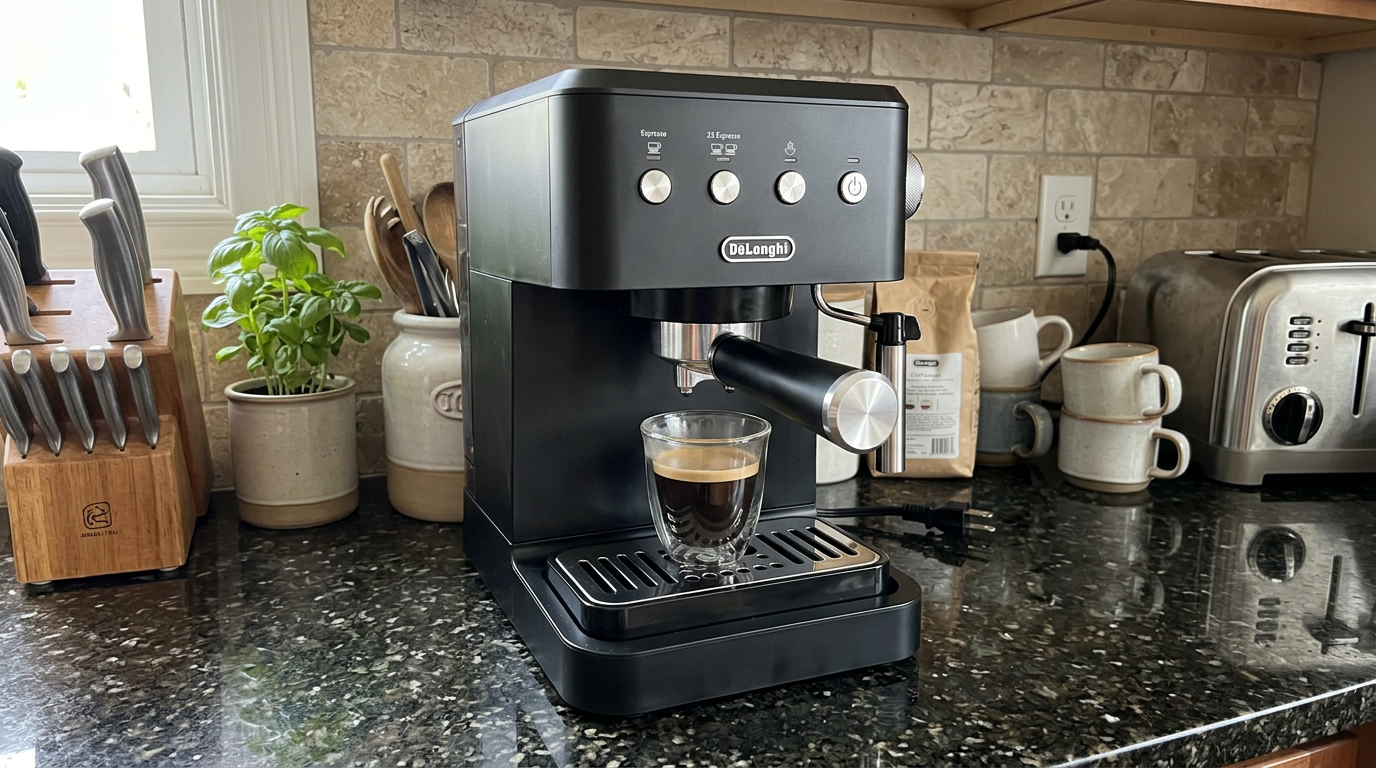
The Classic improved the most with a bottomless portafilter and single-wall basket.
If you are wondering whether these upgrades are worth it on an affordable machine, my answer for the Classic is yes: together, a bottomless portafilter and a single-wall basket turned it from a good beginner machine into one that made genuinely satisfying espresso. On the Signature, I would buy the single-wall basket and stop there, and put any remaining budget toward a better grinder instead.
Extras worth buying
Neither machine comes with everything you need for your best coffee, so here is what made a real difference in my testing.
A small stainless milk pitcher. It made foaming much easier to control on both, and the Signature comes without one.
A better tamper. The plastic tampers included with machines like these are light and imprecise. A properly sized metal tamper gave me a more even puck.
A single-wall basket. Worth it on both once you have a burr grinder.
A bottomless portafilter, for the Classic only. It was the single best upgrade in the test.
A small scale. Weighing the dose and yield made dialling in quicker on both.
| Extra | Classic | Classic Signature |
|---|---|---|
| Milk pitcher | Useful | Needed |
| Better tamper | Recommended | Recommended |
| Single-wall basket | Standard 51 mm | Third-party fit |
| Bottomless portafilter | Yes | No |
| Scale | Helpful | Helpful |
None of these extras is essential on day one. Start with the machine as it comes, learn its rhythm for a week or two, and then add the pitcher and tamper first.
Milk and steaming
The Classic has a Panarello wand✕Panarello wandA steam wand with a sleeve that pulls in air automatically, making foam easy but harder to control for silky microfoam.. With the sleeve on, it made thick, bubbly cappuccino foam with no skill needed. The sleeve is removable, and with it off, plus a small zip tie around the nozzle to stop it slipping, I got smoother microfoam good enough for basic latte art.
The Classic Signature’s wand made good, easy foam for cappuccinos and lattes, but I could not get it quite as silky as the Classic’s with the sleeve removed.
Milk ratings
My single-review milk scores out of 10.
| Milk | Classic | Classic Signature |
|---|---|---|
| Easiest foam | Sleeve on | Default |
| Silky microfoam | Sleeve off, zip-tie trick | Harder |
| Latte art | Basic, with practice | Difficult |
| Milk pitcher included | Not in my box | No |
My guide to the science of steamed milk explains why removing the sleeve changes the foam.
Our tip: For silkier milk on the Classic, take off the frothing sleeve and keep the wand tip just under the surface.
See How Much You’ll SaveMilk choice made a big difference on both. Cold whole milk gave the thickest, sweetest foam. Two-percent foamed well but turned airy faster. Barista oat milk was the best non-dairy option on both; almond milk made big bubbles that collapsed quickly. Starting with very cold milk in a cold pitcher gave me more time to texture the milk before it got too hot, which helps on thermoblock machines with modest steam power.
On both, I purged the wand for a second before steaming to clear water, then again after to clear milk, and wiped it straight away.
Drinks I made most
Over four weeks per machine, these were the drinks I made most, and how each machine handled them.
Espresso: a double shot of about 14 g in and 28 to 30 g out. The Classic was better, especially with the bottomless portafilter.
Cappuccino: a double shot with thick foam. Both were easy, the Classic with its sleeve on and the Signature by default.
Flat white and latte: silkier milk with less foam. The Classic with its sleeve off was the better machine for these.
Americano: a double shot topped with hot water. Both did well; the Signature’s cup warmer kept it hotter for longer.
Iced latte: a double shot over ice with cold milk. Both were equally good, since there is no steaming involved.
| Drink | Better machine | Why |
|---|---|---|
| Espresso | Classic | Fuller body, upgrades |
| Cappuccino | Tie | Both foam easily |
| Flat white, latte | Classic | Silkier milk, sleeve off |
| Americano | Classic Signature | Cup warmer |
| Iced latte | Tie | No steaming needed |
Our tip: For iced lattes on either machine, pull the shot straight over ice so it chills fast without tasting watery.
Beans, grind and dose
Both machines are small-basket machines, so they want smaller doses than big 58 mm machines. I used about 14 g on the Classic and 13 to 14 g on the Classic Signature.
With pressurized baskets, pre-ground espresso coffee worked fine on both. With single-wall baskets, I needed freshly ground beans from a burr grinder. On the Classic, a slightly coarser grind than on my other machines gave the best balance.
Medium and medium-dark roasts were the easiest on both. Light roasts were harder to get sweet.
| Starting recipe | Classic | Classic Signature |
|---|---|---|
| Dose | About 14 g | 13 to 14 g |
| Yield | About 1:2 | About 1:2 |
| Time | 25 to 30 s | 25 to 30 s |
| Grind | Slightly coarser fine | Fine |
My guide to coffee roast levels helps you choose beans that suit these machines.
Our tip: Start at about 14 g in the double basket on either machine and adjust the grind before you change the dose.
Freshness mattered more than origin on both machines. Beans roasted within the last few weeks gave noticeably more crema and sweetness, especially with single-wall baskets. Older supermarket beans tasted flat on both, even when the shot time looked right. If you buy pre-ground coffee, buy small bags and keep them sealed, and stay with the pressurized baskets.
I also found that both machines liked a slightly shorter ratio than I use on bigger machines. Stopping the shot a few seconds earlier, at about 1:1.8, gave a sweeter, rounder espresso from the small baskets.
Cleaning and descaling
Daily care is the same on both: knock out the puck, rinse the basket, flush the group, purge and wipe the wand, and empty the drip tray.
The Classic’s 57 oz tank has A and B lines printed on it for the descaling solution and water, which made descaling straightforward. The Panarello sleeve needs rinsing after every milk drink, as milk dries inside it quickly.
The Classic Signature follows a standard descaling routine from the manual. Its simpler wand was slightly quicker to wipe.
| When | Classic | Classic Signature |
|---|---|---|
| After each shot | Knock out, rinse, flush | Knock out, rinse, flush |
| After milk | Rinse the sleeve, purge | Wipe and purge |
| Daily | Empty drip tray | Empty drip tray |
| Regularly | Descale with A/B lines | Descale per manual |
Cleaning ratings
My single-review scores out of 10.
Water and long-term care
Thermoblocks are sensitive to scale, so water matters on both machines. I used filtered water throughout, which kept the flow steady and the taste clean.
With moderately hard water, I would descale either machine about every month or two; with soft or filtered water, less often. The Classic’s A and B lines on the tank made mixing the descaler easy. On the Classic Signature, I followed the manual’s routine, which took about the same time.
Beyond descaling, the parts that wear on both are the group gasket and the shower screen. Keeping the group clean with a quick flush and a wipe after each session will make both last longer.
| Water | Effect | What I did |
|---|---|---|
| Very hard | Fast scaling, slower flow | Descale monthly |
| Moderate | Some scaling | Descale every month or two |
| Filtered | Clean taste, little scale | Descale less often |
| Distilled | Flat taste | Avoid |
My guide to water chemistry for coffee explains why filtered tap water is the safe middle ground.
Our tip: Use filtered water in either machine; it protects the thermoblock and makes the espresso taste cleaner.
Both machines also benefit from being switched off after use rather than left on all day, which saves energy and reduces wear on the heating element.
Noise
Both use vibratory pumps that buzz while brewing, and the volume was similar. The steam wands hissed at a similar level too. Neither is loud enough to be a problem in a small apartment, and neither has a grinder to add noise.
The loudest moment on both was steaming, which produced a steady hiss for the 30 to 60 seconds it took to heat a small pitcher of milk. Early in the morning, neither woke anyone in my home.
Serving guests
For two drinks, both were quick. For four milk drinks, both slowed down, because a thermoblock needs a short pause between brewing and steaming, and steaming one jug at a time takes a while.
The Classic Signature’s quick heat-up and cup warmer helped here: warm cups kept the drinks hotter while I made the rest. The Classic’s bigger tank meant no refill mid-session.
Four cappuccinos, start to finish
My timings, one jug of milk at a time.
My tip for guests on either machine is to pull all the shots first into warmed cups, then steam one larger pitcher of milk and pour from it. That saves the pause between brewing and steaming for each drink, and on the Signature the cup warmer keeps the waiting shots hot.
Build quality
Neither feels heavy or premium. The Classic felt a little sturdier, with a better portafilter and a solid steam knob. The Classic Signature looks more traditional, but its hollow portafilter and light body felt the cheapest part of the test.
Nothing broke, leaked or loosened on either in four weeks.
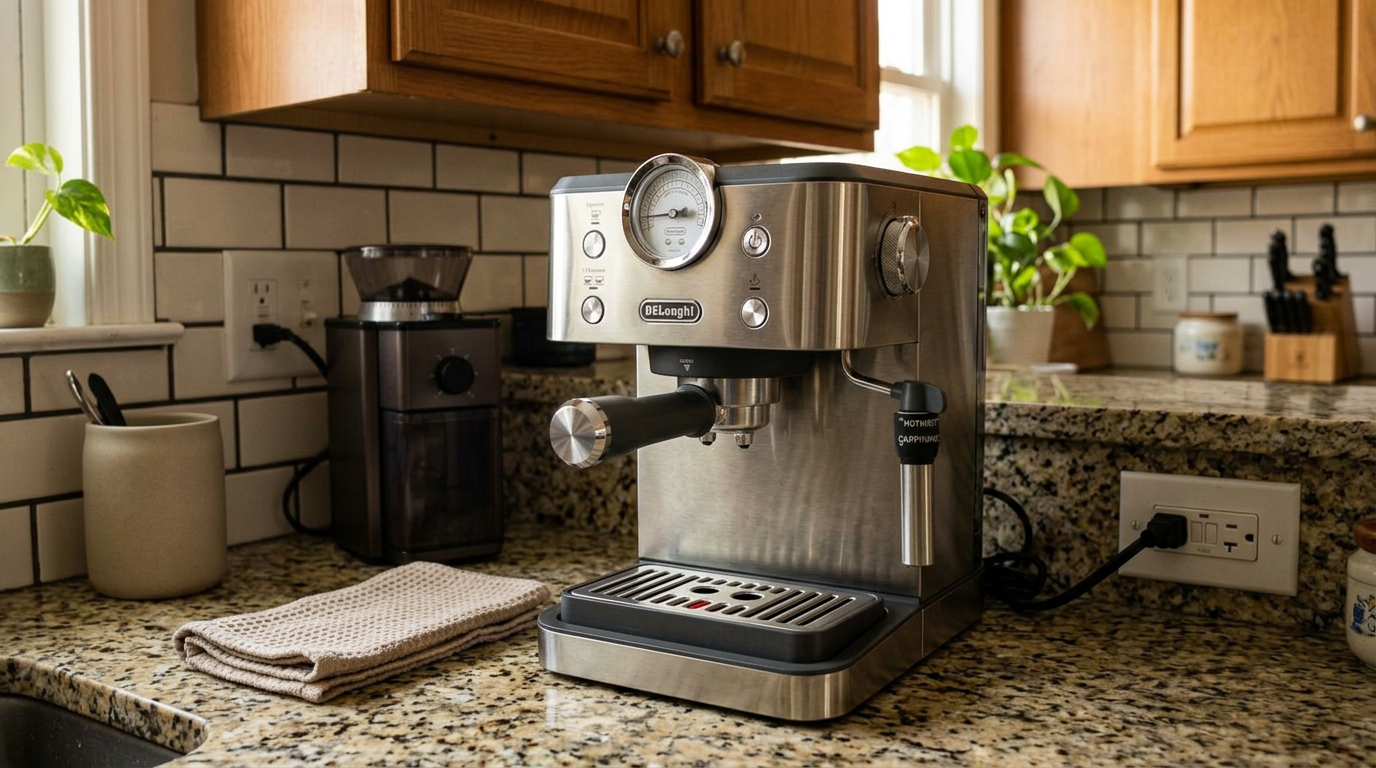
The Signature’s central gauge is easy to read from where you stand.
If you care about how a machine feels in the hand, the Classic is the better of the two; if you care more about how it looks on the counter, the Signature has the more distinctive design. Neither is built like a heavy café machine, and neither claims to be.
Mistakes to avoid
Using a single-wall basket with pre-ground coffee. Shots run fast and sour; stick to pressurized baskets until you have a burr grinder.
Overfilling the small baskets. 13 to 14 g is plenty.
Letting milk dry in the Classic’s sleeve. Rinse it right away.
Twisting the portafilter without holding the machine. Both slide.
| Problem | Fix |
|---|---|
| Shots run very fast | Finer grind or pressurized basket |
| Foam too bubbly on the Classic | Remove the sleeve, use the zip-tie trick |
| Machine slides when locking | Hold it with your other hand |
| Weak, thin shots | Warm the portafilter first |
One more mistake I made early on: tamping too hard on the pressurized baskets. With those baskets, a light, level tamp is enough; the basket creates the pressure. With single-wall baskets, a firm, even tamp matters much more.
A typical morning on each
My weekday drinks were an espresso and a cappuccino.
On the Classic Signature, I switched on, dosed 13 to 14 g, pressed the two-shot button and steamed milk straight after. It was ready in about 15 seconds, and the whole routine took about a minute per drink.
On the Classic, I flushed the empty portafilter to warm it, dosed about 14 g, brewed and then steamed with the sleeve off. It took a little longer, but the espresso and milk were slightly better.
| Step | Classic | Classic Signature |
|---|---|---|
| Warm-up | Flush the portafilter | About 15 s |
| Brew | Rotary selector | One button |
| Milk | Sleeve off for silky foam | Easy foam |
| Total, one drink | A couple of minutes | About a minute |
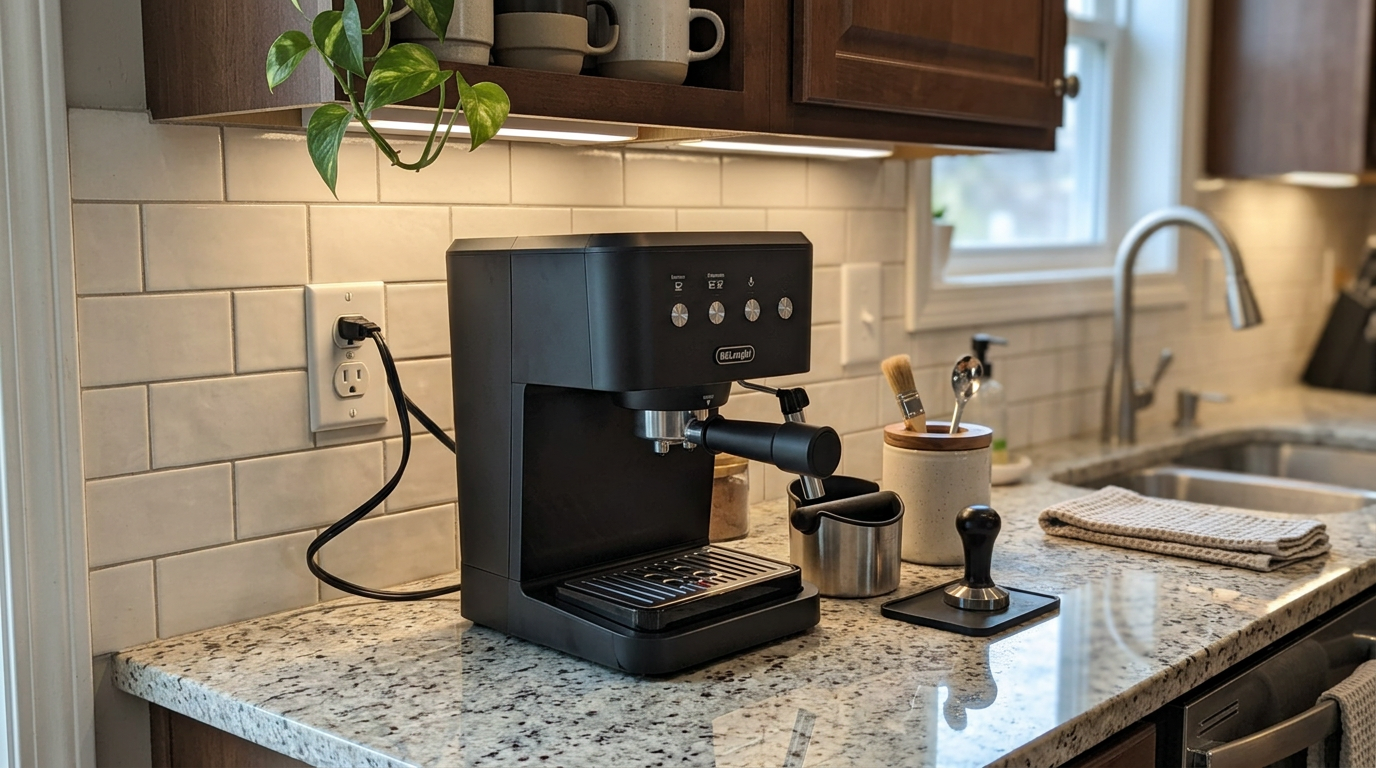
The Classic in my kitchen during testing.
On weekends, I enjoyed the Classic more: with a bottomless portafilter and single-wall basket, dialling in a new bag of beans felt like a small hobby. On weekdays, the Signature’s speed was hard to beat. If I had to keep one for daily life, I would keep the Classic and accept the extra minute.
Which makes the better first machine?
For a complete beginner who wants the simplest routine, the Classic Signature: buttons, a fast heat-up and easy foam.
For a beginner who expects to get more serious, the Classic: it makes slightly better coffee now and grows with you through cheap 51 mm upgrades.
| Coming from | Better pick | Why |
|---|---|---|
| Pods or capsules | Classic Signature | Simplest routine |
| A steam espresso maker | Either | Both are real pump machines |
| Plans a burr grinder soon | Classic | Upgrades pay off |
| Wants a cup warmer | Classic Signature | Built in |
Our tip: If you plan to buy a burr grinder within a year, choose the Classic for its upgradeable 51 mm portafilter.
Either way, both are real pump machines with gauges that teach you what a good shot looks like. The habits you build on them, dosing, tamping, steaming and cleaning, carry straight over if you move up to a bigger machine later.
Four weeks with each: my diary notes
These are the notes I kept as each machine settled into my routine.
De’Longhi Classic
Week 1: Good shots with pressurized baskets from day one.
Week 2: Took off the frothing sleeve; zip-tie trick gave silkier milk.
Week 3: Added a bottomless portafilter and single-wall basket; best shots of the test.
Week 4: A/B lines made descaling easy.
De’Longhi Classic Signature
Week 1: Ready in 15 seconds; the simplest routine I tested.
Week 2: Bought a pitcher; foam was easy.
Week 3: A cheap single-wall basket improved the espresso.
Week 4: The cup warmer earned its place on cold mornings.
Real-life scenarios
These are the situations where one machine fit better in my four weeks.
Ready in about 15 seconds.
51 mm portafilter.
Better milk with the sleeve off.
Central gauge, cup warmer.
A/B descaling lines.
Simple buttons.
The Signature’s cup warmer kept cups warm between drinks.
My scorecard
These are my scores out of 10 from my single reviews.
De’Longhi Classic
De’Longhi Classic Signature
Overall, I rate the Classic 7.5 and the Classic Signature 7.3.
Find Out the Price TodayWhich one is right for you?
4 quick questionsWhich one should you buy?
For most people, the De’Longhi Classic. It made better espresso and milk, and its 51 mm portafilter lets it improve with cheap upgrades.
If you want the quickest, simplest routine and like the traditional look, the Classic Signature. For the full detail, read my reviews of the De’Longhi Classic and the Classic Signature.
- You want better espresso and milk
- You plan to upgrade
- You want a bigger tank
- You want the fastest heat-up
- You want a cup warmer
- You are always rushed
- You want simple buttons
- You like a traditional look
- You want to upgrade
- You dislike plastic portafilters
My pick for most people is the De’Longhi Classic. It made slightly better espresso and milk, and it gets much better with cheap 51 mm upgrades.
Choose the De’Longhi Classic Signature if you want coffee in about a minute, with simple buttons, a central gauge and a cup warmer.
Whichever you choose, warm the portafilter, dose about 14 g and hold the machine when you lock in.
Classic vs Classic Signature specifications
From manufacturer specifications and my own testing.
| De’Longhi Classic | De’Longhi Classic Signature | |
|---|---|---|
| Type | Pump, thermoblock | Pump, thermoblock (Dedica internals) |
| Pressure | 15 bar, gauge | Central gauge |
| Portafilter | 51 mm, angled tabs | Proprietary |
| Steam wand | Panarello, removable sleeve | Steam wand |
| Water tank | 57 oz, A/B descaling lines | Larger than the Dedica’s |
| Heat-up | Quick | About 15 s |
| Cup warmer | No | Yes |
| Size | About 8.9 x 11.1 x 12 in | Traditional body |
| Weight | About 9 lb | Light |
How I tested and compared them
Michael Reynolds here. I used each machine as my everyday espresso machine for four weeks, with the same medium-dark beans and cold whole milk, and kept detailed notes throughout.
I used pressurized baskets first, then single-wall baskets with a burr grinder. On the Classic, I also tested a bottomless portafilter. I timed heat-up, shots and steaming, weighed doses and ran side-by-side tastings.
I steamed whole, 2%, barista oat and almond milk on both, and descaled each as the manual describes.
- Espresso: body, crema, flavor and consistency.
- Milk: foam texture and learning curve.
- Workflow: heat-up, prep and daily routine.
- Ownership: cleaning, noise, water and footprint.
Classic vs Classic Signature FAQ
What is the difference between the De’Longhi Classic and Classic Signature?
The Classic has a 51 mm portafilter that takes upgrades, a Panarello wand and a 57 oz tank. The Classic Signature uses Dedica internals in a traditional body, with a central gauge, top buttons, a cup warmer and a 15-second heat-up.
Which makes better espresso?
The Classic, slightly, and much better with a bottomless portafilter and single-wall basket.
Which is easier to use?
The Classic Signature, with its buttons and 15-second heat-up.
Is the Classic Signature the same as a Dedica?
It uses Dedica internals in a wider, traditional body with a larger tank and cup warmer.
What portafilter size is the De’Longhi Classic?
51 mm with angled tabs.
Can I use a single-wall basket on the Classic Signature?
Yes, a cheap third-party single-wall basket worked in my testing.
Does the Classic Signature come with a milk pitcher?
No, and no single-wall basket either.
How much coffee should I use?
About 14 g on the Classic and 13 to 14 g on the Signature.
How do I get silkier milk from the Classic?
Remove the frothing sleeve and use a small zip tie to stop the nozzle slipping.
Why does my machine slide when locking in?
Both are light; hold the machine with your other hand.