brim 19 Bar vs De’Longhi Dedica EC680R
The brim 19 Bar and the De’Longhi Dedica EC680R are both pump espresso machines for beginners, but they are built for different kitchens. The Dedica is only about 6 inches wide, heats in about 40 seconds and uses forgiving pressurized baskets. The brim is a heavy, stainless, café-style machine with a front pressure gauge, a strong steam wand and hot water on a dial. I used each one as my everyday espresso machine for four weeks to find out which suits you better.
We choose products independently. We may earn a commission when you buy through our links. Affiliate policy
Jargon helpNew to espresso? Tap any dotted term to see what it means.
In this comparison
For most people, buy the De’Longhi Dedica EC680R. It is half the width, ready in about 40 seconds and makes crema-topped espresso from day one, even with pre-ground coffee. Buy the brim 19 Bar if you have the counter space and want to learn espresso properly: its gauge is a great teacher, its steam wand made better milk, and it feels like proper café gear.
The two machines
Specs checked November 24, 2026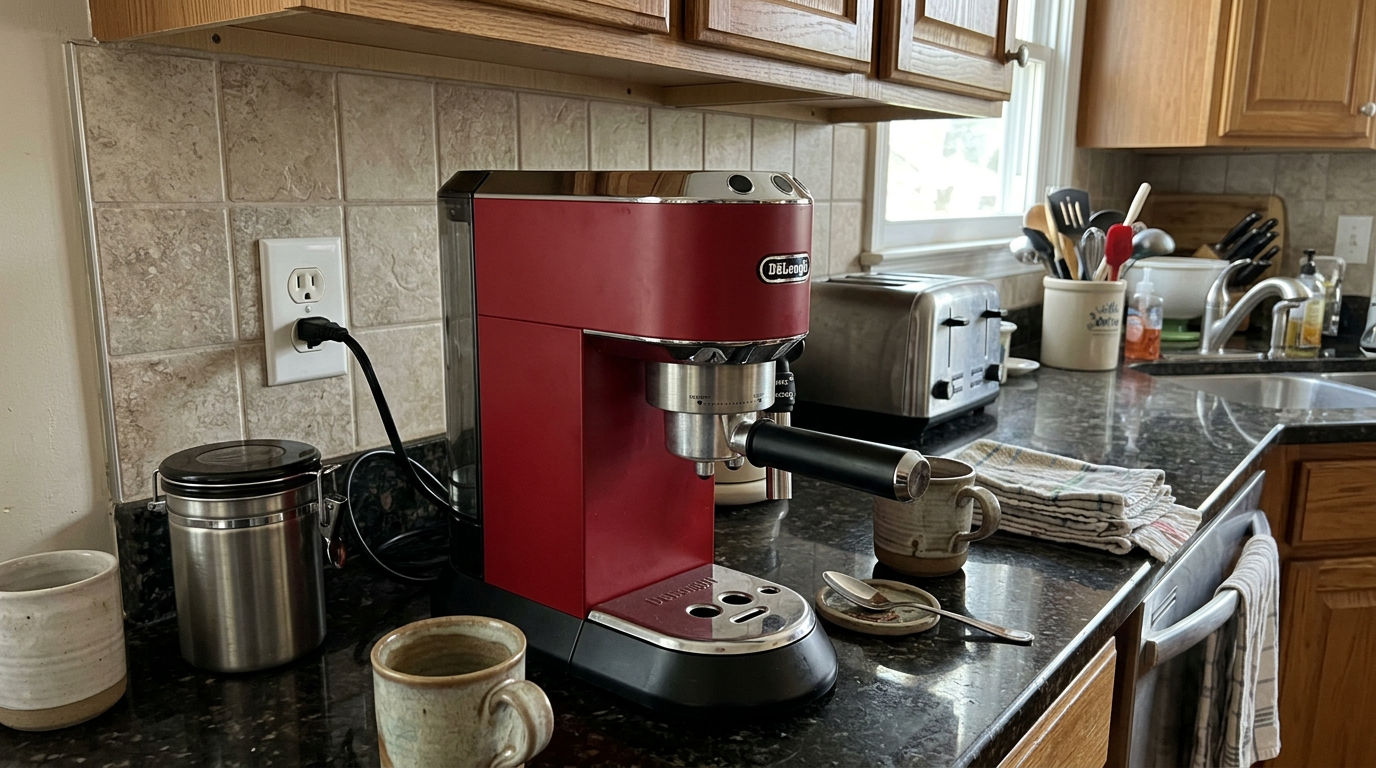
About 6 inches wide, ready in about 40 seconds, with forgiving pressurized baskets and a frothing wand.
Check price on Amazon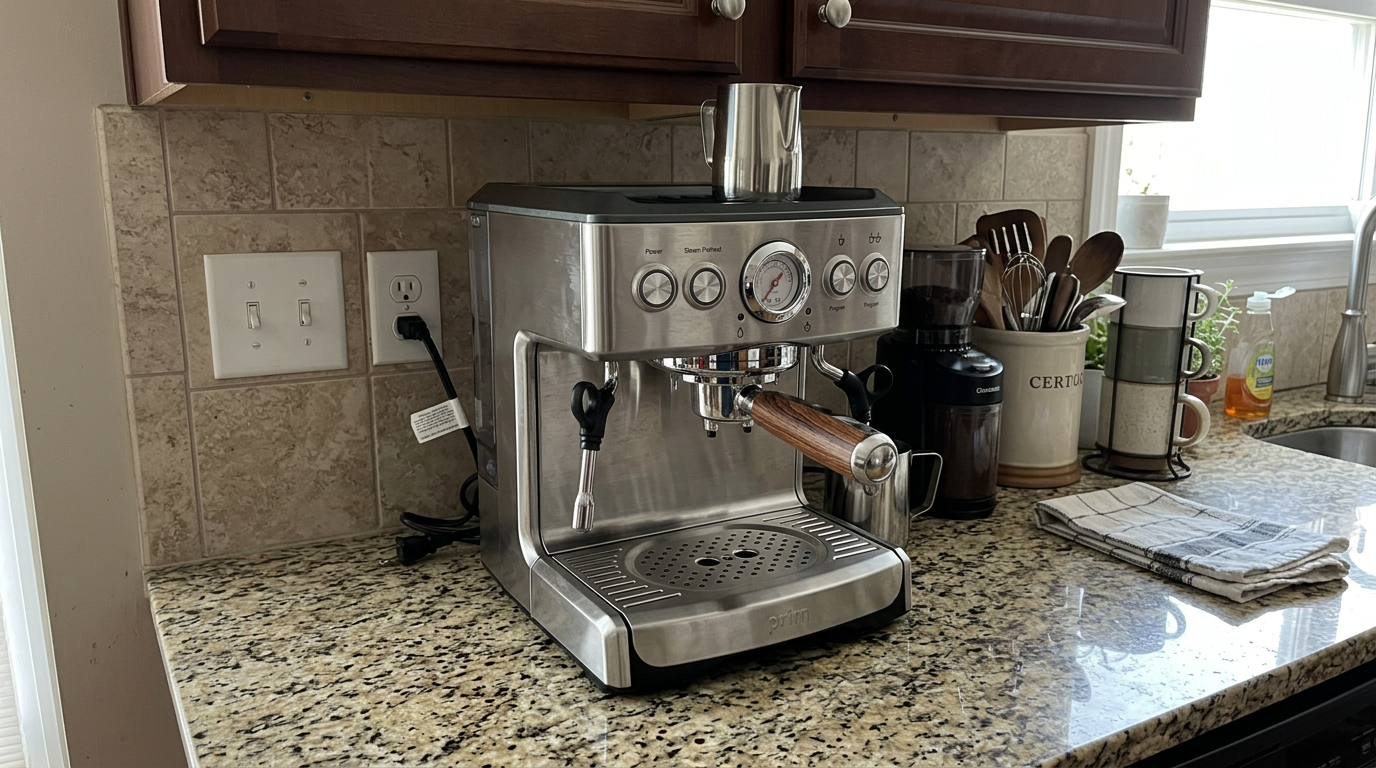
Heavy stainless café-style machine with a front pressure gauge, a strong steam wand and hot water.
See Today’s Pricebrim 19 Bar vs Dedica at a glance
- Both are real pump espresso machines that make crema.
- The Dedica is smaller, faster and much more forgiving for beginners.
- The brim made better milk, and its gauge taught me to dial in shots.
- The brim is heavy and stays put; the Dedica needs a moment between milk drinks.
Head to head
The best result in each row is marked, based on my four weeks with each machine and the manufacturer specs.
The Dedica wins on size, speed and ease; the brim wins on milk, learning and build.
| Spec | Dedica | brim |
|---|---|---|
| Espressomy tasting | Balanced, easy crema ✓ Best | Sweet once dialled in |
| Milk | Foamy, easy | Strong steam, more control ✓ Best |
| Ease of use | Very easy ✓ Best | Practice needed |
| Heat-up | About 40 s ✓ Best | About 45 s |
| Width | About 6 in ✓ Best | Wider |
| Pressure gauge | No | Yes ✓ Best |
| Hot water | From the wand | From the wand, on a dial |
| Stability | Light | About 17 lb, stays put ✓ Best |
| Back-to-back milk | Needs recovery | Short wait to steam ✓ Best |
| Cup warmer | Passive, on top | Cup tray on top |
| Rows won | 4 | 4 |
Four rows each, with two ties. The deciding question is whether you value ease and size, or control and milk.
Is It On Sale? Check Nowbrim 19 Bar vs Dedica pros and cons
De’Longhi Dedica EC680R
- Only about 6 inches wide
- Ready in about 40 seconds
- Forgiving baskets make easy crema
- Less control than non-pressurized baskets
- Frothing sleeve limits milk texture
- Steam needs recovery between drinks
brim 19 Bar
- Real pump espresso with crema
- Pressure gauge helps you dial in shots
- Strong steam wand plus hot water
- Takes practice to get consistent shots
- Heavy and needs more counter space
- Short wait between brewing and steaming
Who should buy which machine?
- Small kitchens and apartments
- Beginners who want espresso fast
- Pre-ground coffee and ESE pods
- Learning to dial in espresso
- Cappuccino and latte drinkers
- Café-style stainless looks
What 19 and 15 bar mean
Both numbers on the boxes are the pump’s maximum rating, not the pressure your coffee is brewed at. Good espresso is extracted at roughly 9 bar at the coffee, and both machines run well below their maximum during a shot.
So the brim’s 19 bar is not a reason to choose it over the Dedica’s 15 bar. A pump with headroom delivers steady pressure, which helps consistency, but grind, dose, tamp and temperature decide the taste.
The brim also uses a low-pressure pre-infusion✕Pre-infusionA short, gentle wetting of the coffee at low pressure before full pressure, so water soaks in evenly. stage, which made its shots more forgiving of an imperfect tamp.
Pressure: the rating versus the brew
What matters for taste is steady pressure around 9 bar at the coffee.
My guide to espresso pressure explains this in more detail.
In practice, the brim’s gauge showed the needle settling in the espresso range on a good shot, well below the 19-bar maximum, which is exactly what you want to see.
Design and size
The Dedica is strikingly slim: about 6 inches wide and 13 inches deep, so it slots in between other appliances. In glossy red, it looked more like a design object than an appliance. It has three illuminated buttons, a steam knob and a passive cup warmer on top.
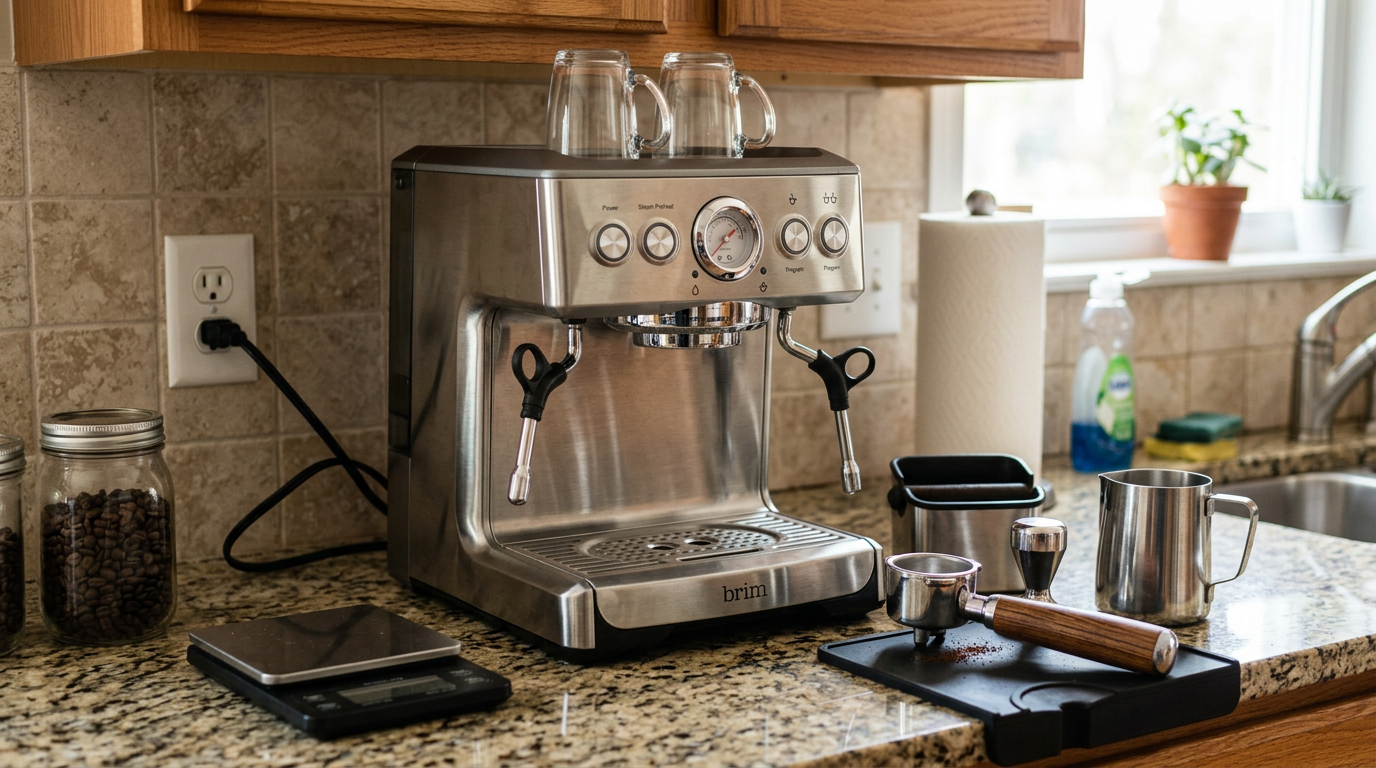
The brim is a different kind of machine. It is wrapped in brushed stainless steel with a round gauge front and centre, buttons and a dial above it and a dark-handled portafilter. At around 17 pounds, it stays put when you lock in the portafilter, which lighter machines do not.
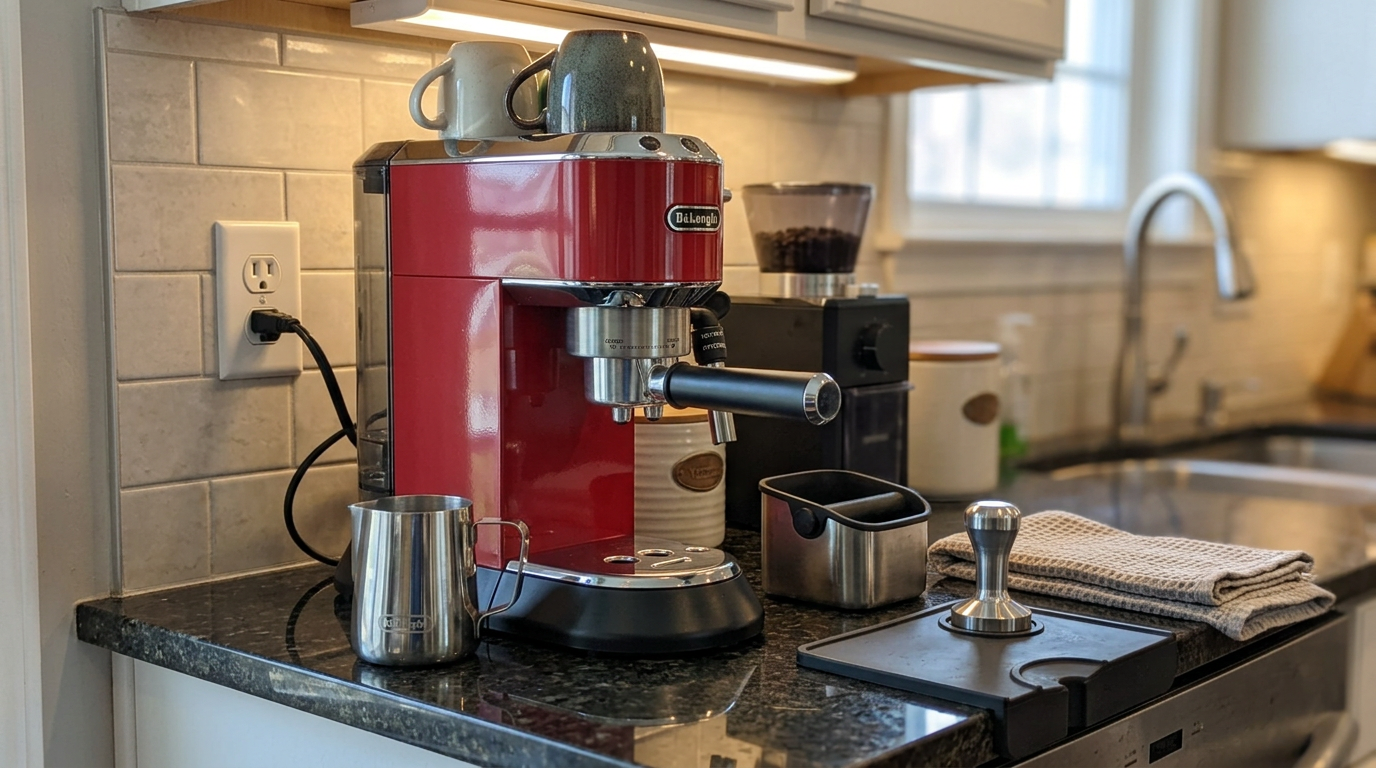
The Dedica’s slim red body takes up less width than a grinder.
Cup clearance is limited on both: espresso cups and small cappuccino cups fit, tall travel mugs do not. The Dedica’s two-level drip tray lets taller glasses fit once you remove the top level.
The two look very different on the counter. The Dedica is a slim, modern appliance that disappears between a kettle and a toaster; the brim is a statement piece that looks like it belongs behind a café counter. If your kitchen is small, the Dedica’s width is its single biggest advantage. If you have room, the brim’s weight and stability made every portafilter lock-in feel more secure.
Water tanks
The Dedica’s 35 oz tank lifts out from the back and has a level indicator on the side. For one or two people, I refilled it every two or three days. If it sits under a low cabinet, you need to slide it forward to lift the tank out.
The brim’s tank is removable too, and you can either lift it out to fill at the sink or flip back a small lid on top and pour straight in. It held plenty for a few days of drinks for one or two people.
| Tank | Dedica | brim |
|---|---|---|
| Capacity | 35 oz | Plenty for a few days |
| Filling | Lift out from the back | Lift out, or pour through the top lid |
| Level check | Side indicator | Lift the lid |
Our tip: After filling either tank, check it is fully seated; a loose tank is the most common cause of leaks and weak pressure.
One practical tip for the Dedica: never let the tank run dry. If it does, the pump can struggle to re-prime, and you may need to run water through the wand to restart it. On the brim, the top-fill lid made it easy to top up the tank without moving the heavy machine.
Setup and first shot
Both took about 15 minutes. I ran a full tank of water through the Dedica and its wand, and two or three blank shots through the brim, to flush and preheat them.
My first Dedica shot came out with a layer of crema, even with supermarket pre-ground coffee, thanks to its pressurized baskets✕Pressurized basketA basket with a single tiny exit hole or a double wall that builds pressure itself, so crema is easy even with imperfect grind or tamp..
My first brim shot was bad. My third was decent. By the end of the first week, I was pulling shots with thick, hazelnut-colored crema and a sweet finish. That learning curve is the brim’s story, and its gauge made it manageable.
| Setup step | Dedica | brim |
|---|---|---|
| Unbox to first shot | About 15 min | About 15 min |
| First shot | Crema on day one | Bad, then better |
| Consistent shots | First day | About a week |
| Trickiest part | Back-mounted tank under cabinets | Dialling in the grind |
Heat-up and speed
Both heat quickly. The Dedica’s thermoblock✕ThermoblockA compact heater that warms water as it passes through a heated block, instead of keeping a boiler hot. was ready in about 40 seconds. The brim’s 1,250-watt thermocoil✕ThermocoilA heater where water runs through a coiled tube that is heated directly, so it is ready quickly without a big boiler. was ready in about 45 seconds on most mornings.
For espresso alone, the Dedica is about as fast as home espresso gets: a double took about 30 seconds from button to cup. Milk drinks took longer on both, because steam needs a higher temperature than brewing.
| Task | Dedica | brim |
|---|---|---|
| Ready from cold | About 40 s | About 45 s |
| Double shot | About 30 s | About 1 min for a single, start to finish |
| Double shot plus milk | About 2.5 min | About 3.5 min |
| Two cappuccinos in a row | About 6 min | About 7 min |
Our tip: Run a blank shot through the empty portafilter before your first coffee on either machine; a cold portafilter makes a thin first shot.
The one pause you notice on both is between brewing and steaming, because steam needs a higher temperature. It is short on both machines, but it adds up when you make several milk drinks in a row. Brewing all the shots first, then steaming, kept the wait to a minimum.
Controls and shots
The Dedica has three buttons: single, double and steam, plus a steam knob on the side. Press single or double and it delivers a set volume and stops by itself; you can reprogram both volumes. It also has an auto shut-off and a descaling alert.
The brim has power, single and double buttons with indicator lights and a dial for steam and hot water. You can also stop a shot by hand, which I did more and more as the test went on, for shorter, sweeter doubles.
On both, the buttons control volume, not flavor. If the coffee runs too fast or too slow, that is the grind’s job.
| Control | Dedica | brim |
|---|---|---|
| Shot buttons | Single, double | Single, double, manual stop |
| Steam | Button plus side knob | Dial |
| Reprogrammable | Yes | Programmed volumes |
| Descaling alert | Yes | No |
I reprogrammed the Dedica’s double button on day one so it filled my cup exactly, which saved me from stopping shots by hand. On the brim, the programmed volumes were a good starting point, but I stopped most doubles by hand once I could see from the color of the stream when the shot was turning pale.
Our tip: Reprogram the Dedica’s double-shot button to your cup size on day one; it saves stopping every shot by hand.
Baskets and grind
The Dedica comes with three pressurized baskets: single, double and one for ESE pods✕ESE podEasy Serving Espresso pods: pre-ground, pre-tamped coffee in a round paper filter.. Because the basket does much of the work, my best shots came from a medium-fine grind, a level dose and a light, even tamp. Going finer made them slower and harsher.
The brim needs a fine espresso grind. Pre-ground espresso coffee worked in a pinch, with a thinner crema, but freshly ground beans with a fine grind and a full basket made the biggest difference of anything I changed.
| Coffee | Dedica | brim |
|---|---|---|
| Pre-ground drip coffee | Weak | Fast, pale, sour |
| Pre-ground espresso | Works well | Decent, thin crema |
| Fresh beans, fine grind | Better, sweeter | Best by far |
| ESE pods | Easiest, no mess | Not designed for them |
The Dedica’s ESE pod basket deserves a mention. Pods made the easiest, least messy espresso of the test: drop one in, brew, throw it away. Freshly ground coffee tasted noticeably better, but for a quick weekday shot or a guest who just wants a coffee, the pods were handy.
The pressure gauge
The brim’s gauge is the reason I would recommend it to someone who wants to learn espresso. Instead of guessing why a shot tasted bad, you can watch what is happening.
If the needle stays low with a fast pour, the grind is too coarse or the dose too light. If it settles in the espresso range with a steady pour, leave it alone. If it is high with slow drips, the grind is too fine or the tamp too hard. If it jumps around, the tamp is uneven and water is channeling✕ChannelingWhen water finds a weak spot in the coffee and rushes through it, so the shot tastes sour and bitter at once..
The Dedica has no gauge, which suits its forgiving baskets: there is less to diagnose.
| Needle on the brim | Meaning | Change |
|---|---|---|
| Low, fast pour | Too coarse or too light | Grind finer, add coffee |
| Steady in the espresso range | Balanced | Leave it |
| High, slow drips | Too fine or tamped hard | Grind coarser |
| Jumps around | Uneven tamp | Level the grounds |
Our tip: On the brim, change one thing at a time and watch the needle; lock the dose first, then adjust only the grind.
Within two days of using the gauge properly, my brim shots were consistent, with the needle settling in the same place every morning.
Espresso quality
For a machine its size, the Dedica’s espresso is genuinely good: a steady crema, a full body and a balanced, chocolatey flavor with medium-dark beans, and very consistent from shot to shot. The ceiling is control: its baskets smooth out small grind changes, for better and for worse.
The brim was less consistent early on, but once dialled in, its shots were sweet with thick, hazelnut-colored crema. For straight espresso, I liked stopping its double early for a shorter, sweeter shot.
Overall, the Dedica scored a little higher for espresso in my testing because it was so reliable; the brim had more room to improve with technique.
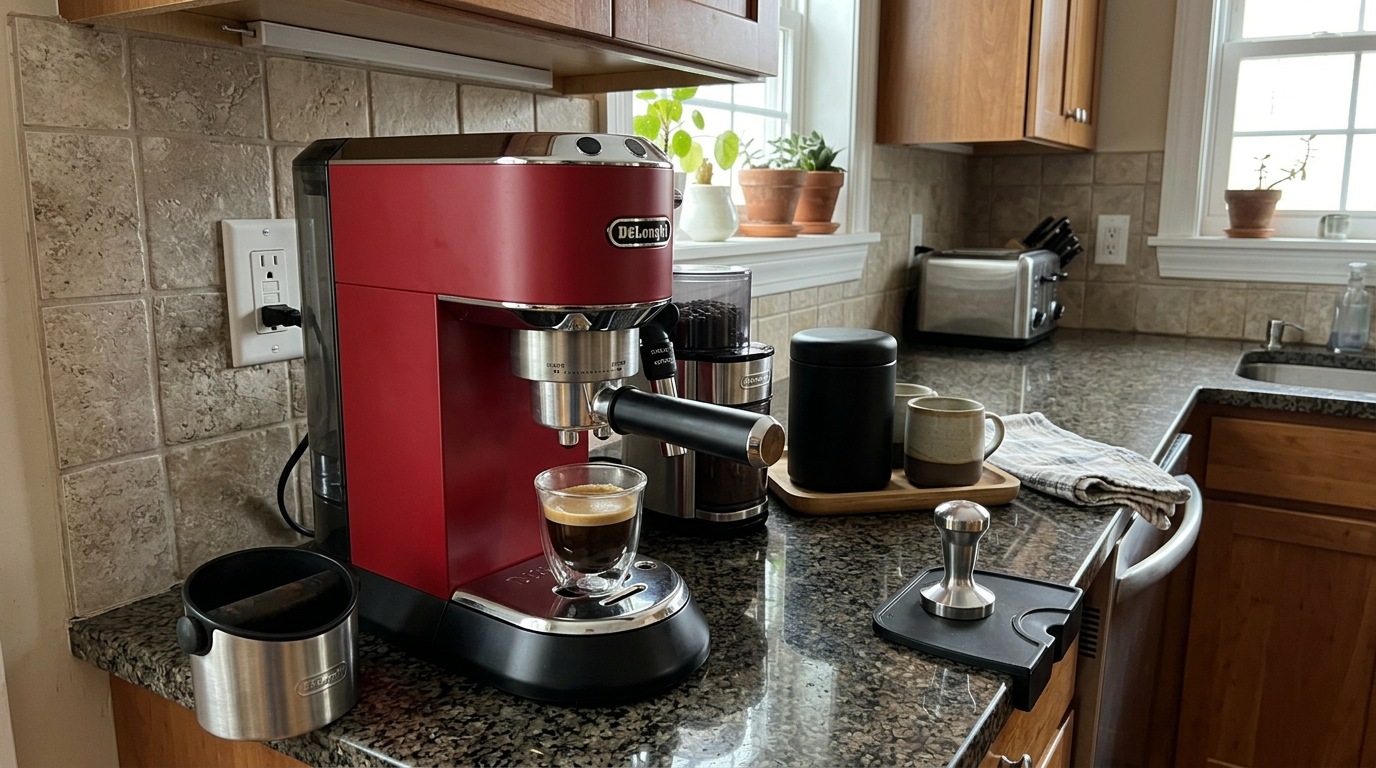
A Dedica double with the crema its pressurized baskets make easy.
My espresso ratings
Ratings out of 10 from my single reviews.
If you are choosing beans, my guide to coffee roast levels explains how roast changes flavor.
Reveal Today’s DealI also ran a week of side-by-side tastings with the same fresh beans. With a good grinder and a dialled-in shot, the brim’s espresso tasted a little sweeter and more varied from bean to bean, because its shots responded more to grind changes. The Dedica’s shots tasted more alike from bag to bag, which is exactly what a beginner wants and exactly what a hobbyist eventually finds limiting.
Milk and steaming
The Dedica’s frothing wand has a Panarello sleeve✕PanarelloA sleeve on the steam wand that pulls in air automatically, making foam easy but giving less control over texture.. It makes thick, consistent foam very easily: a small pitcher of milk was hot and foamy in roughly 45 to 60 seconds. What you give up is texture; it is hard to make the glossy microfoam needed for latte art, and steam needs time to recover between milk drinks.
The brim’s side-mounted steam wand was stronger and easy to aim. It made cappuccino and latte milk quickly, and gave me more control over the texture. The only pause is the short wait to reach steam temperature after brewing.
Milk ratings
My single-review milk scores out of 10.
| Milk | Dedica | brim |
|---|---|---|
| Ease | Very easy, sleeve does the work | Easy to aim, more control |
| Texture | Thick, foamy | Smoother |
| Latte art | Hard | Possible with practice |
| Back-to-back | Needs recovery | Short wait to steam |
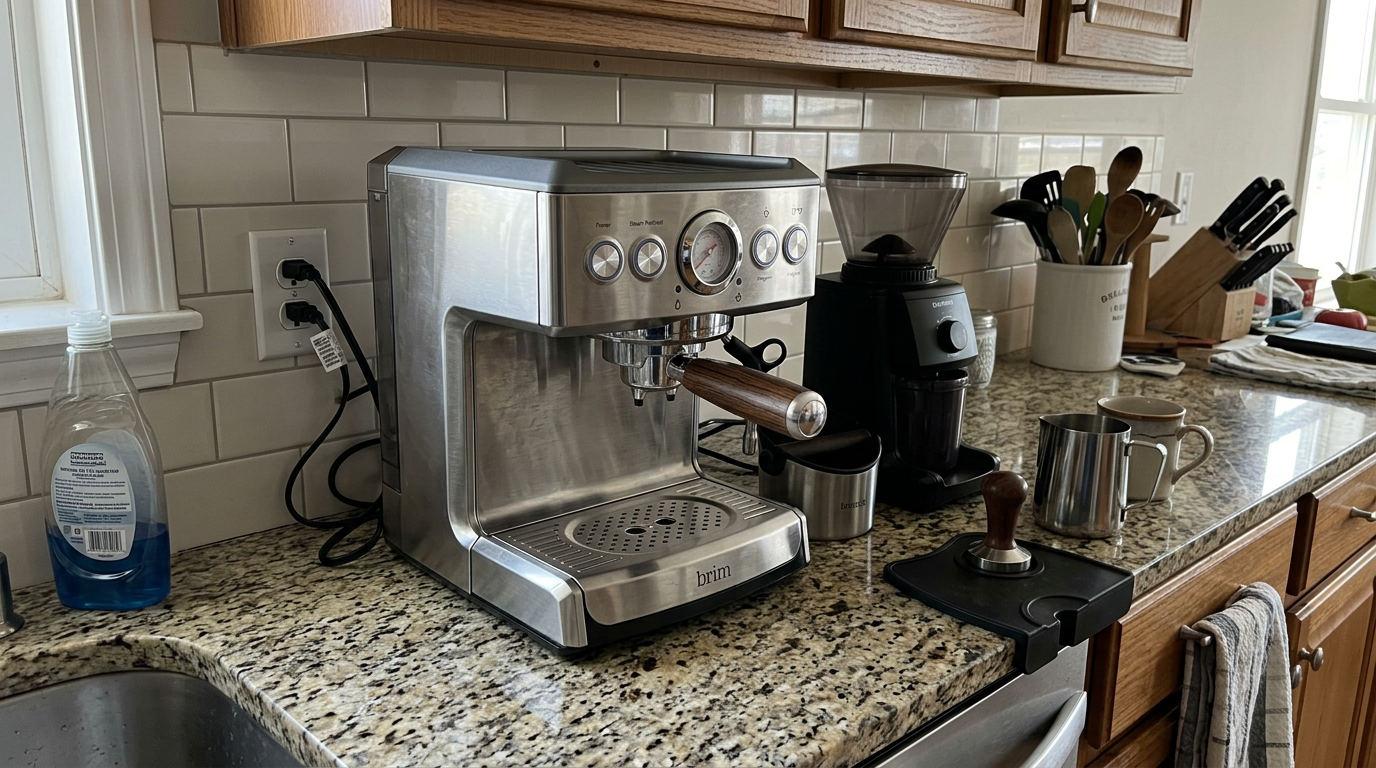
The brim’s side-mounted steam wand was strong and easy to aim.
My guide to the science of steamed milk explains what the frothing sleeve changes.
See How Much You’ll SaveMilk choice mattered on both. Cold whole milk made the best foam; barista oat milk was the best non-dairy option. On the Dedica, very cold milk and a small pitcher gave the sleeve the best result. On the brim, I could keep the tip just under the surface for a few seconds to add air, then sink it to spin the milk into a smoother texture.
Our tip: Start with very cold milk in a cold pitcher on either machine; it gives you more time to texture the milk.
Hot water and Americanos
Both deliver hot water through the steam wand: the Dedica with its side knob and the brim with its dial. I made Americanos on both by brewing a double and topping it with hot water, which tasted rounder than drip coffee.
| Drink | Dedica | brim |
|---|---|---|
| Americano | Double plus hot water | Double plus hot water |
| Tea | Works | Works |
| Cup warming | Top tray or a splash of hot water | A splash of hot water |
On both, the first second of hot water can spit, so I held the cup slightly away and purged briefly first. Having hot water on the machine meant I never needed a kettle next to either one for Americanos.
Drinks I made most
Espresso: the Dedica for consistency; the brim once dialled in.
Cappuccino: both were very good, and the Dedica’s sleeve made foam the easiest.
Latte and flat white: the brim, for its smoother milk.
Iced latte: the Dedica, because its drip tray drops for a tall glass.
Americano: both.
| Drink | Better machine | Why |
|---|---|---|
| Espresso | Dedica | Consistent crema |
| Cappuccino | Tie | Both foam well |
| Latte, flat white | brim | Smoother milk |
| Iced latte | Dedica | Tall glass fits |
| Americano | Tie | Both have hot water |
Our tip: Use the double shot for milk drinks on either machine; a single shot gets lost under steamed milk.
Coffee and water
The Dedica is the more forgiving with pre-ground coffee and ESE pods. Fresh beans were better, but the jump was not as dramatic as on the brim, where freshly ground beans made the biggest difference of anything.
I used cold, filtered water in both throughout, which tasted cleaner and slows scale in the heaters. Medium-dark roasts were the easiest on both.
My guides to burr vs blade grinders and water chemistry go deeper.
For the Dedica, a medium-fine pre-ground espresso coffee is a perfectly good everyday choice, and buying smaller bags keeps it fresher. For the brim, a burr grinder is the best upgrade you can make: it lets you make the small grind steps that the gauge tells you to make. Very dark, oily roasts tasted bitter on both and were best kept for milk drinks.
Cleaning and care
Daily care is similar: knock out the puck, rinse the basket, purge and wipe the wand and empty the drip tray. The Dedica’s frothing sleeve needs rinsing after every milk drink, as milk dries inside it. It also has a descaling alert that tells you when to descale.
The brim’s stainless body wiped clean easily, and fingerprints were less of a problem than I expected. I descaled it on a regular schedule.
| When | Dedica | brim |
|---|---|---|
| After each shot | Knock out, rinse | Knock out, rinse |
| After milk | Rinse the sleeve, purge | Wipe and purge |
| Daily | Empty the drip tray | Empty the drip tray |
| Regularly | Descale when alerted | Descale on schedule |
The Dedica’s frothing sleeve is the part that needs most attention. I pulled it off and rinsed it under the tap after each milk session, and once a week I soaked it in warm water. On the brim, a damp cloth and a one-second purge straight after steaming kept the wand clean.
Troubleshooting
Most problems on both came from grind, dose or tamp.
| Problem | Machine | Fix |
|---|---|---|
| Bitter, slow shot | Dedica | Grind coarser; tamp lightly |
| Sour, fast shot | brim | Grind finer or add coffee |
| Weak pressure, leaks | Both | Seat the tank fully |
| Pump will not prime | Dedica | Never let the tank run dry; run water through the wand |
| Sour and bitter at once | brim | Level the grounds before tamping |
If you run into a problem not listed here, start by checking the three basics on either machine: a fully seated tank, a clean basket rim and fresh coffee at the right grind. Those fixed almost every issue I had in four weeks.
A beginner’s first week on each
If you are new to espresso, here is how the first week went on each machine, so you know what to expect.
On the Dedica, day one was already good. I spent the rest of the week refining small things: reprogramming the double button to my cup size, finding that a medium-fine grind beat a very fine one, warming my cups on the top tray, and learning to purge the wand before frothing. By day three, my routine was fixed, and the coffee barely changed from then on.
On the brim, the first two days were about grind. My first shots ran fast and pale, so I ground finer and added coffee until the needle settled in the espresso range. On day three, I started levelling the grounds with a finger before tamping, which stopped the needle jumping around. By day five, my shots were consistent, and by the end of the week I was stopping the double by hand for a sweeter shot.
| Day | Dedica | brim |
|---|---|---|
| Day 1 | Good shots with pre-ground coffee | Fast, pale shots |
| Day 2 | Reprogram the double button | Grind finer, add coffee |
| Day 3 | Medium-fine grind, light tamp | Level before tamping |
| Day 5 | Routine settled | Consistent shots |
| Day 7 | Trying ESE pods | Manual-stop doubles |
Serving guests
For two drinks, both were quick. For more milk drinks, both slowed down: the Dedica’s steam needed recovery time between drinks, and the brim needed a short wait to reach steam temperature after each shot. Two cappuccinos took about 6 minutes on the Dedica and about 7 on the brim.
Neither is ideal for big households making many milk drinks fast.
Two cappuccinos back to back
My rough times.
My tip for hosting on either machine is to pull all the shots first into warmed cups, then steam one larger pitcher of milk and pour from it. On the Dedica, that also gives its steam a moment to recover between batches, and on the brim it means only one wait for steam temperature instead of one per drink.
Noise
Both use vibratory pumps that buzz while brewing, at a similar level. The brim’s heavier body seemed to damp the vibration a little. Steaming was the loudest part on both, a steady hiss for under a minute. Neither woke anyone in my home early in the morning.
Our tip: Purge either steam wand into the drip tray for a second before frothing; it clears water and reduces spitting.
If noise matters, the Dedica’s smaller pitcher sizes mean shorter steaming, so less hissing overall.
Build quality
The brim felt the sturdier of the two. Its portafilter locks in with a firm, satisfying twist, its buttons have a clear click, and it did not slide even when I gave it a hard push.
The Dedica is mostly metal-finished with plastic parts. It felt well made for its size, but it is light, so I held it when locking in the portafilter.
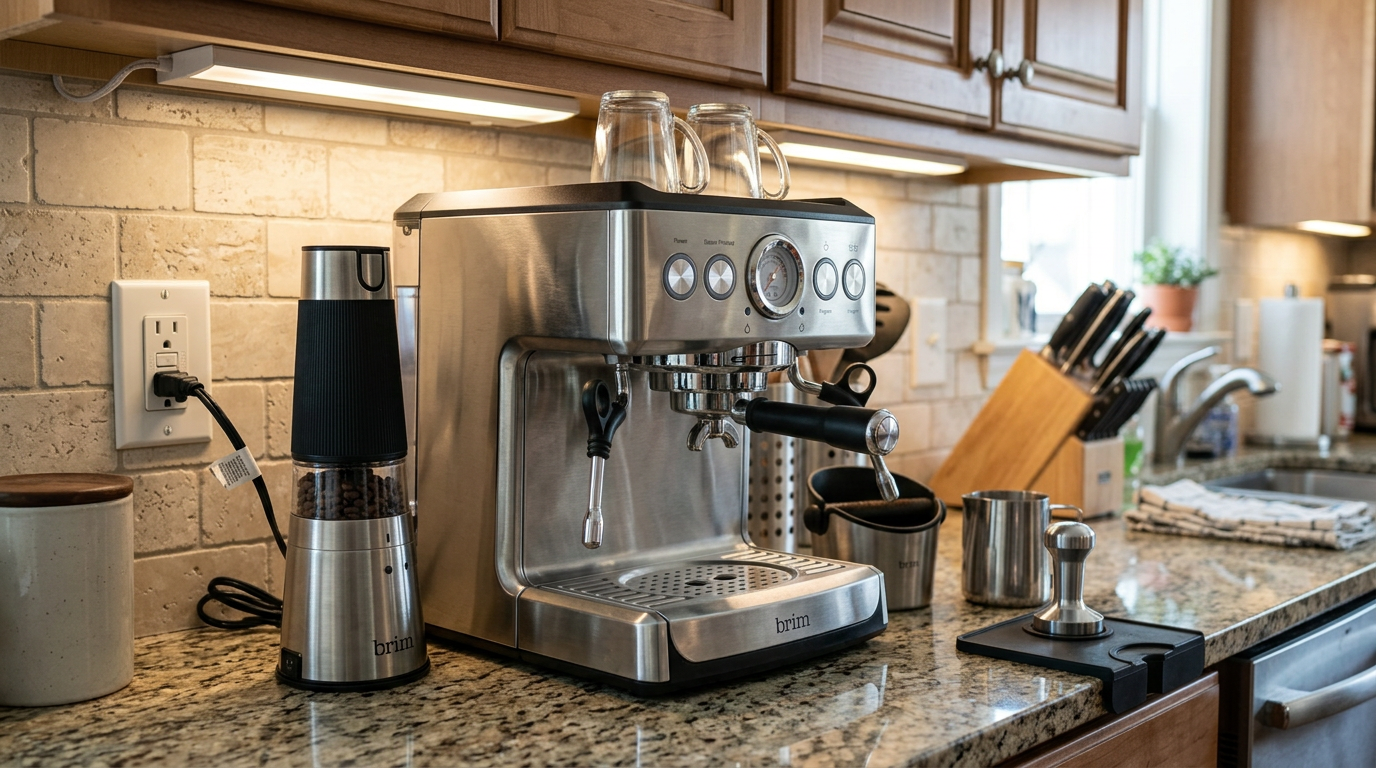
The brim looks like café equipment on the counter.
Over four weeks, neither machine developed a fault. The brim’s weight is a real advantage in daily use: you can lock in the portafilter with one hand. The Dedica’s lightness is the trade-off for its tiny footprint.
A typical morning on each
On the Dedica: switch on, wait about 40 seconds, run a short blank shot, add a level double dose, tamp lightly, press the double button and froth milk with the sleeve. About two and a half minutes for a cappuccino.
On the brim: switch on, run a blank shot to warm the portafilter, grind fine, dose, level and tamp firmly, pull a double while watching the gauge, then turn the dial to steam. About three and a half minutes.
| Step | Dedica | brim |
|---|---|---|
| Heat-up | About 40 s | About 45 s |
| Tamp | Light | Firm and level |
| Shot | Button, auto stop | Button or manual stop |
| Milk | Sleeve, very easy | Wand, more control |
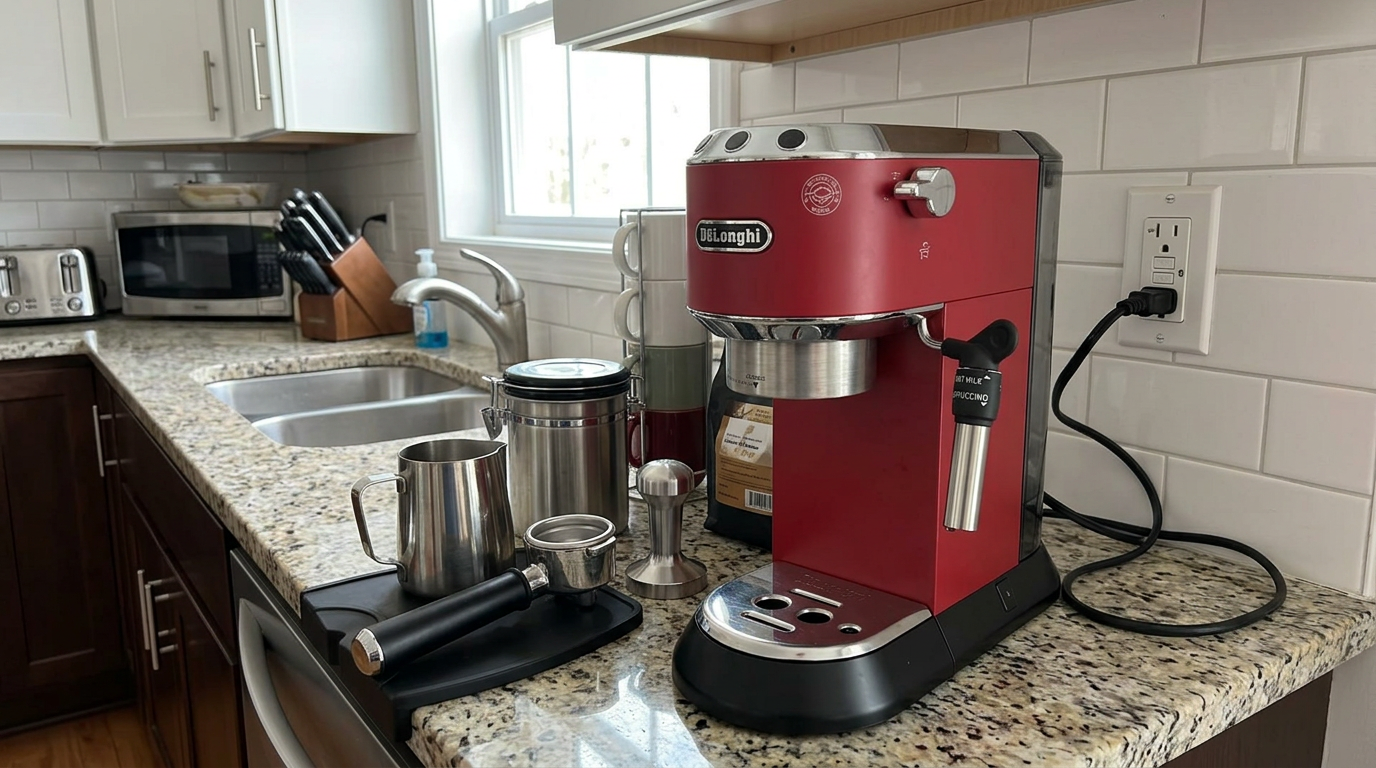
The Dedica tucked by the sink, where it lived for four weeks.
On weekends, I enjoyed the brim more: watching the gauge, adjusting the grind and stopping shots by hand felt like a small hobby. On weekdays, the Dedica’s speed and predictability won, because I never had to think about it.
Which makes the better first machine?
For most beginners, the Dedica. It makes good espresso from day one with very little learning, it fits almost anywhere and it works with pre-ground coffee and ESE pods.
The brim is a great first machine for someone who wants to learn properly and has a burr grinder. Its gauge turns guessing into understanding.
| Coming from | Better pick | Why |
|---|---|---|
| Pods or capsules | Dedica | Easiest start |
| Steam espresso maker | Either | Both are real pump machines |
| Already own a burr grinder | brim | Rewards fresh grinding |
| Tiny kitchen | Dedica | About 6 in wide |
One more thing to consider is where you want to be in a year. If you think you will want more control, a gauge and smoother milk, the brim teaches you skills that carry over to any machine. If you just want good coffee every morning, the Dedica will keep doing that without asking anything more of you.
Four weeks with each: my diary notes
These are the notes I kept as each machine settled into my routine.
De’Longhi Dedica EC680R
Week 1: Crema on day one with pre-ground coffee.
Week 2: Reprogrammed the double button; tried ESE pods.
Week 3: Easy foamy cappuccinos; silky milk was harder.
Week 4: The fastest espresso routine I tested.
brim 19 Bar
Week 1: First shot bad, third decent; learned to watch the gauge.
Week 2: Locked the dose, adjusted only the grind; consistent shots.
Week 3: Started stopping doubles by hand for sweeter shots.
Week 4: Smooth latte milk most mornings.
Real-life scenarios
These are the situations where one machine fit better in my four weeks.
About 6 in wide.
Pressure gauge.
Pressurized baskets.
Smoother milk.
About 40 s to heat.
About 17 lb.
My scorecard
These are my scores out of 10 from my single reviews.
De’Longhi Dedica EC680R
brim 19 Bar
Overall, I rate the Dedica 8.0 and the brim 7.3. I also scored the Dedica 9.2 for its compact design and the brim 7.8 for its build and design.
Find Out the Price TodayWhich one is right for you?
4 quick questionsWhich one should you buy?
For most people, the De’Longhi Dedica EC680R. It is smaller, faster and much easier, and its espresso is reliably good.
If you have the space and want to learn, the brim 19 Bar. For the full detail, read my reviews of the Dedica EC680R and the brim 19 Bar.
- You have a small kitchen
- You use pre-ground coffee
- You want little learning
- You want latte-art milk
- You want full shot control
- You want to learn espresso
- You drink lattes
- You like café styling
- Your counter is tight
- You want push-button ease
My pick for most people is the De’Longhi Dedica EC680R. It is about 6 inches wide, ready in about 40 seconds and makes crema-topped espresso with almost no learning.
Choose the brim 19 Bar if you want to learn espresso with a gauge, smoother milk and a heavy, café-style machine that stays put.
Whichever you choose, warm the portafilter, use the double shot for milk and use filtered water.
brim 19 Bar vs Dedica specifications
From manufacturer specifications and my own testing.
| De’Longhi Dedica EC680R | brim 19 Bar | |
|---|---|---|
| Type | Pump, semi-automatic | Pump, semi-automatic |
| Pump | 15 bar | 19 bar, pre-infusion |
| Heater | Thermoblock | 1,250 W thermocoil |
| Heat-up | About 40 s | About 45 s |
| Baskets | Pressurized single, double, ESE pod | Single and double shots |
| Gauge | No | Yes |
| Milk | Frothing wand with sleeve | Steam wand |
| Hot water | Yes | Yes |
| Water tank | 35 oz | Removable, top-fill lid |
| Width | About 6 in | Wider |
| Weight | Light | About 17 lb |
How I tested and compared them
Michael Reynolds here. I used each machine as my everyday espresso machine for four weeks, with the same medium-dark beans, pre-ground espresso coffee and cold whole milk, and kept detailed notes throughout.
On the Dedica, I also tried ESE pods. On the brim, I used the gauge to dial in fresh beans and tested manual-stop shots.
I timed heat-up, shots and milk drinks, steamed whole, 2% and barista oat milk on both, and followed each manual’s cleaning routine.
- Espresso: body, crema, flavor and consistency.
- Milk: foam texture and learning curve.
- Workflow: heat-up, prep and daily routine.
- Ownership: cleaning, noise, water and footprint.
brim 19 Bar vs Dedica FAQ
What is the difference between the brim 19 Bar and the Dedica EC680R?
The Dedica is about 6 inches wide with pressurized baskets and a frothing sleeve, built for ease. The brim is a heavy stainless machine with a pressure gauge, a strong steam wand and manual shot control, built for learning.
Does 19 bar make better espresso than 15 bar?
No. Both are pump maximums; espresso is extracted at around 9 bar at the coffee.
Which makes better espresso?
The Dedica was more consistent; the brim made sweet shots once dialled in.
Which is better for lattes?
The brim, for smoother milk and more control.
Can I use pre-ground coffee?
Yes. The Dedica is especially forgiving with pre-ground coffee and ESE pods.
Which heats up faster?
The Dedica, in about 40 seconds; the brim takes about 45.
Which is smaller?
The Dedica, at about 6 inches wide.
Does the Dedica have a pressure gauge?
No; the brim does.
Why is my Dedica shot bitter and slow?
The grind is too fine for its pressurized baskets; go a little coarser and tamp lightly.
Which is better for beginners?
The Dedica for an easy start; the brim if you want to learn properly.