Acrylamide in Coffee: What It Is, Why It Forms and Whether It's a Real Health Risk
A few years ago, headlines suggested that coffee in California might need a cancer warning like cigarettes. The reason was acrylamide, a chemical that forms naturally when coffee is roasted. I dug into what acrylamide is, what the research shows about people, why the warning debate happened and what you can realistically do about it.
We choose products independently. We may earn a commission through links on this page; your price stays the same. Affiliate policy

Acrylamide forms naturally when starchy or sugary foods, including coffee beans, are heated above about 250°F. It has caused cancer in animals at high doses, so it's classified as a probable human carcinogen, but human evidence from diet is uncertain and hasn't clearly shown increased cancer risk. Coffee as a whole isn't linked to higher cancer risk; IARC concluded in 2016 that coffee drinking is not classifiable as carcinogenic, and studies link it to lower liver cancer risk. Acrylamide can't be removed completely from roasted coffee, but the risk at normal intake appears very small.
Why acrylamide keeps coming up
A few years ago, headlines suggested that coffee in California might need a cancer warning, just like cigarettes. Many coffee drinkers I know were confused, and a few were genuinely worried. If coffee could cause cancer, why had they never heard about it before?
The story centers on a chemical called acrylamide. It forms naturally when certain foods are cooked at high temperatures, and roasted coffee is one of them. It has caused cancer in laboratory animals at high doses, which is why it appears on lists of chemicals of concern.
But there's a big difference between a chemical being a potential hazard and a food posing a meaningful risk at normal amounts. In this guide I'll explain what acrylamide is, why it's in coffee, what the research says about people, why the warning label debate happened and what, if anything, you can do about it.
Acrylamide in coffee at a glance
| Question | Short answer |
|---|---|
| What is acrylamide? | A chemical that forms when starchy or sugary foods are heated above about 250°F |
| Why is it in coffee? | It forms naturally during roasting |
| Is it in other foods? | Yes, including fries, chips, toast, cookies and roasted potatoes |
| Does it cause cancer in animals? | Yes, at high experimental doses |
| Does it cause cancer in people? | Human evidence from diet is uncertain and hasn't clearly shown increased risk |
| Is coffee linked to cancer? | Coffee isn't classified as a carcinogen; it's linked to lower risk of some cancers |
| Can it be removed from coffee? | Not entirely; some formation is unavoidable when roasting |
What is acrylamide?
Acrylamide is a chemical compound used in industry, for example in making certain plastics and in water treatment. But it also forms naturally in food during cooking.
It's produced mainly through the Maillard reaction, the same browning reaction that gives toast, fries, roasted vegetables and coffee their rich flavors and colors. When foods containing an amino acid called asparagine and certain sugars are heated above roughly 250°F, some acrylamide forms.
That means acrylamide can appear in many ordinary foods, whether they're cooked at home, in a restaurant or in a factory, and whether they're organic or conventional:
- Toasted bread.
- French fries and potato chips.
- Roasted and baked potatoes.
- Cookies, crackers and some breakfast cereals.
- Roasted coffee beans.

This is an important point. Acrylamide isn't an ingredient added by food companies. It's a side effect of cooking chemistry, which is why eliminating it completely from the diet is so difficult.
How acrylamide forms in coffee
Green coffee beans contain sugars and asparagine. When they're roasted, the Maillard reaction transforms them into hundreds of flavor and aroma compounds, and acrylamide is one of the by-products.
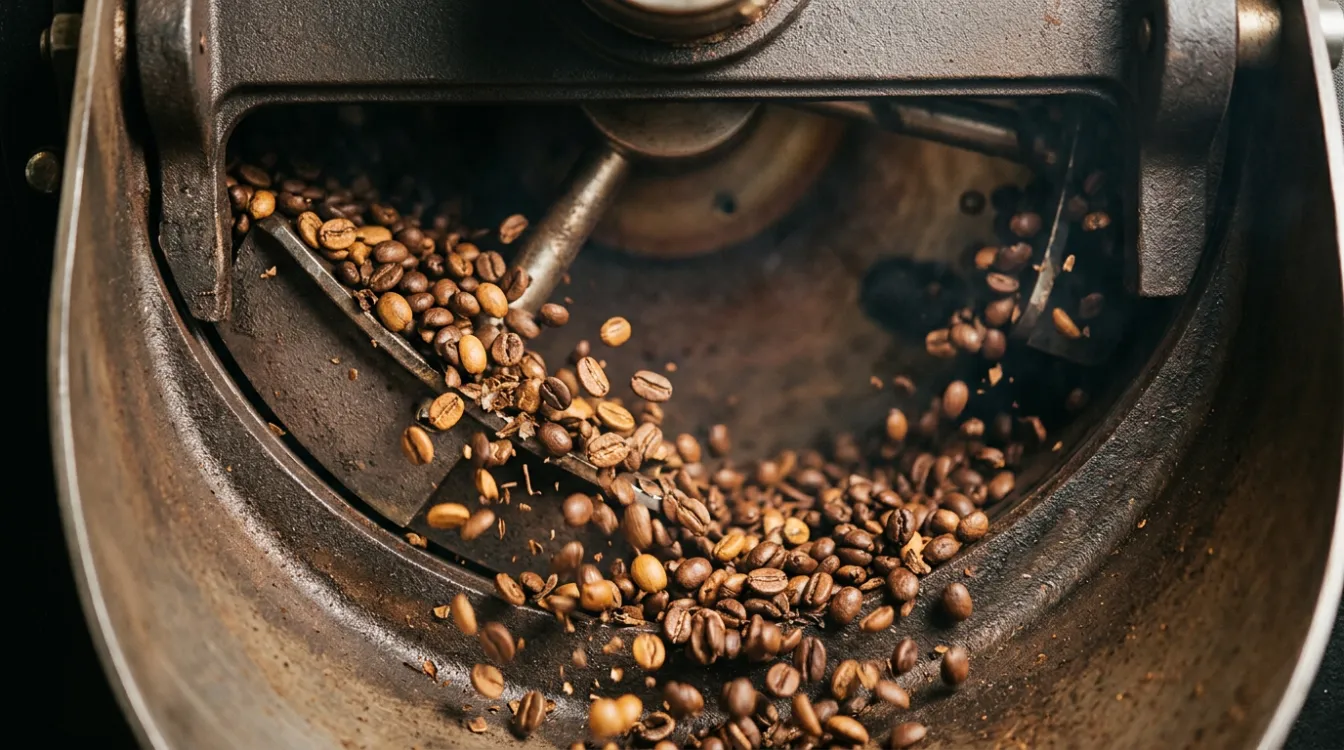
Interestingly, acrylamide levels don't simply rise the longer coffee is roasted. Research shows that acrylamide forms early in roasting, then partly breaks down as roasting continues. That's why:
- Lighter roasts can contain somewhat more acrylamide than darker roasts.
- Robusta coffee tends to contain more acrylamide than arabica, because it has more asparagine.
- Instant coffee and some coffee substitutes made from roasted grains or chicory can contain higher levels per gram than regular roasted coffee, although serving sizes differ.
These differences are real, but they're relatively small compared with the bigger picture of overall diet and the strong research on coffee and health.
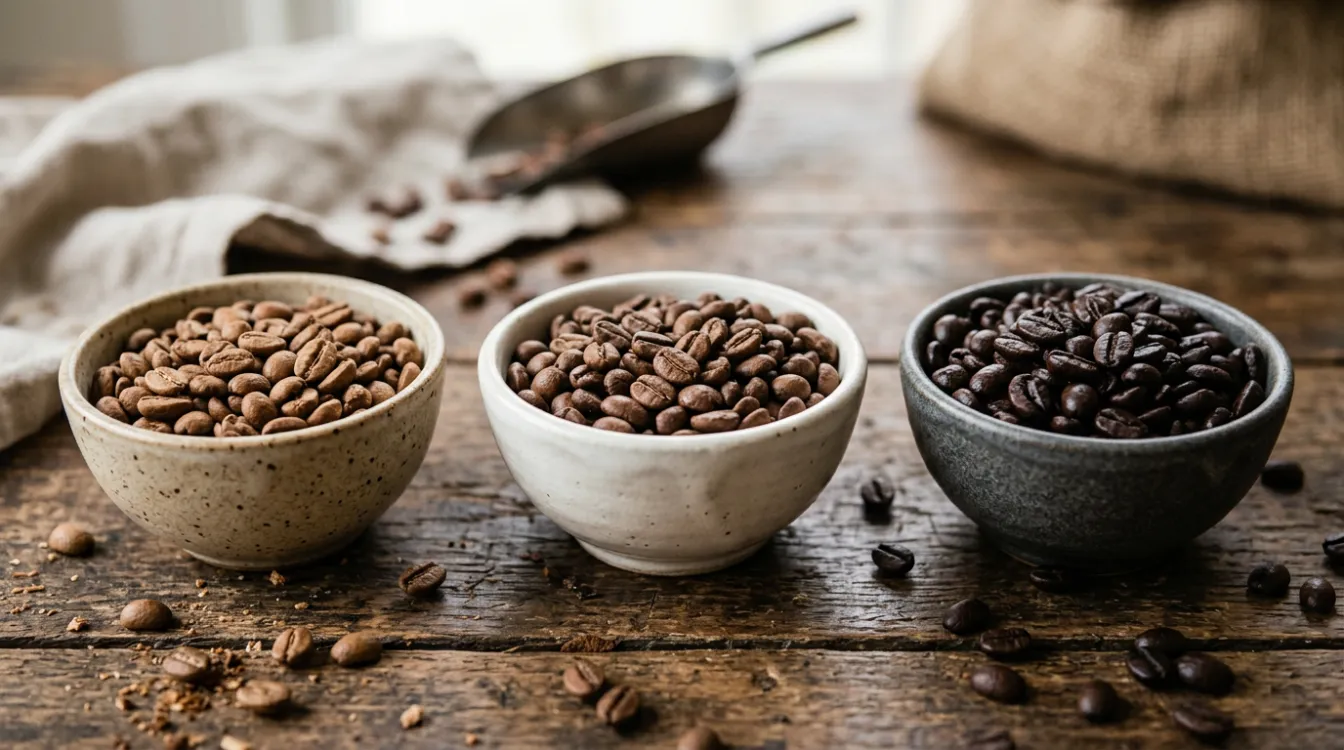
My guide to arabica vs robusta vs liberica explains how the coffee species differ in composition and flavor.
How acrylamide in food was discovered
Acrylamide was known as an industrial chemical long before anyone thought about it in food. Workers exposed to large amounts in factories could develop nerve damage, so occupational safety rules were set decades ago.
The food story began in 2002, when researchers in Sweden announced that acrylamide forms in many common foods during frying, baking and roasting. The finding surprised scientists and regulators around the world. Within a short time, food safety agencies in Europe and North America began measuring acrylamide in foods, studying how it forms and looking for ways to reduce it.
Since then, a large body of research has accumulated. It has confirmed that acrylamide forms mainly through the Maillard reaction, mapped which foods contain the most, and tracked people's diets to look for health effects. The overall picture is of a widespread, low-level exposure that's worth reducing where practical, rather than a sudden new danger.
The Maillard reaction: flavor and acrylamide together
The Maillard reaction is named after French chemist Louis-Camille Maillard, who described it in the early 1900s. It's one of the most important reactions in cooking.
When amino acids and sugars are heated together, they react to form hundreds of new compounds. These create the brown color and complex flavors of seared steak, bread crust, roasted vegetables, chocolate and, of course, coffee.
In coffee roasting, the Maillard reaction produces many of the nutty, caramel, chocolatey and roasted notes we love. My guide to coffee extraction explains how those compounds end up in the cup.
Acrylamide is formed when the amino acid asparagine reacts with certain sugars during this process. Because the same chemistry creates flavor, you can't completely stop acrylamide from forming without changing what makes roasted coffee taste like coffee.
What happens to acrylamide in the body?
When we eat or drink acrylamide, it's absorbed and processed mainly by the liver. Part of it is converted into a related compound called glycidamide, which is thought to be responsible for much of the concern seen in animal studies. The body then breaks down and excretes these compounds, mostly in urine.
Researchers can estimate people's exposure by measuring markers in blood or urine. Studies using these markers have helped scientists understand how much acrylamide people typically get from their diets and how it varies between individuals, for example between smokers and non-smokers.
That last point is worth noting: tobacco smoke is a significant source of acrylamide. For smokers, smoking contributes far more acrylamide exposure than coffee.
How regulators around the world handle acrylamide
Different regions take different approaches, but the overall goal is similar: keep levels as low as reasonably achievable.
| Region | Approach |
|---|---|
| European Union | Requires food businesses to apply reduction measures and monitor levels against benchmark values for foods including coffee |
| United States | FDA guidance to help industry reduce acrylamide; no legal limits for coffee |
| California | Proposition 65 lists acrylamide, but a 2019 rule says coffee doesn't need a cancer warning |
| Other countries | Many follow international research and monitoring, often aligned with EU or Codex guidance |
These systems reflect the view that acrylamide is worth reducing, but not that coffee or other everyday foods are unsafe to eat.
Since 2002, food producers have made real progress on some products. Potato chip and french fry makers, for example, have changed potato varieties, storage temperatures and frying conditions to lower acrylamide in many products. Coffee has proven harder, because roasting is the whole point, but monitoring and research continue. The fact that agencies keep measuring and publishing data is a good sign: the system is designed to spot problems and push levels down over time, rather than to wait for harm to appear.
Why acrylamide raised health concerns
The concern about acrylamide comes mainly from animal research. In some experiments, laboratory animals exposed to large amounts of acrylamide developed tumors and other cancer-related effects.
Based largely on this evidence, the International Agency for Research on Cancer (IARC) classifies acrylamide as "probably carcinogenic to humans." That sounds alarming, but it's important to understand what the classification means.
Hazard vs risk
- Hazard identification asks whether something can cause harm under some circumstances.
- Risk assessment asks how likely that harm is under real-world conditions, at the amounts people are actually exposed to.
IARC classifications describe hazard, not risk. A substance can be classified as a probable carcinogen because of animal studies, even when there's no clear evidence that ordinary dietary exposure causes cancer in people.
Animal studies vs real life
Animal experiments often use doses far higher than people get from food, sometimes given in ways that don't match how we eat. They're valuable for understanding biology and flagging potential hazards, but their results can't be translated directly into human risk at normal intakes.
What human studies say about acrylamide
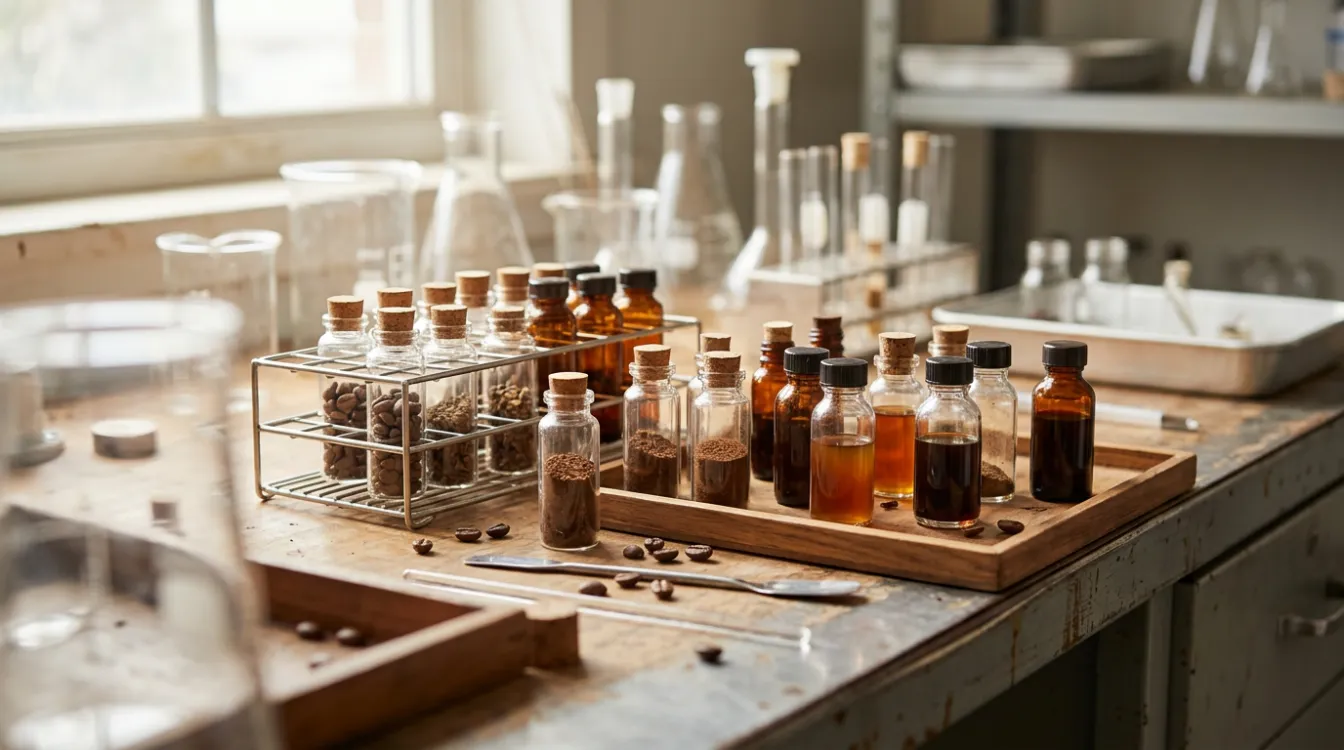
Human evidence is much less clear than the animal data. Large studies have looked at people's dietary acrylamide intake and their cancer rates, and for most cancer types, they haven't found a consistent increase in risk.
The American Cancer Society has noted that studies in people so far haven't clearly shown increased risks of specific cancers linked to dietary acrylamide. Some studies have suggested possible links for particular cancers, but results are inconsistent and often limited by how hard it is to measure what people eat over many years.
Researchers and food safety agencies still consider it sensible to reduce acrylamide where practical, because it's a potential hazard and exposure is widespread. But that's very different from saying that everyday foods containing it, including coffee, are proven to cause cancer.
Acrylamide is everywhere in the diet
One reason acrylamide is tricky is how widespread it is. Research has estimated that foods containing acrylamide make up around 40% of the calories eaten by Americans.
You don't need to eat processed food to encounter it. Making toast, roasting potatoes or frying breakfast at home can produce it. Coffee is one source among many.
That has two implications:
- Simply knowing that a food contains acrylamide doesn't tell you whether it's risky. What matters is how much, how often and in the context of your whole diet.
- Removing one food, such as coffee, wouldn't eliminate acrylamide from anyone's diet.
California's Proposition 65 and the coffee warning
California's Proposition 65, passed in 1986, requires businesses with more than ten employees to warn consumers about exposure to chemicals the state lists as causing cancer or reproductive harm. Acrylamide is on that list.
Because roasted coffee contains acrylamide, a lawsuit argued that coffee sellers should display cancer warnings. In 2018, a California court ruling raised the real possibility that coffee shops would have to post such warnings.
Coffee companies challenged the requirement, arguing that a cancer warning would mislead consumers, given the large body of research on coffee and health. In 2019, California adopted a regulation stating that coffee doesn't require a cancer warning under Proposition 65, citing the overall scientific evidence on coffee drinking.
The episode became a classic example of the difference between identifying a hazardous chemical in a product and evaluating the health effects of the product as a whole.
The ruling and the later regulation also sparked a broader conversation about how warning laws should work. Many public health experts argued that warnings should depend on the strength of the evidence and the size of the risk, not only on whether a listed chemical is detectable. Coffee became the most familiar example in that debate, because almost everyone drinks it and because so much research exists on coffee drinkers themselves. For consumers, the most useful takeaway is that a warning sign tells you a chemical is present, and that you need more information to judge whether the amount matters.
Acrylamide in common foods compared
Acrylamide levels vary enormously between products and even between batches, so exact numbers aren't very useful. But the general pattern looks like this.
| Food | Typical acrylamide level | Main reason |
|---|---|---|
| Potato chips and fries | Often among the highest | High-temperature frying of starchy potatoes |
| Coffee substitutes (roasted grains, chicory) | Often high per gram | Roasted cereals and roots |
| Crackers, crispbreads and cookies | Moderate to high | Baking until crisp and brown |
| Breakfast cereals | Variable | Toasting and baking |
| Toasted bread | Low to moderate | Rises as toast gets darker |
| Roasted coffee (per cup) | Low to moderate per serving | Formed in roasting; diluted in the cup |
| Boiled or steamed foods | Very low or none | Temperature too low for formation |
This is why advice on reducing acrylamide focuses mainly on frying, baking and toasting at home, rather than on coffee.
Why the coffee industry fought the warning
Coffee companies didn't object to the idea of warnings in general. Their argument was that a cancer warning on coffee would mislead people about the science.
They pointed to large studies showing that coffee drinking isn't associated with higher cancer risk and is linked to lower risk of some cancers. They also argued that acrylamide in coffee can't be eliminated with current technology, so a warning wouldn't help consumers find a "safer" coffee.
California's regulators ultimately agreed that, based on the overall evidence about coffee, a cancer warning wasn't appropriate. The decision was welcomed by many scientists and public health experts as a sensible example of looking at whole foods rather than single chemicals.
What a Proposition 65 sign really tells you
If you live in or visit California, you'll see Proposition 65 warning signs in many places: restaurants, hotels, parking garages, furniture stores and more. They can feel alarming at first.
A Proposition 65 sign tells you that a listed chemical may be present. It doesn't tell you how much, whether that amount is likely to cause harm or how the risk compares with everyday activities. Many signs are posted to avoid legal risk rather than because a product has been shown to be dangerous.
That's not to say the signs are useless; for some products and exposures, they draw attention to real hazards. But they're best treated as a prompt to learn more, not as proof that something will make you ill.
Quick answers on decaf, instant and pods
- Decaf: contains acrylamide at levels broadly similar to regular coffee, because decaffeination doesn't remove the compounds that form it during roasting. My guide on whether decaf coffee is healthy covers decaf in more detail.
- Instant coffee: can contain more acrylamide per gram, but a cup uses less coffee, so the difference per serving is smaller than it looks.
- Coffee pods and capsules: contain normal roasted coffee, so levels are similar to other roasted coffee.
- Cold brew: made from roasted coffee and still contains acrylamide.
What research says about coffee and cancer overall
Coffee is one of the most studied drinks in the world, and the research on cancer is broadly reassuring.
- Liver cancer: many studies and meta-analyses have linked coffee drinking with a lower risk of liver cancer.
- Other cancers: research on cancers such as prostate and breast cancer hasn't found a consistent increase in risk with coffee drinking, and some studies suggest lower risk.
- Overall cancer: the evidence doesn't indicate that coffee raises overall cancer risk, and some studies associate it with modestly lower risk.
In 2016, IARC reassessed coffee and concluded that coffee drinking is "not classifiable as to its carcinogenicity to humans." This replaced an older classification from 1991 and reflected the large body of research that has accumulated since then.
This shows why it's a mistake to judge a food by a single compound. Coffee contains hundreds of substances, including antioxidants and other bioactive compounds that researchers continue to study. The overall effect of drinking coffee is what matters for health, not the presence of one chemical in isolation. My guide to the health benefits of coffee and my article on coffee and longevity cover the wider research.
Why acrylamide can't be removed from coffee
The U.S. Food and Drug Administration has issued guidance to help the food industry reduce acrylamide. For many foods, such as fries and chips, there are effective strategies: choosing potato varieties with less sugar, blanching, cooking to a lighter golden color and controlling temperatures.
Coffee is harder. According to the FDA's guidance, there's no practical commercial way to produce roasted coffee without forming some acrylamide, because it forms during the roasting that creates coffee's flavor and aroma.
Researchers have explored options such as:
- Enzyme treatments: using the enzyme asparaginase to break down asparagine in green coffee before roasting.
- Roast profiling: adjusting roast temperature and time.
- Bean selection: choosing beans with lower asparagine content.
Some of these approaches can reduce acrylamide, but they may also affect flavor and cost, and none removes it completely. In the European Union, food businesses must follow acrylamide reduction measures and benchmark levels for coffee and other foods, which encourages producers to keep levels as low as reasonably achievable.
Why the size of a risk matters
One of the most important ideas in public health is that health risks aren't simply "safe" or "dangerous." They come in sizes.
Cigarette smoking is a clear example of a large, well-established risk. About two in three long-term smokers die prematurely from smoking-related diseases. Avoiding tobacco makes a huge difference to health.
Acrylamide from diet is very different. It has caused cancer in animals at high doses, but evidence that normal dietary amounts cause cancer in people is uncertain. Any risk from the acrylamide in coffee, if it exists at all, appears to be very small, and coffee as a whole isn't linked to higher cancer risk.
Statistical significance in a large study doesn't automatically mean a risk is large or important in everyday life. Good health communication should explain how likely harm is and how serious it would be, not just whether a chemical is present.
| Exposure | Strength of evidence of harm in people | Size of risk |
|---|---|---|
| Cigarette smoking | Very strong | Large |
| Heavy alcohol use | Strong | Substantial |
| Dietary acrylamide | Uncertain in humans | Small, if any |
| Coffee drinking overall | No evidence of increased cancer risk | Not classifiable as carcinogenic |
The problem with warning labels on everything
Warning labels only work if people take them seriously. When cancer warnings appear on many ordinary products, from coffee to parking garages, people can start to ignore them. Researchers call this warning fatigue.
A systematic review published in 1994 in the Journal of Public Policy and Marketing looked at unintended consequences of warnings and noted that policies often focus on identifying hazards rather than helping people understand how likely and how serious they are.
If a coffee cup carried the same kind of warning as a cigarette pack, people might reasonably assume the risks were similar. That would be misleading, and it could weaken the impact of warnings for genuinely dangerous products.
An effective warning should be based on solid evidence, reflect a meaningful level of risk, help people make practical choices and accurately represent uncertainty. That's a high bar, and it's one reason the coffee warning debate attracted so much attention.
Does brewing method change acrylamide?
Acrylamide dissolves easily in water, so most of the acrylamide in ground coffee ends up in the cup regardless of how you brew it. That means:
- Drip, pour-over and French press all extract acrylamide efficiently.
- Espresso is more concentrated, but a shot is small, so the amount per serving isn't dramatically different.
- Cold brew extracts more slowly, but over many hours it still extracts much of the acrylamide.
- Paper filters don't remove acrylamide, because it's dissolved in the coffee rather than suspended in oils or particles.
Since the differences between brewing methods are small and inconsistent, I don't recommend changing how you brew because of acrylamide. Choose the method you enjoy. My guide on pour over vs drip coffee compares two of the most popular options.
Acrylamide isn't the only roasting compound
Roasting creates hundreds of compounds, and a few others sometimes appear in headlines.
- Furan forms during roasting and is also listed as a possible carcinogen based on animal studies. It's volatile, so some of it escapes into the air when coffee is ground and brewed, especially in open cups.
- Polycyclic aromatic hydrocarbons can form when foods are charred or smoked. Very dark, burnt roasts may contain more; well-controlled roasting keeps levels low.
- Antioxidants and beneficial compounds also form or change during roasting, including melanoidins, which give coffee its brown color.
The overall lesson is the same: coffee is a complex mix of compounds, and its health effects can only be judged by studying coffee drinkers directly, which researchers have done extensively.
A note for home roasters
If you roast coffee at home, you can apply the same knowledge:
- Avoid scorching or burning beans, which creates harsh flavors and unwanted compounds.
- Medium roasts tend to balance flavor with lower acrylamide than very light roasts.
- Roast in a well-ventilated area or outdoors, because roasting releases smoke and chaff.
- Let beans rest after roasting before brewing for better flavor.
None of these steps will make coffee acrylamide-free, but they'll help you make better-tasting coffee while keeping roasting by-products in a sensible range.
Putting acrylamide in perspective
It's natural to want to avoid anything labeled as a possible carcinogen. But a long list of everyday foods contains some acrylamide, and avoiding all of them would mean giving up bread crusts, roasted vegetables, crackers, cereals and much more.
A healthier approach is to focus on the big, well-established factors in long-term health: not smoking, staying active, eating plenty of fruit, vegetables and whole grains, limiting alcohol and processed meat, getting enough sleep and keeping a healthy weight. Next to these, the acrylamide in a few cups of coffee is a very small consideration, if it matters at all.
For most people, moderate coffee drinking fits comfortably into a healthy lifestyle, and the research on coffee drinkers is far more reassuring than the headlines once suggested.
What about pregnancy and children?
Questions about acrylamide often come up during pregnancy and when feeding children, because people naturally want to be extra careful.
For pregnancy, the main coffee-related concern is caffeine rather than acrylamide. Health authorities commonly advise limiting caffeine during pregnancy, so it makes sense to follow your doctor's or midwife's advice on how much coffee is appropriate.
For children, coffee isn't usually part of the diet anyway. Their main acrylamide sources are foods like fries, chips, crackers, cereals and toast. Cooking these to a lighter golden color and offering a varied diet are sensible, simple steps.
If you have specific concerns, a healthcare professional can give advice based on your situation.
How to judge the next food scare
The acrylamide story is a good model for thinking about health headlines. When you see a claim that a common food contains a "cancer-causing chemical," a few questions help:
- Is the evidence from people or from animals?Animal and lab studies flag hazards but don't show real-world risk.
- How large are the doses?Experimental doses are often far higher than dietary exposure.
- What does research on the whole food say?Coffee has been studied directly in huge populations.
- How big is the risk, if any?A small or uncertain risk isn't the same as a large one.
- Who is making the claim?Be wary when the solution is a product someone is selling.
- What do major health bodies say?Look for positions from cancer societies and food safety agencies.
Applying these questions to coffee and acrylamide quickly shows why most experts aren't worried about moderate coffee drinking.
My take as a daily coffee drinker
I drink coffee every day, usually two or three cups, and I've read a lot of research for this site. Acrylamide doesn't change my habits.
What I do is the same as for any healthy diet: I eat plenty of fresh food, don't burn my toast or fries, avoid smoking and keep coffee to a moderate amount that suits my sleep. I choose coffee for flavor, mostly arabica at medium roasts, which happens to be on the lower side for acrylamide anyway.
If acrylamide worries you, it's reasonable to adjust your cooking habits and choose arabica. But the evidence doesn't suggest that giving up coffee would make a meaningful difference to your health, and you'd lose a drink with a long list of potential benefits.
What future research may tell us
Research on acrylamide is ongoing. Scientists continue to follow large groups of people over many years to see whether dietary acrylamide is linked to particular cancers, and to understand why results have been inconsistent so far.
Other researchers are working on practical ways to reduce acrylamide in foods without spoiling flavor, including enzyme treatments, plant breeding for lower asparagine, and smarter cooking and roasting profiles. Some of these techniques are already used for potato products and baked goods, and coffee researchers are testing similar ideas.
At the same time, studies on coffee drinkers keep growing in size and detail. If acrylamide in coffee were causing noticeable harm, we would expect to see it in these studies. So far, the opposite pattern has emerged: moderate coffee drinking is generally linked with neutral or favorable health outcomes. As always, new research may refine the picture, but there's no current reason to change your coffee habits because of acrylamide.
Can you reduce your acrylamide exposure?
You don't need to give up coffee, but if you'd like to lower your overall acrylamide intake, small changes across your diet make more difference than focusing on coffee alone.
Around the kitchen
- Toast to a light golden color rather than dark brown.
- Cook fries and roast potatoes to golden, not brown. Soaking raw potato slices in water before frying can help.
- Store potatoes in a cool, dark place, not the fridge, because cold storage can increase sugars that form acrylamide.
- Eat a varied diet with plenty of fresh fruit, vegetables and foods that aren't fried or heavily browned.
With coffee
- Arabica over robusta: arabica tends to contain less acrylamide. Most specialty coffee is arabica anyway.
- Medium to dark roasts: because acrylamide partly breaks down as roasting continues, darker roasts tend to contain a little less than very light ones. That said, choose the roast you enjoy; the difference is modest.
- Fresh brewed over coffee substitutes: some grain- and chicory-based coffee substitutes contain more acrylamide per gram.
- Moderate amounts: keeping coffee intake moderate also keeps caffeine in a comfortable range. My guide on how much coffee is too much covers sensible limits.
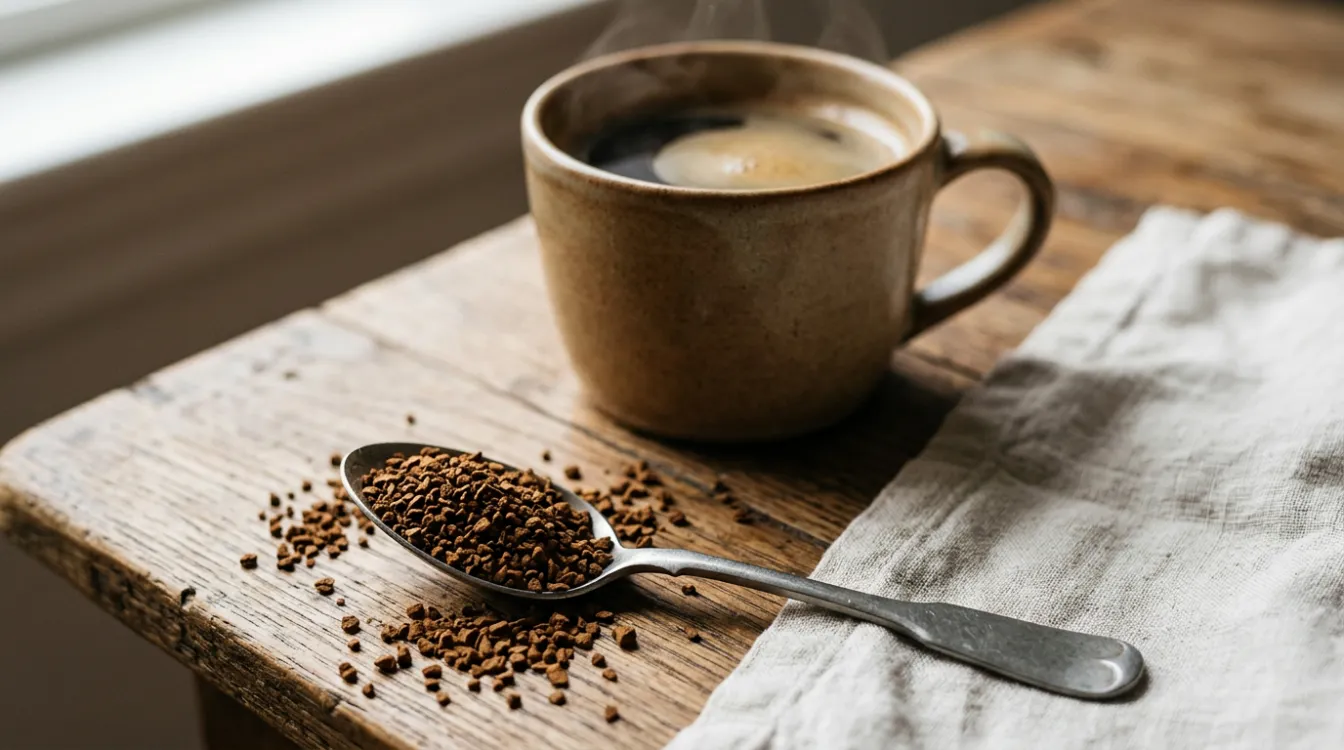
Our tip: Don't change how you brew coffee because of acrylamide. Brewing method has little practical effect, and the differences are small compared with your overall diet.
Acrylamide in different coffee types
| Coffee type | Relative acrylamide | Notes |
|---|---|---|
| Light-roast arabica | Moderate | Forms early in roasting; less time to break down |
| Medium to dark-roast arabica | Lower | Some acrylamide breaks down with longer roasting |
| Robusta | Higher | More asparagine in the green beans |
| Instant coffee | Higher per gram | Smaller amount used per cup |
| Grain or chicory coffee substitutes | Often higher | Roasted cereals and roots form more acrylamide |
| Decaf | Similar to regular | Decaffeination doesn't remove the precursors that matter much |
Exact levels vary widely between products, so treat this as a general guide rather than a precise ranking.
What to look for when you shop
You won't find acrylamide levels on coffee bags, and you don't need them. Instead:
- Choose fresh, good-quality coffee you enjoy.
- Arabica-based coffees are the norm in specialty coffee.
- Buy from roasters who share origin and roast information.
- Don't be swayed by marketing claiming "acrylamide-free" coffee; any roasted coffee contains some.

Myths about acrylamide in coffee
"Coffee causes cancer because it contains acrylamide"
Coffee contains acrylamide, but coffee drinking isn't linked to higher cancer risk, and it's associated with lower risk of some cancers.
"Acrylamide is added to coffee"
It isn't added. It forms naturally during roasting.
"Organic coffee doesn't contain acrylamide"
Organic coffee is roasted the same way, so it contains acrylamide too.
"Darker roasts have the most acrylamide"
Acrylamide tends to decrease as roasting continues, so darker roasts often contain a little less.
"A Prop 65 warning means a product is dangerous"
It means a listed chemical is present, not that the product poses a significant risk at normal use. California decided coffee doesn't need the warning.
The verdict
Acrylamide forms naturally when coffee is roasted, just as it does when bread is toasted or potatoes are fried. It has caused cancer in animals at high doses, so food safety agencies consider it a potential hazard and encourage reducing it where practical.
But human evidence that dietary acrylamide causes cancer is uncertain, and coffee as a whole isn't linked to higher cancer risk. IARC concluded in 2016 that coffee drinking is not classifiable as carcinogenic, and California decided that coffee doesn't need a cancer warning.
If you want to reduce acrylamide, focus on your whole diet: lighter toast, golden fries, plenty of fresh food. Then enjoy your coffee in moderation without worrying about a chemical that's simply part of roasting.
Frequently asked questions
What is acrylamide?
A chemical that forms naturally when starchy or sugary foods are cooked at high temperatures.
Why does coffee contain acrylamide?
It forms during roasting through the Maillard reaction.
Does acrylamide in coffee cause cancer?
Human evidence is uncertain, and coffee drinking overall isn't linked to higher cancer risk.
Which coffee has the least acrylamide?
Arabica and medium to dark roasts tend to have a little less than robusta and very light roasts.
Does instant coffee have more acrylamide?
Instant coffee can contain more per gram, but less is used per cup.
Does California require a coffee cancer warning?
No. In 2019 California decided coffee doesn't need a Proposition 65 cancer warning.
Can acrylamide be removed from coffee?
Not completely; some forms unavoidably during roasting.
Should I stop drinking coffee because of acrylamide?
There's no evidence that moderate coffee drinking needs to stop for this reason.

- Michael Reynolds, review of research and regulations
- Acrylamide and cancer risk, American Cancer Society
- Acrylamide, U.S. Food and Drug Administration
- Acrylamide, Wikipedia
- Proposition 65, Wikipedia
Related guides
Coffee and longevity Health benefits of coffee Mold and mycotoxins in coffeeWritten by Michael Reynolds. Last updated November 20, 2026.