CASABREWS Ultra vs Breville Barista Express
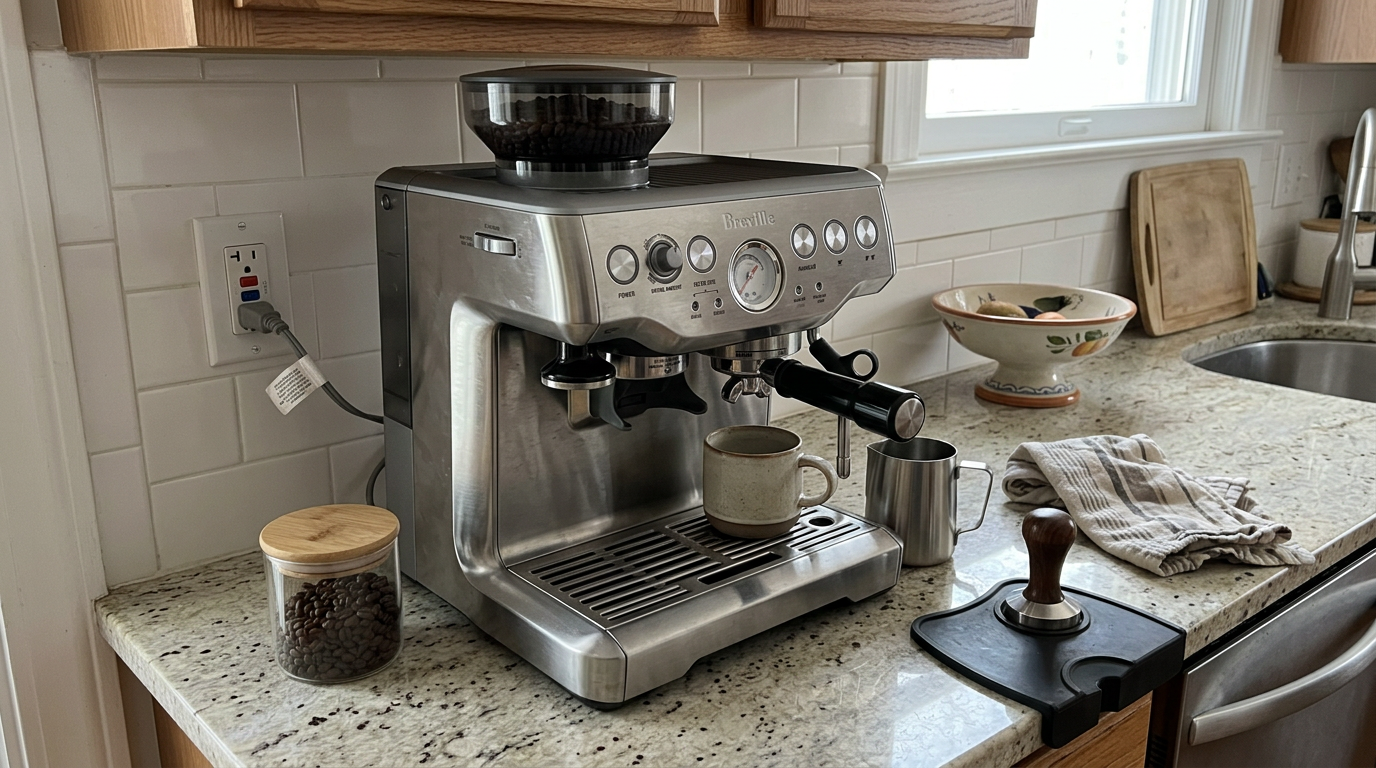
Two espresso machines for people who want to learn real espresso, built around very different ideas. The Breville Barista Express puts a grinder, a pressure gauge and a steam wand in one body. The CASABREWS Ultra skips the grinder and gives you a café-size 58 mm portafilter, four brewing temperatures and a built-in shot timer instead. I used each one for four weeks to see which is the better buy.
We choose products independently. We may earn a commission when you buy through our links. Affiliate policy
Jargon helpNew to espresso? Tap any dotted term to see what it means.
In this comparison
Buy the Breville Barista Express if you do not own a good espresso grinder. It is the complete package, and its steam wand made much better milk. Buy the CASABREWS Ultra if you already own a capable grinder and care most about straight espresso. Its 58 mm portafilter, four temperatures and shot timer made dialing in easy, and its espresso was right up with the Breville’s.
The two machines
Specs checked November 24, 2026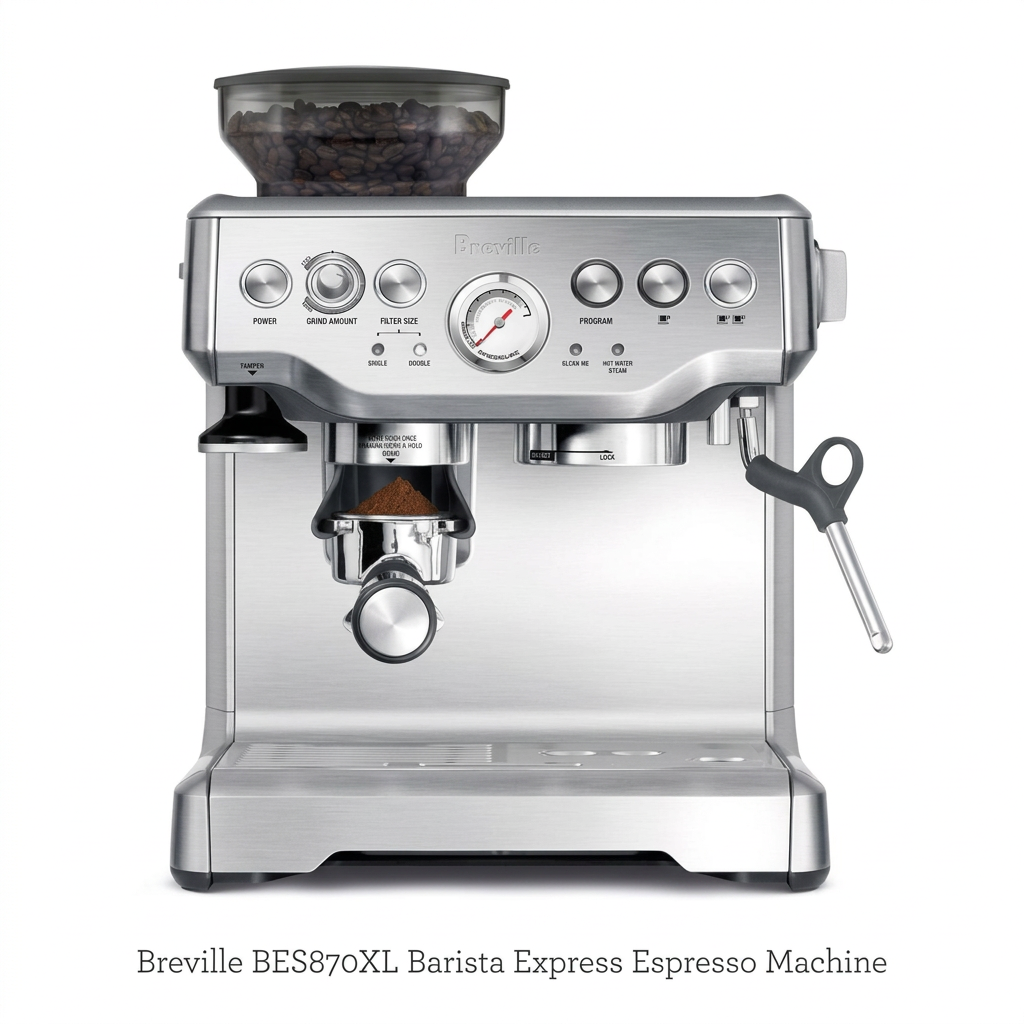
Conical burr grinder with 16 settings and an inner burr, PID, a pressure gauge, a 54 mm portafilter, a steam wand and a hot water outlet.
Check price on Amazon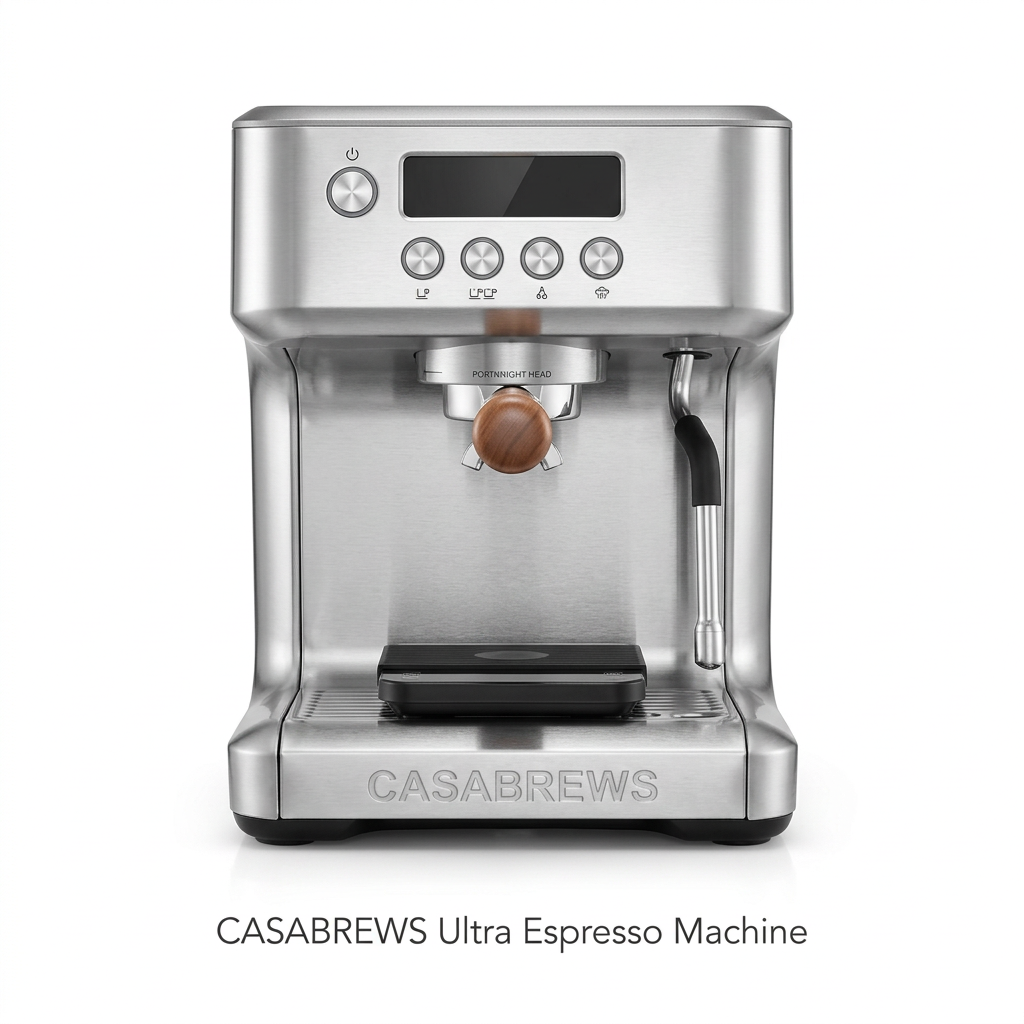
A 58 mm stainless portafilter, PID with four temperatures, a built-in shot timer, single-wall and pressurized baskets and a 74-ounce tank.
Find Out the Price TodayCASABREWS Ultra vs Barista Express at a glance
- The Barista Express is a complete setup; the Ultra needs a good grinder beside it.
- With a capable separate grinder, the Ultra’s espresso was right up with the Breville’s, and its timer and temperatures made it easier to dial in.
- The Breville’s steam wand made far better milk; the Ultra’s is modest and slow.
- No grinder or lots of lattes: Barista Express. Own a grinder and love espresso: Ultra.
Head to head
The better result in each row is marked, based on my four weeks with each machine and the manufacturer specs.
This matchup splits evenly. The Barista Express wins on completeness and milk; the Ultra wins on espresso tools and capacity.
| Spec | Barista Express | Ultra |
|---|---|---|
| Espressomy tasting, same beans | Sweet, syrupy ✓ Best | Sweet, clear, very close |
| Built-in grinder | Yes, 16 settings ✓ Best | No |
| Milk | Latte-art microfoam ✓ Best | Modest, slow |
| Brew to steam | About 15 s ✓ Best | A longer wait |
| Portafilter | 54 mm | 58 mm, café standard ✓ Best |
| Brew temperatures | PID, fixed | PID, four settings ✓ Best |
| Shot timer | No | Yes, on the screen ✓ Best |
| Pressure gauge | Yes ✓ Best | No |
| Water tank | About 67 oz | About 74 oz ✓ Best |
| Footprint | 12.5 in wide, 22 to 23 lb | 10.3 in wide, 13.5 lb ✓ Best |
| Hot water | Dedicated outlet ✓ Best | From the wand |
| Rows won | 6 | 5 |
The tally is nearly even, so count the rows you care about. If you have no grinder, the first row alone decides it.
Is It On Sale? Check NowCASABREWS Ultra vs Barista Express pros and cons
Breville Barista Express
- Built-in grinder saves money and space
- Pressure gauge makes dialing in easy to learn
- Steam wand can make latte-art microfoam
- Grinder needs an inner-burr tweak out of the box
- Wait between brewing and frothing
- No low-water sensor
CASABREWS Ultra
- 58 mm portafilter fits standard accessories
- PID with four temperatures and a shot timer
- Single-wall and pressurized baskets included
- Modest steam power
- Wait to switch between brewing and steaming
- No milk pitcher, basic plastic tamper
Who should buy which machine?
- Beginners without an espresso grinder
- Latte drinkers who want latte art
- Kitchens that want one appliance
- Espresso and Americano drinkers
- People who already own a good grinder
- Tinkerers who want 58 mm accessories
Grinder vs no grinder
Both are semi-automatic✕Semi-automatic espresso machineA machine where you dose and tamp the coffee into the portafilter yourself, and the machine controls the water and stops the shot. machines with PID✕PID temperature controlA digital controller that keeps the brew water at a steady, set temperature, shot after shot. temperature control and a manual steam wand.
The Barista Express adds a conical burr grinder on top, so you grind straight into the portafilter. It also has a round pressure gauge that shows what each shot is doing.
The Ultra spends its effort elsewhere: a 58 mm stainless portafilter, four brew temperatures, a shot timer on an LCD and a big 74-ounce tank. You bring the grinder.
| Feature | Barista Express | Ultra |
|---|---|---|
| Heating | 1600 W thermocoil, PID | 1,350 W thermoblock, PID |
| Pump | 15 bar | 20 bar rated |
| Grinder | Built in | Separate, not included |
| Feedback | Pressure gauge | Shot timer |
I have also compared the Ultra with Breville’s smallest machine in my CASABREWS Ultra vs Breville Bambino comparison.
Our tip: Count the grinder in your plan before choosing; the Ultra is only as good as the grinder beside it.
That makes this a comparison of two philosophies. The Breville says: here is everything you need in one box. The Ultra says: bring your own grinder, and here are the best espresso tools I can give you for the money.
Design, size and build
The Barista Express is about 12.5 inches wide, 13.8 inches deep and 15.9 inches tall, at 22 to 23 pounds, with a bean hopper on top and a round gauge on the front.
The Ultra is about 10.3 inches wide, 12.2 inches deep and 13 inches tall, at about 13.5 pounds. Its brushed stainless panels, angled edges and small LCD made it look like a far pricier machine.
Remember to add a grinder to the Ultra’s footprint. With mine beside it, the pair took up about as much width as the Breville alone.
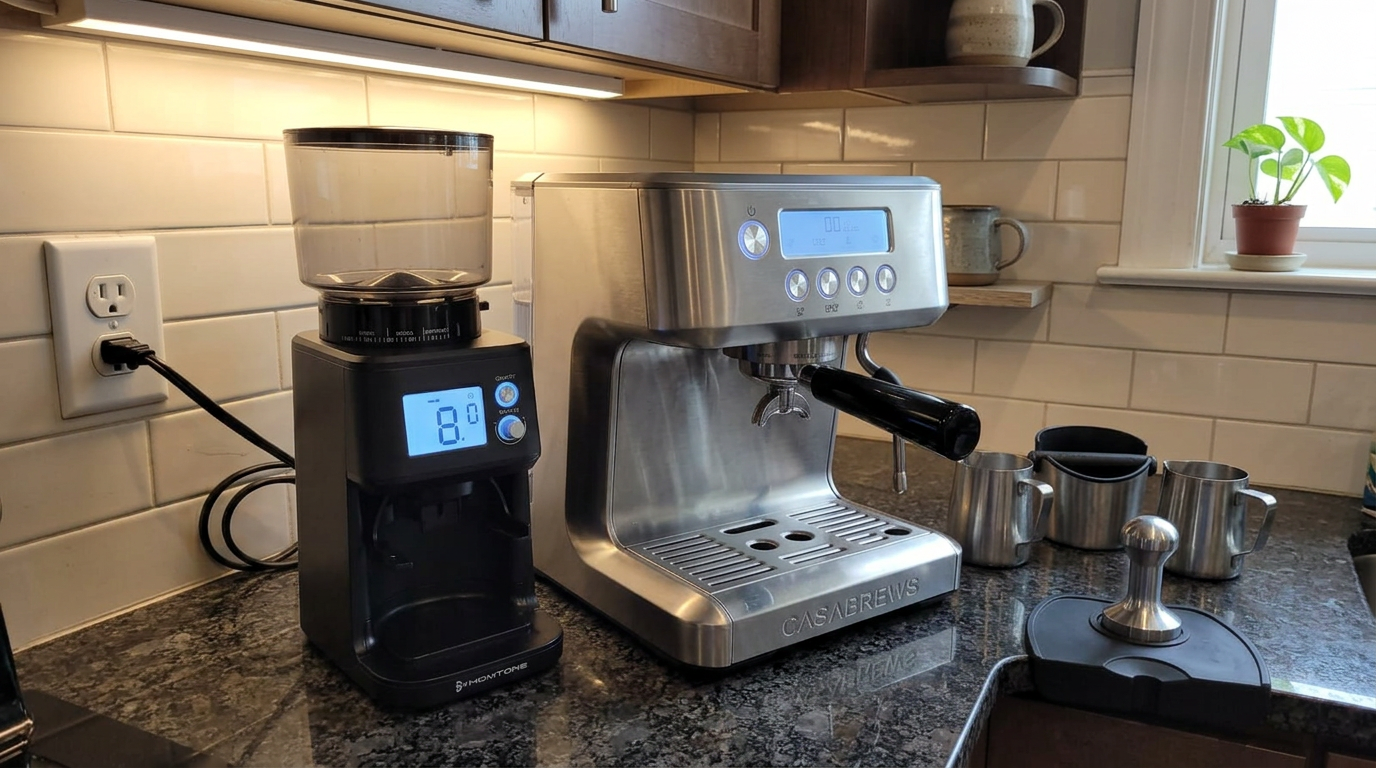
The Ultra with my grinder: together, about as wide as the Barista Express.
The Ultra’s flat top warms several cups while the machine is on. The Breville warms cups on top too, behind the hopper.
Cup clearance was similar: espresso cups and cappuccino cups fitted under both, and smaller mugs fitted under the Ultra’s spouts.
Setup and first shots
The Barista Express took about 20 minutes: soak and fit the water filter, fill the tank and hopper, flush the group. Its inner burr shipped at 6, and moving it to 2 gave the side dial enough fine steps. By the end of day two, my shots poured like warm honey.
The Ultra took about 15 minutes. It warmed up in about a minute, and my first shot with freshly ground medium-roast beans ran too fast and sour. Two grind steps finer on my grinder, the second ran in 28 seconds on the built-in timer and tasted sweet.
| Setup step | Barista Express | Ultra |
|---|---|---|
| Time to first shot | About 20 minutes | About 15 minutes |
| Grinder tweak | Inner burr from 6 to 2 | Depends on your grinder |
| In the box | Four baskets, magnetic tamper, Razor, jug, filter | Four baskets, plastic tamper, spoon, cleaning tool |
| Until shots tasted right | End of day two | Second shot |
Our tip: Buy a small stainless milk pitcher with the Ultra; it does not come with one.
The Ultra’s hidden functions, programming shot length and changing temperature, use long presses on its buttons, so I kept the manual handy for the first week. The Breville’s dials and buttons needed no manual after day one, apart from the inner burr.
The grinder question
This is the heart of the comparison. The Barista Express grinds by time, with 16 settings and an inner burr that shifts the range. For an integrated grinder, it is decent, and it saves you buying and housing a second appliance.
It is less precise than a good standalone espresso grinder, though. The grounds clumped a little, and the timed dose drifted as the hopper emptied, so I weighed it a few times a week.
The Ultra is only as good as the grinder you pair it with. With a capable burr grinder that goes fine enough for espresso, it made excellent shots. With a cheap grinder, it would struggle like any single-wall machine.
| What you need | Barista Express | Ultra |
|---|---|---|
| Espresso grinder | Built in | Buy separately |
| Scale | Very useful | Very useful |
| Better tamper | Included, magnetic | Recommended, 58 mm |
| Milk pitcher | Included | Buy separately |
| Appliances on the counter | One | Two |
For why burr grinders matter so much, see my guide to burr vs blade grinders.
See Today’s PriceIf you already own a good grinder, the Breville’s built-in one is a duplicate. If you do not, it saves you from buying, fitting and cleaning a second appliance, which is a real advantage for a first setup.
54 mm vs 58 mm
The Ultra’s 58 mm stainless portafilter is the café standard. It has real weight, and tampers, funnels, baskets and distribution tools in that size are easy to find.
The Barista Express’s 54 mm portafilter is Breville’s standard. It is heavy and solid, and 54 mm accessories are common too, just less universal.
In the cup, a wider, shallower puck can extract a little more evenly, but at home the bigger difference is the accessory choice.
| Detail | Barista Express | Ultra |
|---|---|---|
| Size | 54 mm | 58 mm |
| My dose | About 15.4 g | About 18 g |
| Tamper in the box | Magnetic, metal | Plastic, upgrade it |
| Accessory choice | Good | Widest |
On the Ultra, the plastic tamper was the weak point of the kit. A 58 mm metal tamper made level pucks easy and my shot times steadier within a day.
On the Breville, the heavy magnetic tamper and Razor trimming tool meant I never needed to buy anything extra for prep.
Baskets and pre-ground coffee
Both ship with single-wall baskets for fresh beans and pressurized baskets for pre-ground coffee, so either can start with a bag of supermarket espresso.
On the Barista Express, the dual-wall baskets made foamy-looking shots from almost anything, but hid what was happening in the coffee. I used the single-wall double for almost every shot.
On the Ultra, the pressurized baskets were a handy fallback for guests who brought pre-ground coffee. With fresh beans, the single-wall baskets were the reason to own it.
| Basket | Barista Express | Ultra |
|---|---|---|
| Single-wall single and double | Included, 54 mm | Included, 58 mm |
| Pressurized single and double | Included | Included |
| Best with pre-ground | Dual-wall | Pressurized |
| Best with fresh beans | Single-wall double | Single-wall double |
Our tip: Switch to the single-wall basket as soon as you have fresh beans and a good grinder; the flavor jump is the whole point of both machines.
Temperature control and the shot timer
Both use PID, but only the Ultra lets you choose the temperature: 194, 198, 201 or 205°F, set by holding the hot water button for about five seconds.
That made a real difference. Light roasts tasted sweeter at 205°F, and a dark roast lost its bitter edge at 194°F.
The Ultra’s LCD also counts the seconds during every shot. I never needed a phone stopwatch, and I could see straight away if a shot ran fast or slow.
The Barista Express gives feedback a different way: its pressure gauge. Watching the needle rise into the espresso zone taught me what grind changes did.
Ultra: how temperature changed a dark roast
My flavor ratings out of 10, same dose, grind and shot time.
If you buy one bag of medium-roast espresso blend at a time and never change, the Breville’s fixed temperature will suit you fine. If you like trying different roasters and roasts, the Ultra’s four settings are genuinely useful.
Dialing in, step by step
Both machines make dialing in easier than most, in different ways. On both, I aimed for a 1:2 ratio: about 15.4 grams in and 30 out on the Barista Express, and 18 in and 36 out on the Ultra, in 25 to 30 seconds.
On the Breville, I watched the gauge. A needle that stayed low meant grind finer; one that pinned high meant grind coarser.
On the Ultra, I watched the timer. Under 20 seconds meant finer; over 35 meant coarser. Then I used temperature to fine-tune the taste.
| If the shot... | What it means | What I changed |
|---|---|---|
| Runs under 20 s | Grind too coarse | Grind finer |
| Runs over 35 s | Grind too fine | Grind coarser |
| Tastes sour at the right time | Too cool for the roast | Ultra: raise the temperature |
| Tastes bitter at the right time | Too hot for the roast | Ultra: lower the temperature |
Our tip: Change one thing at a time when dialing in, grind first, then temperature; otherwise you will not know what helped.
Espresso quality
With a medium roast, the Barista Express made sweet, syrupy espresso with a thick hazelnut crema and a touch more body from its own grinder.
The Ultra, paired with my separate grinder, made sweet, clear espresso. With light roasts at 205°F, its shots were the brighter and juicier of the two.
In blind tastings, I split almost evenly: the Breville won with darker beans, the Ultra with lighter ones. Overall, I gave the Breville a slight edge for consistency from its integrated workflow.
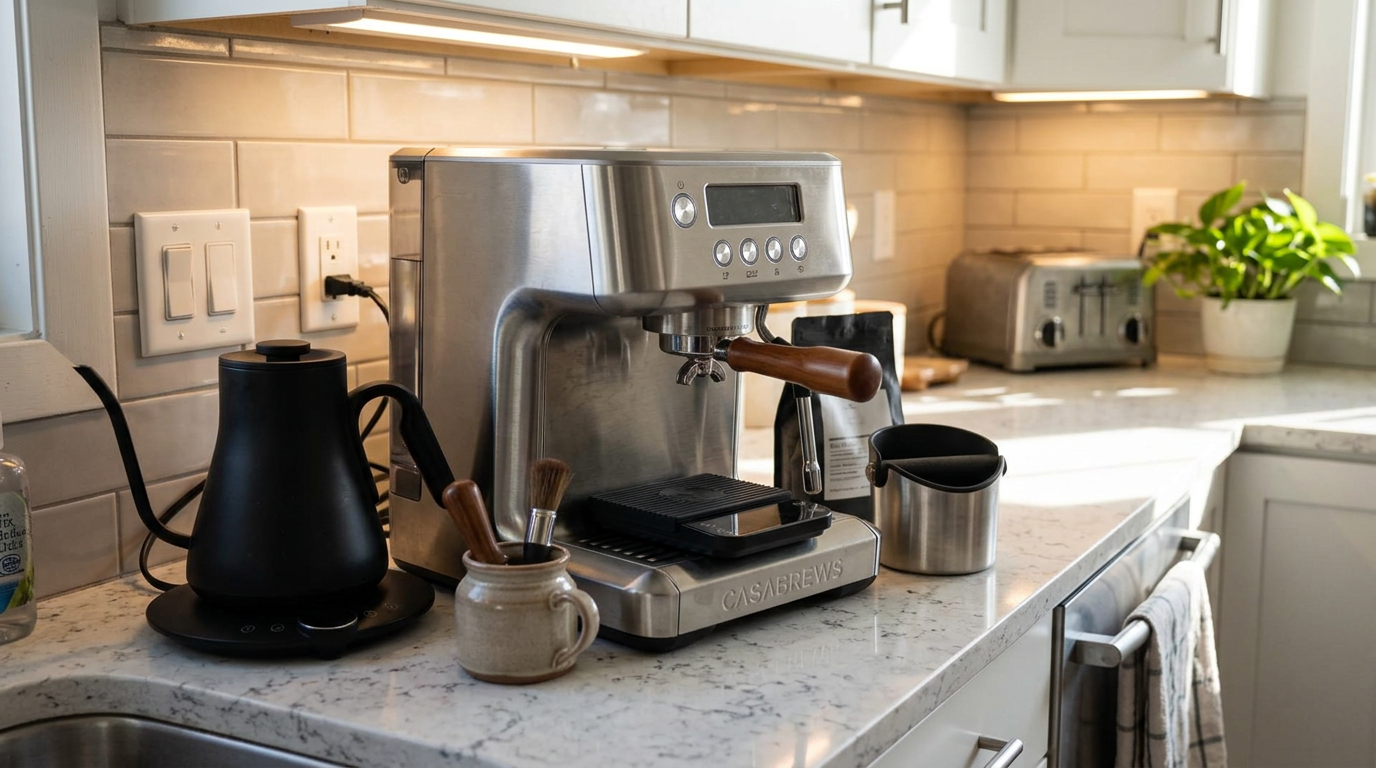
A scale on the Ultra’s drip tray and its timer on the screen made dialing in easy.
My espresso ratings
Ratings out of 10 from my single reviews and side-by-side tasting.
| What you taste | Likely cause | First fix on both |
|---|---|---|
| Sour, thin, fast | Under-extracted✕Under-extractionWhen water does not pull enough flavor from the coffee, often because the grind is too coarse or the shot too short. | Grind finer |
| Bitter, slow | Over-extracted | One step coarser |
| Bitter dark roast on the Ultra | Water too hot | Drop to 194°F |
| Sour light roast on the Ultra | Water too cool | Raise to 205°F |
If you are still choosing beans, my guide to coffee roast levels explains how roast changes the grind.
Reveal Today’s DealBoth made hot, steady shots from the second shot onward. The first of the morning was a little cooler on both until I ran a blank shot through the empty portafilter.
Heat-up and speed
Both took about a minute to warm up from cold. Neither can brew and steam at the same time.
The Barista Express switched to steam in about 15 seconds after the shot. The Ultra, with one thermoblock, needed a longer wait to heat for steam, and then vented water into the drip tray when switching back to brewing.
Switch-on to first sip
My timings, including grinding, steaming and a quick wipe.
Both switch themselves off when idle. On the Ultra, the long press needed to change the temperature is easy to forget, so I left it at 201°F most days and changed it only with new beans.
Milk steaming
The Barista Express has a manual wand on a swivel joint with a single-hole tip. Its steam is gentle, which gave me time to learn. My first week of milk was bubbly; by week three, I was pouring hearts and simple rosettas.
The Ultra’s wand is more modest. With technique and a small pitcher, it made microfoam✕MicrofoamMilk foam with bubbles so small you can barely see them. It looks glossy and is what makes latte art possible., but a jug took about 50 to 60 seconds, and bigger jugs struggled.
If milk drinks are your daily habit, the Breville is clearly the better machine.
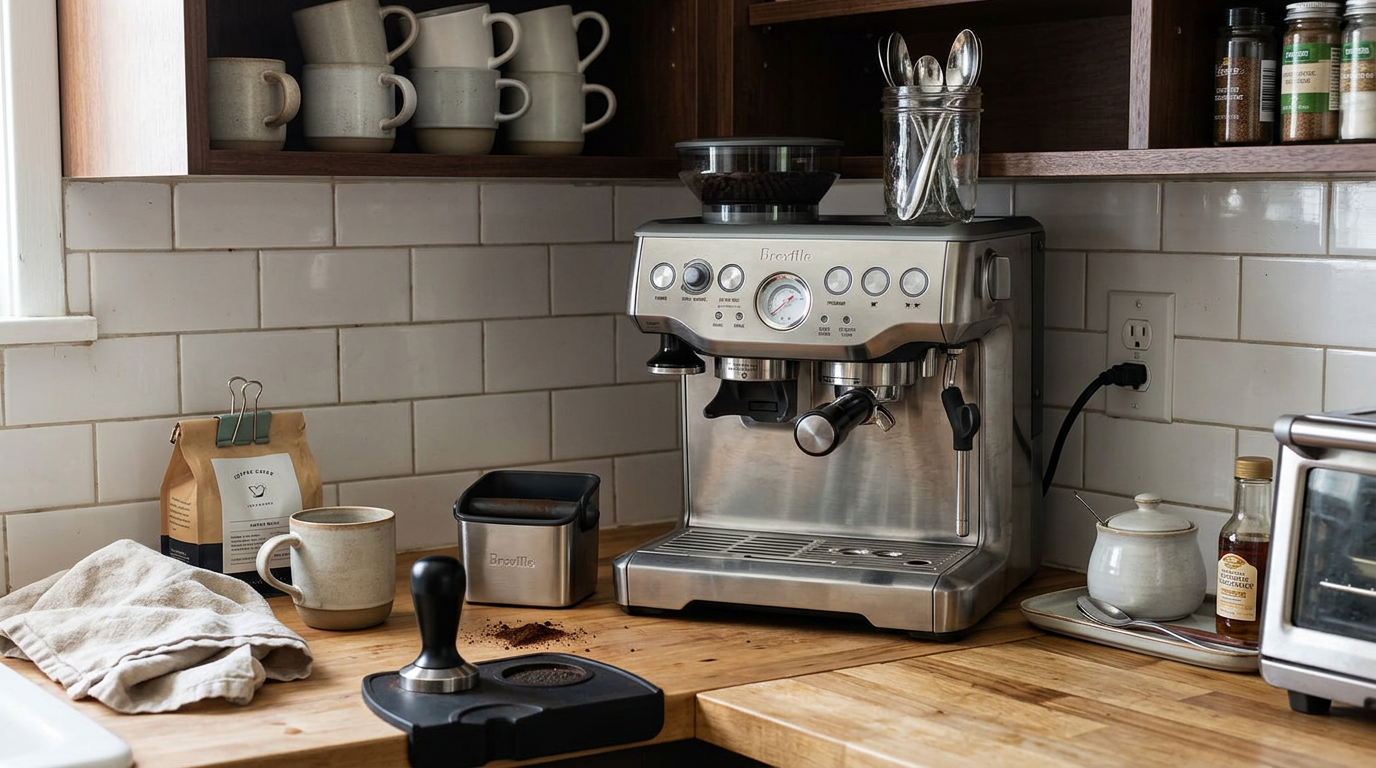
The Express’s swivel wand has room for a 12-ounce jug.
Milk texture over four weeks
My texture ratings out of 10 with cold whole milk.
| Milk feature | Barista Express | Ultra |
|---|---|---|
| Wand | Swivel, single-hole tip | Manual wand |
| Brew to steam | About 15 s | A longer wait |
| One jug | About 60 s | About 50 to 60 s, small jug |
| Milk jug included | Yes | No |
| Latte art | Hearts and rosettas | Simple hearts |
Our tip: Pull the shot first, then steam; neither machine can do both at once.
See How Much You’ll SaveWith barista oat milk, both needed a gentler stretch and a longer spin. Regular almond drink barely foamed on either.
Hot water, Americanos and tea
The Barista Express has a dedicated hot water outlet, so Americanos and tea were easy.
The Ultra gives hot water from the steam wand via its hot water button. It worked for one Americano✕AmericanoEspresso topped up with hot water. Adding the water after the shot keeps more of the crema., and Americanos suited the Ultra’s clean, sweet shots very well.
| Drink | Barista Express | Ultra |
|---|---|---|
| Americano | Hot water outlet | Hot water button, via the wand |
| Long black | Outlet first, then shot | Wand first, then shot |
| Tea | Good | Kettle is easier |
The Ultra’s hot water button also doubles as the way back into brew mode after steaming, which took me a day to get used to.
Cleaning and upkeep
The Barista Express adds grinder care: brushing the burrs and chute weekly, backflushing with a tablet when the Clean Me light comes on, and replacing the water filter every two to three months.
The Ultra is simpler to clean, with no grinder. Its big drip tray slides out easily, but it fills faster than you expect, because the machine vents into it after steaming.
| When | Barista Express | Ultra |
|---|---|---|
| After milk | Wipe and purge the wand | Wipe and purge the wand |
| Daily | Empty tray, wipe shower screen | Empty tray, rinse basket |
| Weekly | Brush burrs and chute | Brush the group gasket |
| When prompted | Backflush with a tablet | Descale |
| Every 2 to 3 months | Replace the water filter | Descale |
My daily hands-on cleaning time
My estimates, not counting descaling.
On the Ultra, I wiped the shower screen and brushed the group gasket weekly, which took a minute. Add your separate grinder’s cleaning to its routine, too.
Noise
The Ultra was quieter than most vibration-pump machines I have tested. The Barista Express’s built-in grinder was the loudest part of either setup, briefly. Your separate grinder will be the loud part of an Ultra setup.
Beans, water and long-term care
The Ultra’s 74-ounce tank lasted me two or three days even with four or five drinks a day. The Barista Express’s 67-ounce tank was close. Neither has a low-water warning.
Both reward fresh beans. The Ultra’s four temperatures let me match each roast; the Breville handled most roasts well once its inner burr was set.
| Bean type | Barista Express | Ultra |
|---|---|---|
| Light roast | Bright, grind finer | Sweet at 205°F |
| Medium | Sweet, caramel | Balanced at 201°F |
| Medium-dark | Thick crema, great in milk | Smooth at 198°F |
| Dark | A step coarser | Less bitter at 194°F |
Use filtered water on both. My guide to water chemistry for coffee explains why.
Our tip: Write your grind setting and temperature on the coffee bag, so you can return to them after trying a new bean.
Avoid very oily dark beans in the Breville’s grinder, as they clog the burrs faster. With the Ultra, that is a question for your separate grinder.
Serving guests
Four lattes took me about 16 minutes on the Barista Express and about 18 on the Ultra, because the Ultra’s steam is slower and works best one small jug at a time.
For Americanos, the Ultra kept up easily, and its big tank meant no refill.
Four lattes, start to finish
Including grinding, steaming and a quick wipe.
The Ultra’s flat top kept four cups warm while I worked, which helped the espresso stay hot for longer.
Build quality and long-term ownership
Both feel solid. The Barista Express is heavier, with a brushed stainless body and a heavy metal portafilter. The Ultra is mostly stainless too, with metal parts even underneath, and its 58 mm portafilter has real weight.
Neither gave me a fault in four weeks. The Breville asks for more routine care because of its grinder and water filter.
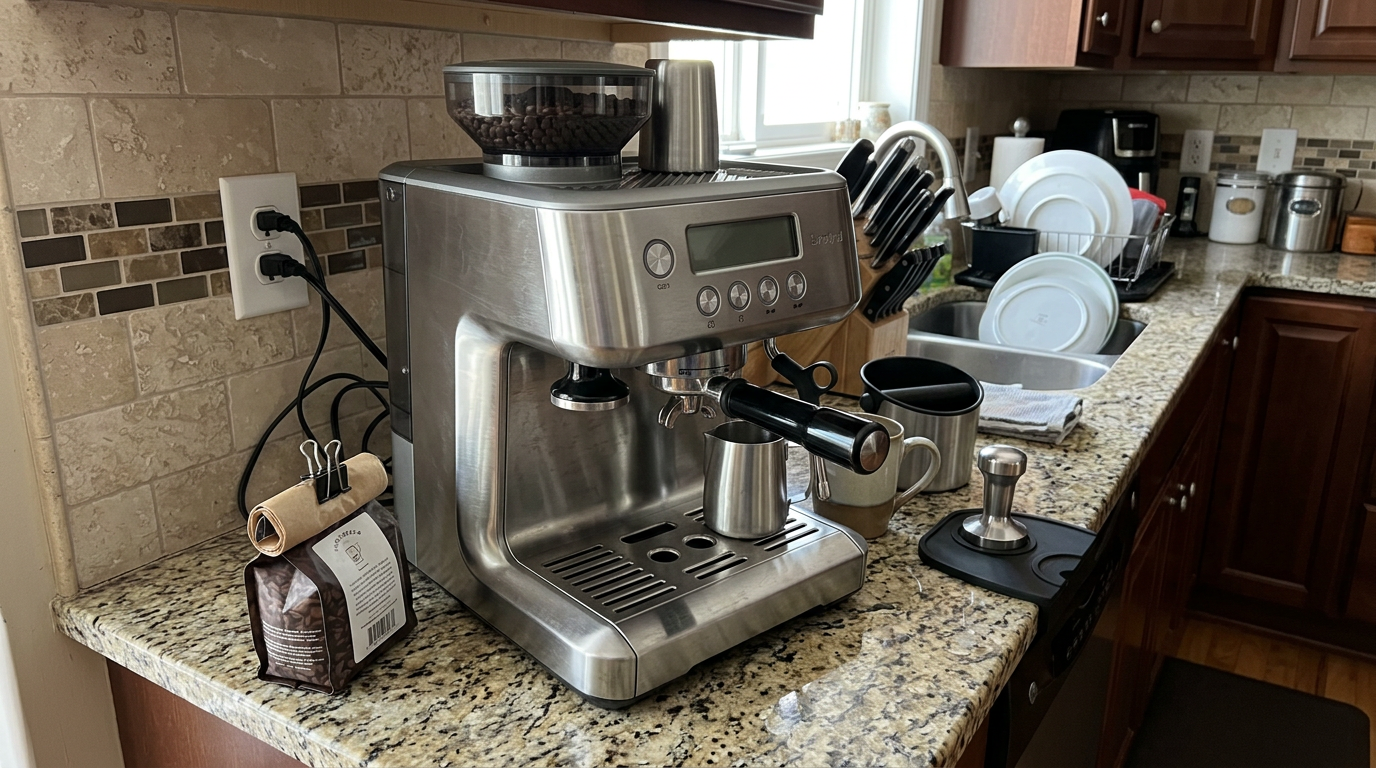
The Ultra’s flat top doubles as a cup warmer.
The Ultra’s 58 mm parts are a long-term advantage: baskets, tampers and gaskets in that size are among the easiest to find.
Mistakes to avoid
Buying the Ultra without a capable grinder. Its single-wall baskets need a fine, even grind.
Leaving the Express’s inner burr on 6. The dial ran out of fine steps.
Steaming a big jug on the Ultra. The spin weakened and the foam got uneven.
Ignoring the Ultra’s temperature setting. Dark roasts at 205°F tasted bitter.
| Problem | Fix |
|---|---|
| Gauge needle stays low on the Express | Grind finer |
| Ultra shot under 20 s on the timer | Grind finer |
| Overflowing Ultra drip tray | Empty it after steaming |
| Bubbly milk | Tip just under the surface, shorter stretch |
A typical morning on each
My weekday routine was an Americano for me and a latte for my partner.
On the Barista Express, I switched on, ground and tamped, pulled both shots, added hot water from the outlet to mine and steamed one jug. It took about seven minutes.
On the Ultra, I ground on my separate grinder, pulled both shots while watching the timer, added hot water and waited for steam. It took about seven and a half minutes.
| Step | Barista Express | Ultra |
|---|---|---|
| Heat-up | About 1 min | About 1 min |
| Grind and tamp | About 45 s, built in | About 45 s, separate grinder |
| Shot | About 28 s | About 28 s on the timer |
| Steam one jug | About 60 s | About 50 to 60 s |
By week four, both routines had shrunk by about a minute as I stopped second-guessing the grind. The Breville’s gauge and the Ultra’s timer both helped me stop checking every shot by taste alone.
The drinks I made most
The Breville was the all-rounder; the Ultra was at its best with espresso and Americanos.
| Drink | Barista Express | Ultra |
|---|---|---|
| Espresso | Sweet, syrupy | Sweet, clear, tune by roast |
| Americano | Hot water outlet | Its best drink |
| Flat white | Latte-art milk | Small jug, good |
| Latte | Very good | Good, slower |
| Iced latte | Shot over ice | Shot over ice |
If you are new to these drinks, my guide to Americano vs long black explains the hot-water drinks.
Which makes the better first espresso machine?
For most first-time buyers, the Barista Express. It is one purchase, it includes a usable grinder and its gauge teaches you what is happening.
The Ultra is the better first machine for someone who already owns a good grinder, perhaps from pour-over, and wants the best espresso tools for the money.
| Coming from | Better pick | Why |
|---|---|---|
| Pods, no grinder | Barista Express | Everything in one box |
| Pour-over with a good grinder | Ultra | 58 mm, timer, temperatures |
| Café lattes every day | Barista Express | Better milk |
| Espresso purist on a budget | Ultra | Dial-in tools |
Our tip: Give either machine a full week before judging it; my shots and milk both improved a lot by day seven.
Either way, plan for a scale. Both machines reward weighing your dose and your shot, and a small kitchen scale with a timer is the cheapest upgrade that makes the biggest difference.
Small extras worth having
For the Ultra, a good burr grinder is essential, and a 58 mm metal tamper, a scale and a milk pitcher are worth adding straight away.
For the Barista Express, a scale is the most useful extra, and spare water filters keep it running.
| Extra | Barista Express | Ultra |
|---|---|---|
| Espresso grinder | Built in | Essential |
| Metal tamper | Included | Recommended, 58 mm |
| Milk pitcher | Included | Buy one |
| Scale | Very useful | Very useful |
| Distribution tool | Optional | Easy to find in 58 mm |
Still torn between the two?
Start with one question: do you own a good espresso grinder? If not, the Barista Express is almost always the better buy.
If you do, ask how many milk drinks your home makes. Mostly espresso and Americanos point to the Ultra; mostly lattes point back to the Breville.
Four weeks with each: my diary notes
These are the notes I kept as each machine settled into my routine.
Breville Barista Express
Week 1: Moved the inner burr from 6 to 2. Shots poured like honey by day two.
Week 2: Shots settled into 26 to 30 seconds; milk still bubbly.
Week 3: New beans needed one step coarser. First hearts.
Week 4: A light roast needed a finer grind and worked well.
CASABREWS Ultra
Week 1: Second shot in 28 seconds on the timer. Learned the long-press menus.
Week 2: Matched temperature to roast: 205°F for light, 194°F for dark.
Week 3: Swapped to a 58 mm metal tamper. More consistent pucks.
Week 4: Small-jug milk good enough for simple hearts.
Real-life scenarios
These are the situations where one machine clearly fit better in my four weeks.
Grinder built in.
205°F and a good grinder.
Better steam.
Shot timer on screen.
Dedicated outlet.
Café-standard portafilter.
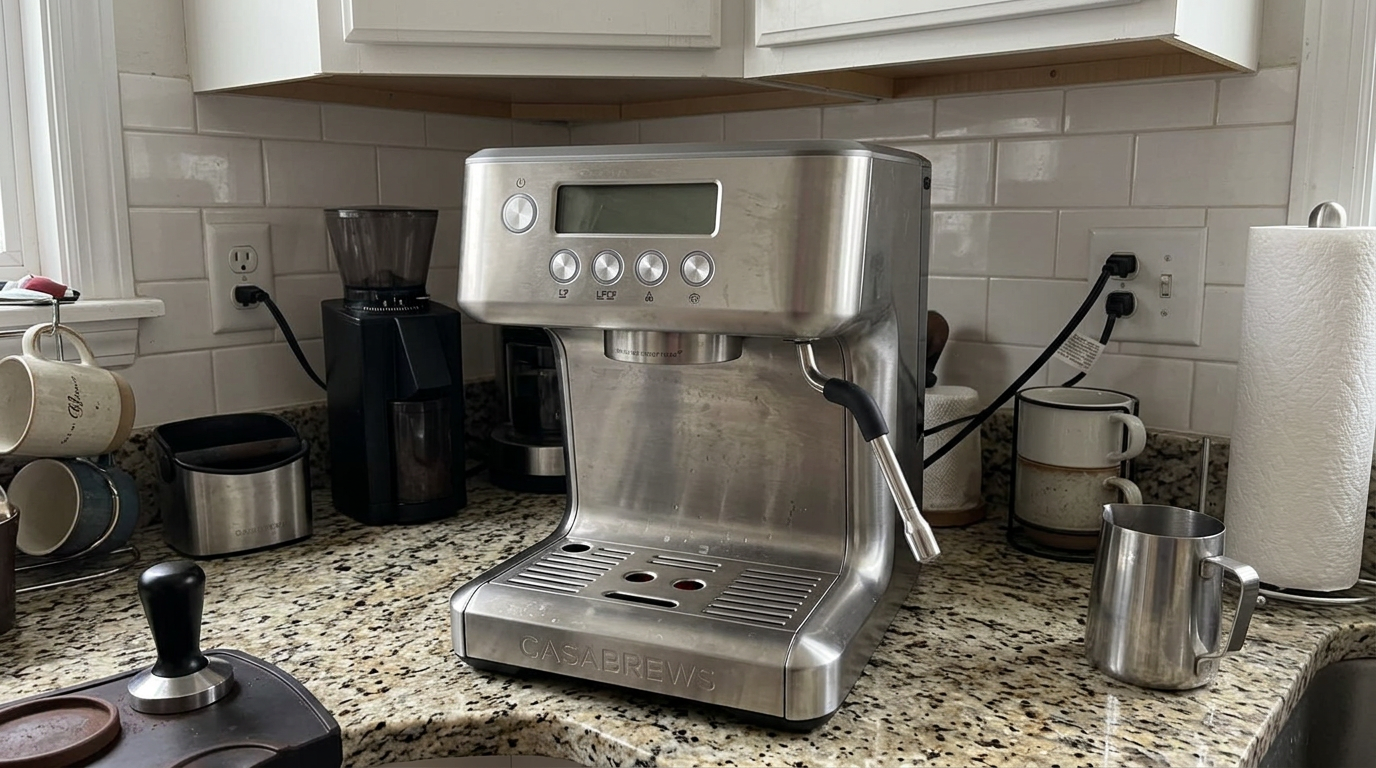
The Ultra looked like a much pricier machine on my counter.
My scorecard
These are my scores out of 10 from my single reviews and four weeks of side-by-side use.
Breville Barista Express
CASABREWS Ultra
Overall, I rate the Barista Express 8.0 and the Ultra 7.7. The Ultra’s espresso score assumes a good separate grinder.
Find Out the Price TodayWhich one is right for you?
4 quick questionsWhich one should you buy?
Without a good grinder, the Breville Barista Express. It gives you the whole espresso workflow in one box, plus the better milk.
With a good grinder and an espresso habit, the CASABREWS Ultra. For the full detail, read my Barista Express review and CASABREWS Ultra review.
- You do not own an espresso grinder
- You drink lattes most days
- You want one appliance
- You want to choose brew temperature
- You want 58 mm accessories
- You have very little counter height
- You already own a good grinder
- You drink espresso and Americanos
- You like timers and settings
- You have no grinder budget
- You make many lattes in a row
- You want a milk jug in the box
My pick for most people is the Breville Barista Express. It brings a capable grinder, a teaching pressure gauge and much better milk in one box.
The CASABREWS Ultra is the smarter buy if you already own a good grinder and care most about espresso: its 58 mm portafilter, four temperatures and shot timer made dialing in a pleasure.
Whichever you choose, weigh your dose, use fresh beans and purge the wand after every drink.
CASABREWS Ultra vs Barista Express specifications
From manufacturer specifications and my own testing.
| Barista Express | CASABREWS Ultra | |
|---|---|---|
| Model | BES870XL | Ultra |
| Grinder | Conical burrs, 16 settings plus inner burr | None |
| Heating | 1600 W thermocoil, PID | 1,350 W thermoblock, PID |
| Brew temperatures | Fixed | 194, 198, 201 and 205°F |
| Pump | 15 bar | 20 bar rated |
| Portafilter | 54 mm | 58 mm stainless |
| Baskets | Single-wall and dual-wall | Single-wall and pressurized |
| Feedback | Pressure gauge | Shot timer on LCD |
| Hot water | Dedicated outlet | From the steam wand |
| Water tank | About 67 oz | About 74 oz |
| Milk jug included | Yes | No |
| Dimensions (W x D x H) | 12.5 x 13.8 x 15.9 in | 10.3 x 12.2 x 13 in |
| Weight | 22 to 23 lb | About 13.5 lb |
How I tested and compared them
Michael Reynolds here. I used each machine as my everyday espresso maker for four weeks, with the same beans and the same scale, and kept detailed notes throughout.
For the Ultra, I used a capable separate burr grinder; for the Barista Express, its own grinder after moving the inner burr. I tried all four Ultra temperatures with light, medium and dark roasts.
I steamed whole, 2%, barista oat and almond milk on both, timed every step and ran blind tastings with the same beans.
- Espresso: body, crema, flavor and consistency.
- Milk: foam texture and learning curve.
- Workflow: heat-up, prep and daily routine.
- Ownership: cleaning, noise, water and footprint.
CASABREWS Ultra vs Barista Express FAQ
What is the difference between the CASABREWS Ultra and the Barista Express?
The Barista Express has a built-in grinder, a pressure gauge, a dedicated hot water outlet and a stronger steam wand. The Ultra has no grinder but adds a 58 mm portafilter, four brew temperatures, a shot timer and a bigger 74-ounce tank.
Which makes better espresso?
They were very close. The Breville had a slight edge for consistency; the Ultra was brighter with light roasts at 205°F, paired with a good grinder.
Do I need a grinder for the Ultra?
Yes, a capable burr grinder for its single-wall baskets. Its pressurized baskets work with pre-ground coffee.
Which is better for lattes?
The Barista Express. Its steam was faster and made latte-art milk by week three.
Can I change the brew temperature?
On the Ultra, yes: 194, 198, 201 or 205°F. The Barista Express uses a fixed PID setting.
Does the Ultra have a shot timer?
Yes, on its LCD during every shot.
Which takes up less space?
The Ultra alone, but with a grinder beside it, the pair is about as wide as the Barista Express.
Is a milk jug included?
With the Barista Express, yes. With the Ultra, no.
Do they have a low-water warning?
No. Check the tank on both.
Which has the bigger tank?
The Ultra, at about 74 ounces, against about 67 on the Barista Express.

- Our hands-on Breville Barista Express review
- Our hands-on CASABREWS Ultra review
- Manufacturer specifications and owner documentation
- General espresso brewing and milk steaming guidance